


Received telegram code without requesting it is a surprisingly common experience in 2026. You glance at your phone, see a Telegram verification code arrive, and immediately wonder whether someone is trying to break into your account. For many people, the message appears out of nowhere. They were not installing Telegram, logging into a new device, or changing account settings. Yet a login code suddenly appears.
The first reaction is usually concern. Has someone stolen your phone number? Is your account already compromised? Should you delete the app or change everything immediately?
In reality, an unexpected Telegram code can mean several different things. Some are completely harmless. Others deserve closer attention. Understanding the difference can help you respond calmly and make better security decisions.
What a Telegram Verification Code Actually Means
A Telegram verification code is generated when someone attempts to access a Telegram account associated with a specific phone number. The platform uses the code to confirm that the person attempting to log in controls that number.
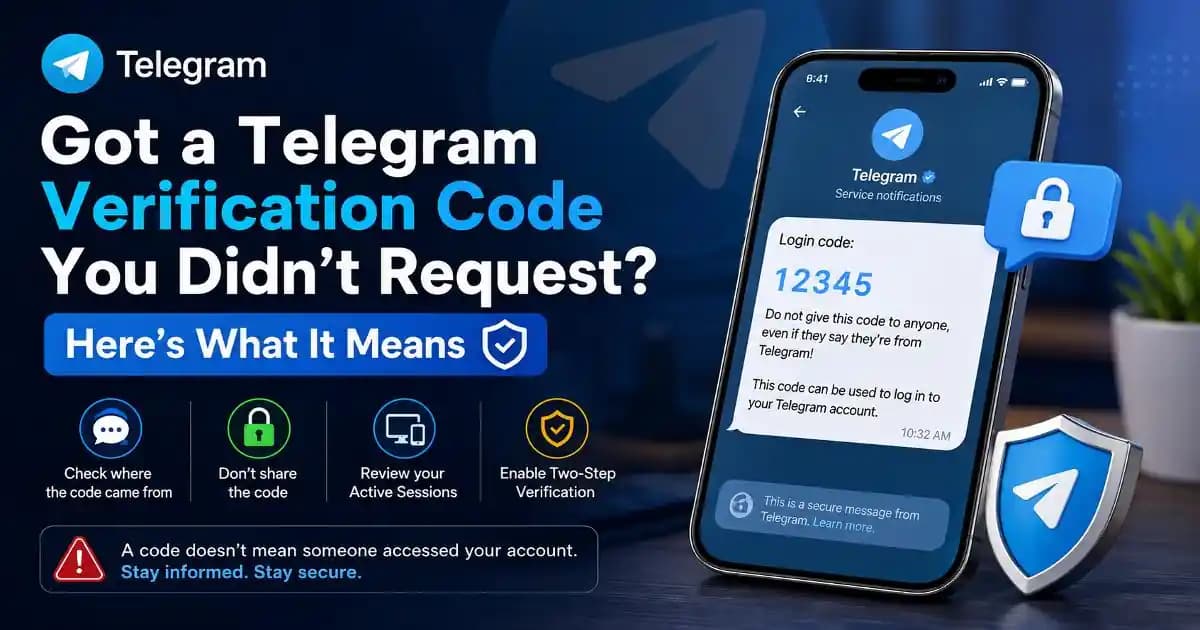
The important detail is that receiving a code does not automatically mean someone successfully entered your account. In most cases, it means a login attempt reached the verification stage but still requires access to the code itself.
Think of it as a doorbell rather than an open door. The code is often evidence that an attempt occurred, not proof that access was granted.
The Most Harmless Explanation: Someone Entered the Wrong Number
One of the most common reasons involves simple human error.
Phone numbers are frequently mistyped. A person setting up Telegram on a new phone may accidentally enter a number similar to yours. A single incorrect digit can send a verification code to an entirely different person.
This happens every day across messaging platforms, banking apps, delivery services, and online accounts. The person requesting the code may have no connection to you whatsoever.
If the code appears only once and no other suspicious activity follows, an accidental number entry is often the most likely explanation.
Automated Login Attempts Are Becoming More Common
During 2025 and 2026, automated account targeting has become increasingly common. Criminal groups use software to test large numbers of accounts across multiple platforms.
Sometimes these systems attempt logins using phone numbers collected from public profiles, old data leaks, business directories, social media accounts, or previously exposed contact databases.
When an automated system tries to initiate a Telegram login using your phone number, Telegram may send a verification code even though you never requested one yourself.
In these situations, receiving the code can actually be a sign that Telegram's verification process is doing its job by requiring additional confirmation before access is granted.
Credential Stuffing Doesn't Always Involve Passwords
Many people associate credential stuffing attacks with usernames and passwords. However, attackers increasingly combine leaked phone numbers with automated login workflows.
After obtaining large databases of contact information, attackers may test whether accounts exist on popular services. They may trigger login requests to determine which numbers are active.
This does not necessarily mean they know your password or have control of your device. It simply means your number may have appeared in a dataset that is being tested by automated systems.
That is one reason digital literacy and account security awareness remain important even when no immediate compromise has occurred.
Could Someone Be Specifically Targeting Your Account?
Sometimes the answer is yes.
If you receive repeated Telegram codes over a short period, especially alongside suspicious messages, calls, or social engineering attempts, someone may be actively trying to gain access.
A common pattern begins with an unexpected verification code. Shortly afterward, the target receives a message claiming to be from customer support, a colleague, a friend, or a business representative. The sender then asks for the code.
The real goal is not the message itself. The goal is obtaining the verification code needed to complete the login process.
This is why verification security depends as much on user behavior as technical protections.
When Should You Actually Worry?
Not every unexpected code requires urgent action.
A single code arriving once with no additional activity is often low risk. However, concern should increase when you notice repeated codes, unfamiliar login notifications, unexpected active sessions, security alerts, suspicious calls, or requests asking you to share verification information.
The context surrounding the code matters more than the code itself.
Looking for supporting signs can help distinguish a harmless mistake from a genuine account protection issue.
Check Active Sessions Instead of Guessing
One of the most useful features inside Telegram is the ability to review active sessions.
If you receive a code unexpectedly, open Telegram settings and review the devices currently connected to your account.
Active sessions can reveal whether unfamiliar phones, computers, tablets, or locations have successfully connected.
This approach is far more reliable than relying on assumptions or online rumors. The session list provides direct evidence about whether account access has actually occurred.
How to Respond Safely
If an unexpected Telegram code arrives, avoid sharing it with anyone, even if they appear trustworthy.
Review active sessions, enable two-step verification if it is not already active, keep your phone number secure, and remain cautious of follow-up messages designed to create urgency.
Most successful account takeovers involve some form of social engineering rather than sophisticated hacking.
The attacker often relies on confusion, pressure, or trust to convince users to reveal information voluntarily.
Why These Messages May Become More Common
As online services continue expanding verification systems, users are likely to encounter more unexpected authentication messages across messaging apps, financial services, and digital platforms.
AI-assisted scam operations can now personalize outreach at scale, making fraudulent requests appear more convincing than they were a few years ago. However, the underlying principle remains unchanged: attackers still need users to cooperate in some way.
Understanding how verification systems work helps reduce unnecessary panic while improving online safety.
An unexpected Telegram code should be treated as useful information. It is a signal worth checking, not automatically a sign that disaster has already occurred.