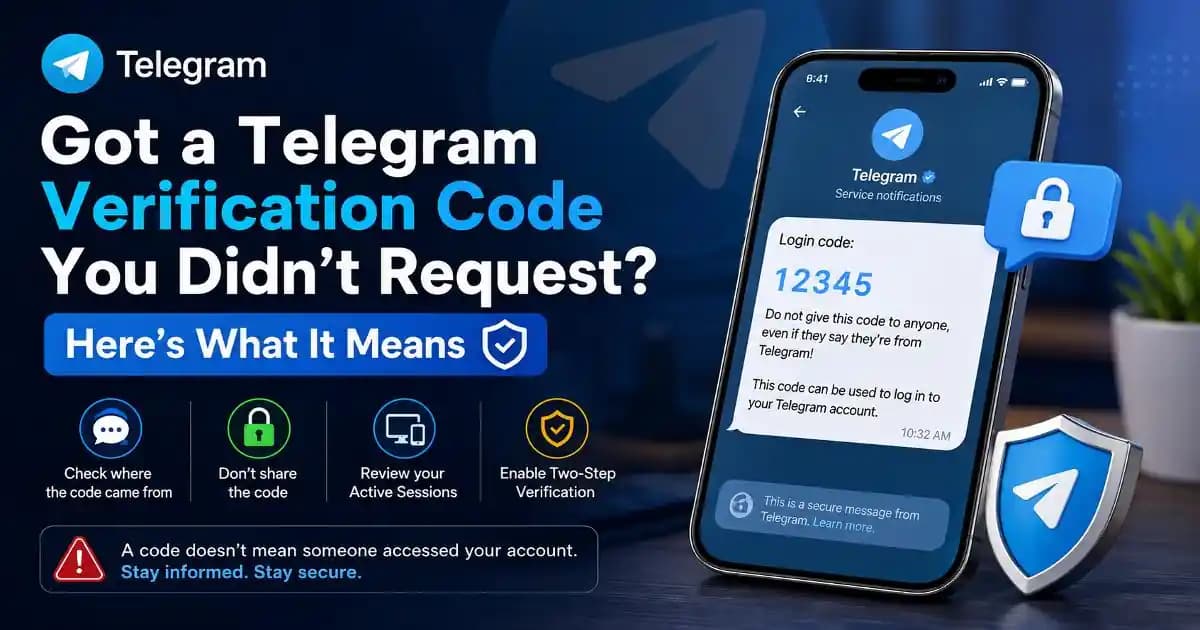



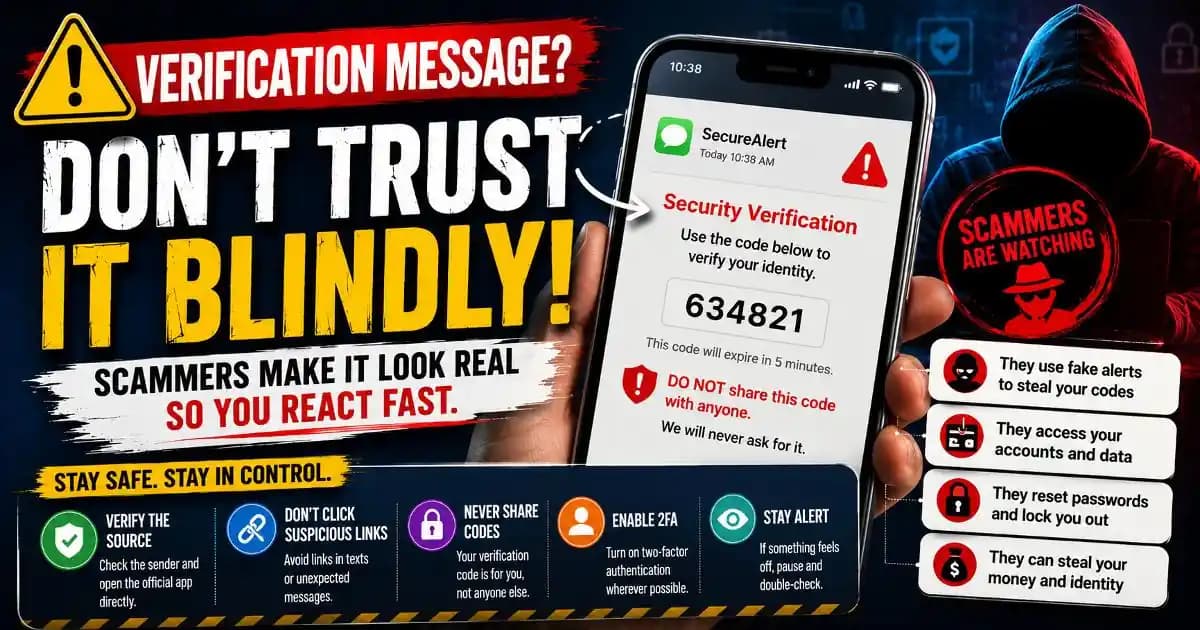
Fake verification message scams often begin with a notification that looks completely routine. A phone vibrates, a code appears on the screen, and the message claims to come from a trusted app, bank, Delivery service, or social platform.
For many users, these alerts feel so familiar that they barely pause to question them.
That reaction is exactly what modern scammers depend on.
Verification systems have become part of daily digital life. Messaging apps request login confirmation codes, banks send transaction approvals, streaming platforms verify devices, and social networks trigger authentication checks when accounts appear active on new phones.
Because users now expect verification messages constantly, fake alerts blend naturally into ordinary behavior.
This has made authentication scams significantly more effective during 2025 and 2026.
Why Verification Messages Feel Automatically Trustworthy
Most people associate verification codes with protection rather than danger.
Authentication systems were designed to improve account security and reduce unauthorized access. As a result, users often see verification prompts as proof that a platform is legitimate and secure.
Attackers exploit this trust carefully.
A fake verification message may imitate the language, layout, timing, and tone used by real services. Some even appear inside existing message threads, making the scam feel even more authentic.
Others arrive immediately after a user attempts to sign in somewhere, creating the illusion that the code is connected to legitimate activity.
That timing is rarely accidental.
Modern scams increasingly combine phishing protection failures with behavioral manipulation. The message itself may look harmless, but the surrounding pressure encourages users to act quickly before thinking critically.
How Fake Verification Scams Usually Work
Many scams begin before the message appears.
An attacker may first attempt to log into a victim’s account using stolen credentials or leaked passwords. The real platform then sends a legitimate verification code to the user automatically.
Moments later, the scammer contacts the victim pretending to be customer support, a friend, a delivery company, or even an automated security system. The victim is then pressured to share the code “for verification” or “to secure the account.”
In other cases, attackers send completely fake messages containing malicious links or deceptive login pages designed to steal credentials directly.
Some campaigns now imitate WhatsApp verification alerts, banking approvals, Apple ID warnings, Google account checks, and package delivery confirmations with remarkable realism.
The goal is often the same: gain access to accounts before the victim realizes what happened.
Why Mobile Users Are Especially Vulnerable
Phones changed how people react to authentication systems.
Verification prompts appear directly on lock screens, inside notification panels, or through quick banners that users process in seconds. Most people interact with these messages while multitasking, commuting, working, or switching rapidly between apps.
Under those conditions, users focus on speed rather than verification.
Small screens also reduce context. Many people never inspect the sender carefully, check the originating number, or question why the message arrived unexpectedly.
This environment creates ideal conditions for social engineering.
Some attackers now imitate entire mobile system notifications rather than individual apps. Others abuse browser pop-ups, fake support calls, or deceptive account recovery systems tied to verification requests.
At the same time, app permission abuse has become more concerning. Certain malicious apps request access to SMS notifications or accessibility settings that may expose authentication codes indirectly.
The result is a growing overlap between legitimate verification systems and manipulated trust.
Why Urgency Changes User Judgment
Most fake verification message scams rely heavily on emotional pressure.
A warning claiming suspicious account activity, a blocked payment, a locked profile, or an urgent security problem encourages users to react before verifying details carefully.
That emotional urgency changes decision-making.
People who normally inspect messages cautiously may suddenly share verification codes, approve login requests, or click suspicious links simply because the situation feels time-sensitive.
Scammers understand that fear of losing account access often outweighs skepticism.
This pattern has become one of the defining characteristics of modern account protection fraud. Attackers rarely need advanced hacking tools if they can persuade users to cooperate voluntarily.
The manipulation works because verification systems already feel familiar and legitimate to most people.
Real Companies Usually Handle Verification Differently
Legitimate companies generally do not ask users to share one-time authentication codes with other people.
Most verification messages explicitly warn users not to forward codes or disclose them to anyone, including support staff. However, many people ignore those warnings because the surrounding situation feels urgent or emotionally convincing.
Trusted platforms also usually direct users back into official apps rather than pressuring them through random links, external calls, or unexpected chat conversations.
Still, attackers increasingly imitate official support behavior closely. Some fake support scams use professional language, realistic caller IDs, and believable troubleshooting scripts.
This is why identity protection today depends as much on behavioral awareness as technical security tools.
The safest habit is often slowing down long enough to verify whether the request itself makes sense.
Why Verification Fatigue Is Becoming a Problem
Users now receive so many authentication prompts that many respond automatically.
Phones constantly ask for login confirmations, app approvals, device pairing, password resets, payment verification, and suspicious activity checks. Over time, this creates verification fatigue.
Some users stop reading prompts carefully altogether.
That exhaustion benefits scammers because routine behavior reduces skepticism.
Cybersecurity experts increasingly warn that security systems themselves can become less effective when users feel overwhelmed by endless notifications. The problem is no longer just technical vulnerability. It is behavioral overload.
Improving digital literacy therefore means understanding how trust, urgency, and repetition shape online decisions.
The safest users are usually not the most paranoid people. They are the people who pause briefly before reacting automatically to a message that appears urgent, familiar, or emotionally persuasive.
Frequently Asked Questions
What is a fake verification message?
It is a scam message designed to imitate real authentication alerts from trusted apps or services.
Can scammers send messages that look official?
Yes. Many scams imitate branding, wording, and verification formats very convincingly.
Should users ever share verification codes?
No. Authentication codes should generally remain private and never be shared with unknown contacts.
Why do fake verification scams work so well?
They exploit trust, urgency, and routine user behavior around familiar authentication systems.
How can users reduce verification scam risks?
Pause before responding, verify requests independently, and avoid clicking unexpected authentication links.