


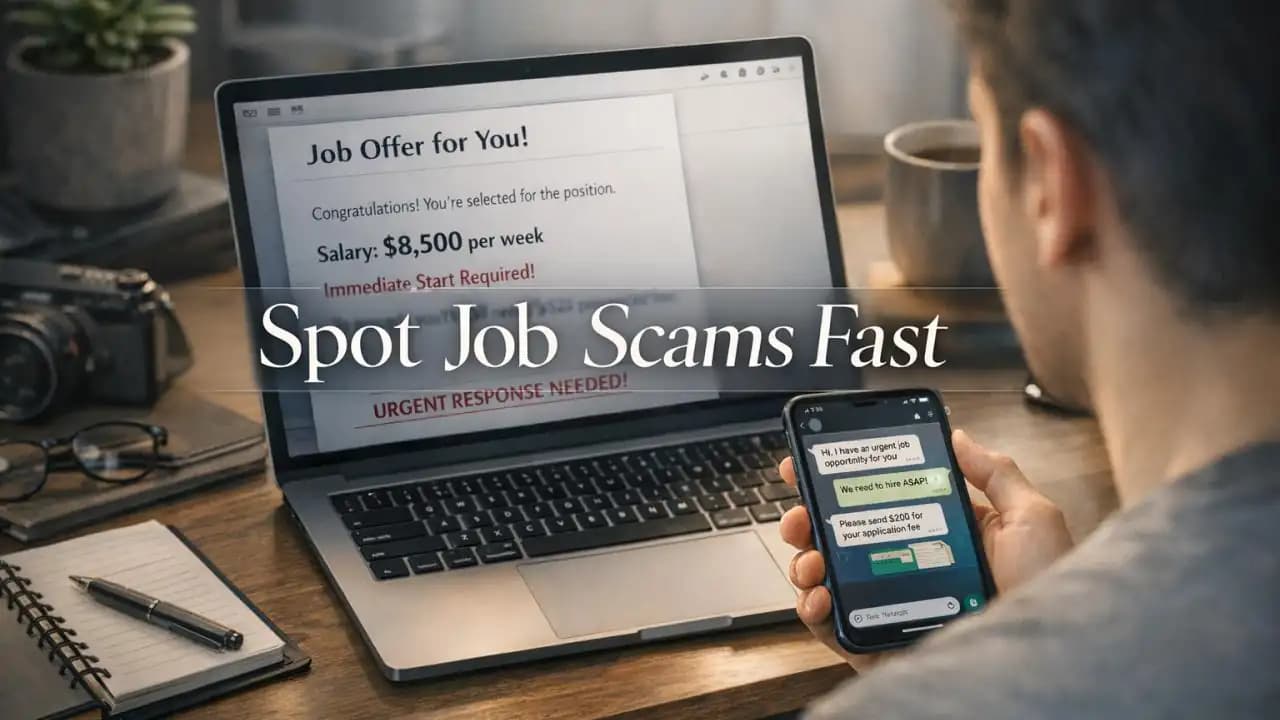
Job scam reports are rising as fake job offers reach people through email, messaging apps, social media, and even trusted-looking job sites. A common scenario is simple: someone applies for a role or posts a resume Online, then receives a message offering quick hiring, flexible work, and high pay. At first it feels like luck. A few messages later, the scammer asks for personal details, banking information, or a payment for training or equipment.
What is happening with fake job offers online
Fake job offers are increasing because scammers know many people are actively looking for work, side income, or remote roles. They copy real company names, use polished job descriptions, and contact users in a way that feels routine.
Some scams start with a Message out of nowhere. Others begin after a user applies for a real-looking listing. The scam can appear on job boards, LinkedIn-style networks, Facebook groups, Telegram channels, WhatsApp messages, or email.
The goal is usually one of three things: steal money, collect personal information, or use victims in wider fraud, such as reshipping goods or laundering payments.
How a job scam usually works
The first contact
The scammer introduces a job that sounds easy and urgent. It may promise remote work, daily payouts, no experience required, or unusually high pay for simple tasks.
The trust-building stage
Next, the scammer acts like a recruiter or HR manager. They may use a company logo, a professional profile photo, and scripted interview questions. Some send offer letters that look formal but contain small mistakes.
The setup
After gaining trust, they ask for sensitive details such as your ID, address, bank account, tax number, or copies of documents. In other cases, they ask for money for background checks, software Access, training, visa processing, or office equipment.
The final push
The message becomes urgent. They may say the role will go to someone else if you do not act today. This pressure is designed to stop you from checking whether the company, recruiter, or job is real.
Why it matters
A job scam is not just an annoying fake message. It can lead to identity theft, account takeover, financial loss, and long-term stress. Someone who shares personal records with a scammer may face problems long after the fake job disappears.
These scams also damage trust in legitimate hiring. People become less confident about real job outreach, which makes the job search harder for everyone.
Signs that a job offer may be a scam
Pay is high for very little work
If the offer sounds far better than similar roles in the market, slow down and verify it.
You are hired too quickly
Many fake recruiters skip normal screening and offer the role almost immediately.
You are asked to pay first
Legitimate employers do not usually ask candidates to send money for equipment, training, or application processing.
Messages come from personal accounts
A recruiter using free email services or private messaging accounts instead of an official company domain is a Warning sign, especially when combined with urgency.
Details do not match
Check the company website, recruiter profile, email domain, and job description. Small mismatches are often the clearest clue.
They ask for sensitive documents too early
Be cautious if a supposed recruiter wants your ID, bank details, or full personal records before formal verification.
Risks users should know
The most immediate risk is losing money. Victims may pay fake fees, buy equipment from scam links, or send funds as part of a fake onboarding process.
Another major risk is identity misuse. Copies of passports, national IDs, resumes, and banking details can be reused for fraud, impersonation, or account recovery attacks.
Some victims are pulled into task scams or fake payroll schemes, where they unknowingly help move money or goods. That can create legal and financial complications.
Recent trends from 2024 to 2026
From 2024 onward, fake recruitment scams have become more polished. Scammers are using better design, more believable language, and multi-step conversations that feel like real hiring.
Remote work remains a major hook. So do part-time rating jobs, app optimization tasks, data entry roles, and personal assistant offers.
Another recent trend is moving the conversation off the original platform very quickly. A fake recruiter may contact you through a job site, then push you to WhatsApp or Telegram where verification is weaker.
There is also growing use of stolen company identities. Instead of inventing a fake business, scammers now copy real brands and impersonate real employees more convincingly.
Practical awareness to protect yourself
Verify the company independently
Do not rely on the links sent in the message. Search for the official company website yourself and compare the job listing, contact details, and recruiter information.
Check the recruiter carefully
Look at the email domain, social profile history, and whether the person appears on the official company site or staff pages.
Never pay to get hired
If money is requested for interviews, training, software, equipment, or placement, treat it as a major Warning (1) sign.
Protect your documents
Share sensitive records only when you are sure the employer is legitimate and the hiring stage makes sense.
Slow down when pressured
Urgency is one of the oldest scam tools. A real employer may move fast, but they will not stop you from verifying basic facts.
What to do if you think you were targeted
Stop replying and do not send more information. Save screenshots, email headers, payment details, and usernames.
If you shared financial information, contact your bank or payment provider immediately. If you shared login details, change your passwords and enable two-factor authentication. If you sent identity documents, consider reporting the incident to local cybercrime or consumer Protection channels.
Also report the listing or account on the platform where the contact began. This helps limit further harm to other job seekers.
FAQs
How can I tell if a recruiter is real?
Check whether the recruiter uses an official company email, appears on the company website or verified profile, and matches the job listing details.
Do real employers ever ask for payment?
In most standard hiring situations, no. Requests for upfront fees are a common sign of a scam.
What if I already sent my resume?
A resume alone is less risky than sending ID or banking details, but stay alert for follow-up phishing, impersonation, or targeted scam attempts.
Are job scams common on trusted platforms?
Yes. Trusted platforms reduce risk but do not remove it. Scammers can still post fake listings or impersonate recruiters.
What is the safest next step after a suspicious offer?
Pause, verify the company independently, and do not move the conversation to private apps until you are confident the opportunity is real.