


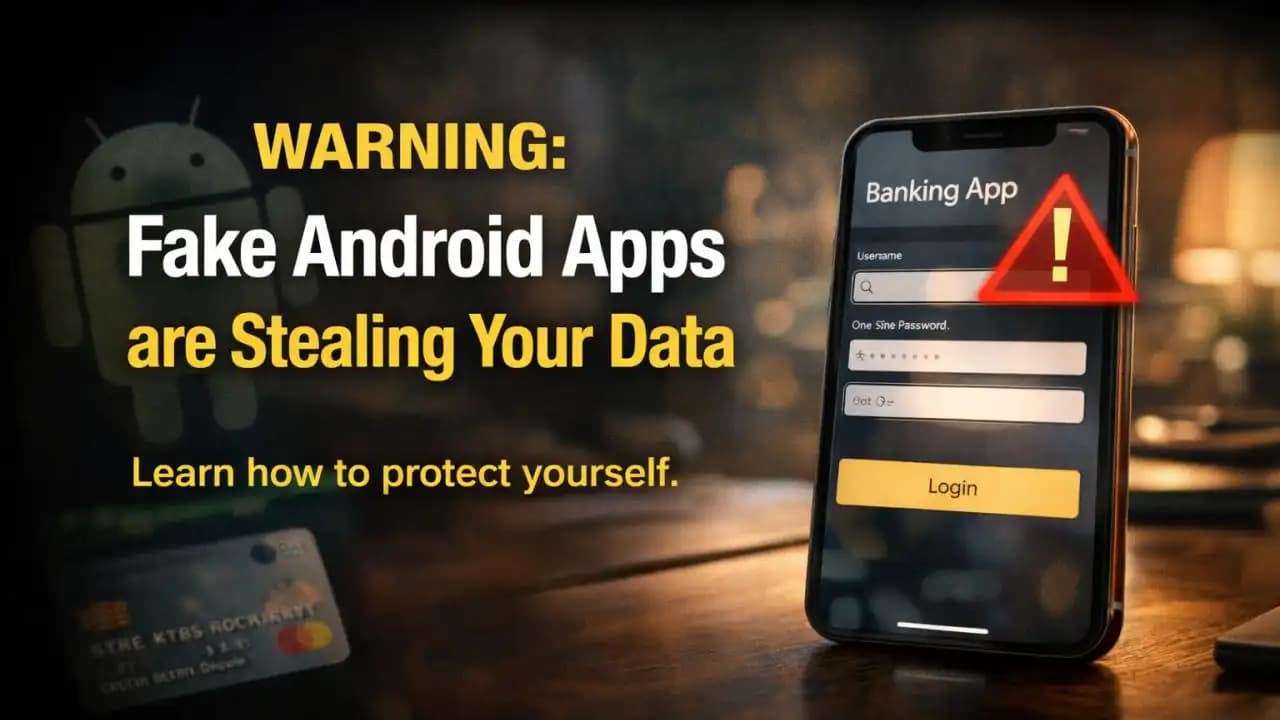
fake Android apps are showing up in everyday situations someone sends you a “bank update” link on WhatsApp, or you search for a popular app and download a version that looks identical. It installs fine, opens like the real thing… but something feels off. By the time you notice, your phone may already be compromised.
This isn’t rare anymore. Over the past year, especially into 2025–2026, more Android users have been running into apps that look completely legitimate but are designed to quietly take control of their data.
How fake Android apps trick people into downloading them
Most people don’t go looking for risky apps. These apps come to you.
A common situation looks like this:
- You receive a message: “Your bank account will be blocked. Update now.”
- Or a friend forwards a link: “Install this app to track your delivery.”
- Or you search for something simple like “APK WhatsApp update”
The app you download may have:
- The same icon as the real app
- A nearly identical name
- Screens that look exactly like your bank or payment app
The goal is simple: make you trust it for just a few seconds.
In many recent cases, users didn’t realize anything was wrong because the app opened normally. It wasn’t broken. It didn’t crash. It worked just enough to feel real.
What these malicious apps can actually do to your phone
Once installed, these apps don’t behave like normal apps.
They often ask for permissions that seem harmless at first like Access to notifications or accessibility settings. But that’s where things change.
These apps aren’t just collecting data they’re controlling behavior.
Here’s what they can do:
- Read your SMS messages (including OTP codes)
- Overlay fake screens on top of real apps
- Record what you type (including passwords)
- Access banking or wallet apps silently
- Control parts of your phone remotely
In some cases reported recently, users said they opened their banking app and saw a “login expired” screen only to realize later it was fake.
Why banking apps and OTP codes are the main target
If you’re wondering why these scams focus so heavily on banking, the answer is simple: speed.
OTP (one-time password) systems are meant to protect you but they’re now part of the attack.
Here’s how it usually works:
- You install a fake app
- You try to log into your bank or payment app
- The fake app shows a login screen that looks real
- You enter your details
- The real bank sends an OTP
- The fake app reads the OTP instantly
Within seconds, scammers can access your account.
In regions where mobile banking and UPI apps are widely used, this type of attack has grown quickly in 2025–2026 because it works fast and doesn’t require advanced hacking.
How to spot a fake Android app before installing
Most fake apps don’t look obviously fake at first glance.
But there are small signs that many users overlook:
- The app is not from the official Google Play Store
- The developer name looks slightly different
- The app asks for unusual permissions right after install
- You were pushed to install it through a link
- The reviews look generic or repetitive
If you were sent a link to install an app, that alone should raise a question.
Another common pattern: the app asks you to enable “Accessibility Service” immediately. That’s a major red flag in most cases.
Safe ways to download apps without taking risks
Most users already know they should use official app stores but in real life, people still install apps from links, especially when they feel urgency.
A few habits can make a big difference:
- Download apps directly from Google Play, not from links
- Search for the app manually instead of clicking shared URLs
- Check the developer name carefully
- Avoid installing APK files unless you fully trust the source
The safest downloads are the ones you initiate not the ones pushed to you.
In recent months, many scam campaigns have relied on urgency: “Update now or lose access.” That pressure is intentional.
What to do if you already installed a suspicious app
If you think you’ve installed something risky, don’t ignore it.
Many users delay action because the phone still “seems fine.”
Here’s what matters:
- Remove the app immediately
- Check app permissions, especially accessibility access
- Change passwords for banking and important accounts
- Monitor recent transactions
- Contact your bank if anything looks unusual
The faster you act, the less damage can happen.
In several recent cases, users who acted quickly were able to prevent unauthorized transactions simply by removing the app and securing their accounts.
Why this problem is growing in 2025–2026
A few years ago, fake apps were easier to spot.
Now, they’re harder to distinguish because:
- App designs are easy to copy
- Messaging apps like WhatsApp spread links quickly
- Users rely more on mobile banking
- Attackers use social engineering instead of technical exploits
The biggest shift isn’t technology it’s how scams are delivered.
Instead of hacking systems, scammers now focus on convincing users to install the threat themselves.
A quick reality check most users miss
Most people assume that if an app installs and opens normally, it must be safe.
That’s no longer true.
The risk doesn’t come from broken apps it comes from apps that work just well enough to gain your trust.
And in everyday situations messages, shared links, quick installs it’s easy to overlook that moment.
Being careful doesn’t mean avoiding all apps. It just means pausing when something feels slightly rushed or unexpected.
FAQs
Can fake Android apps appear on the Play Store?
Sometimes, but most are distributed through links or third-party downloads rather than official listings.
Is it safe to install APK files from the internet?
Only if you fully trust the source. Many fake apps are shared as APK files outside official stores.
Can these apps really read my OTP messages?
Yes, if you grant SMS or notification access, they can capture verification codes.
How do I know if my phone is already affected?
Look for unusual permissions, unknown apps, or unexpected behavior like overlays or login issues.
Should I reset my phone if I installed a fake app?
If you’re unsure about the extent of access, a reset can help but securing accounts and removing the app is the first step.