


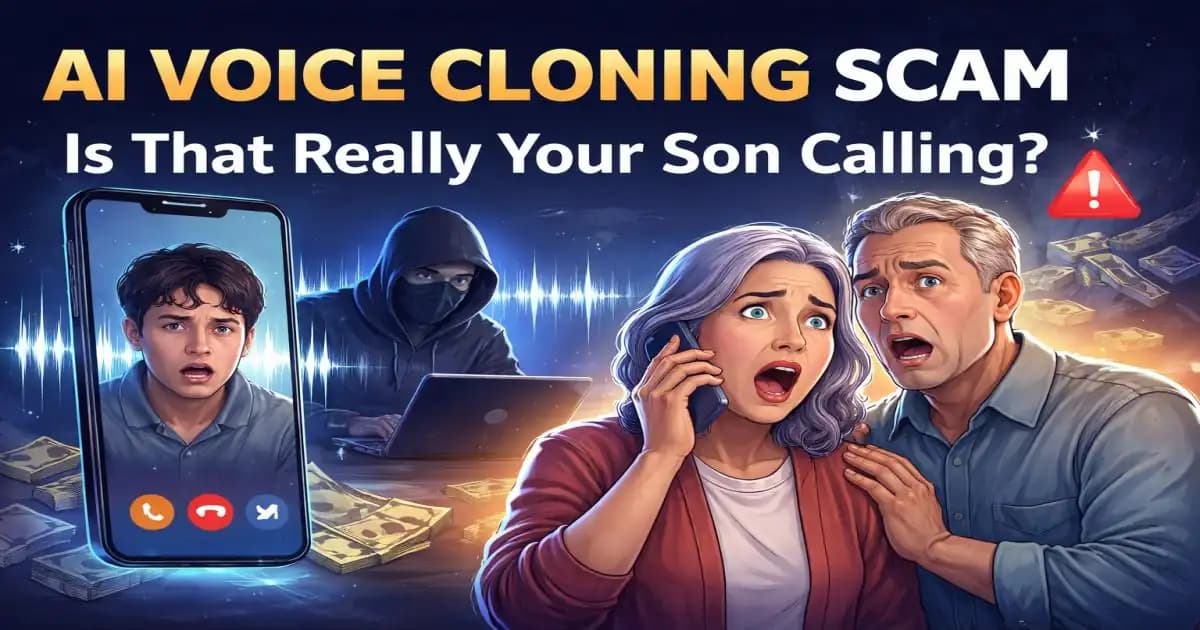
It starts with a phone call (AI voice cloning scam) that feels urgent, emotional, and frighteningly real. A familiar voice your son, your daughter, your spouse sounds panicked. They say they’re in trouble. They need money. Right now.
And because it sounds exactly like them, you don’t hesitate.
This is the new reality of the AI voice cloning scam, a rapidly growing threat that blends artificial intelligence with emotional manipulation. Unlike traditional scams, this one doesn’t rely on broken language or obvious red flags. It uses something far more powerful trust.
Why This Scam Feels So Real
Most of us have shared voice clips Online without thinking twice. A video on Instagram, a voice note on WhatsApp, a short clip on TikTok that’s all it takes.
Today’s AI tools can analyze just a few seconds of someone’s voice and recreate it with shocking accuracy. Tone, pitch, emotion even hesitation can be mimicked.
Scammers collect these clips, feed them into voice cloning software, and create convincing audio that sounds like someone you know personally.
This isn’t futuristic anymore. It’s happening now.
How the AI Voice Cloning Scam Typically Works
You might receive a call late at night or during a busy moment. The voice sounds distressed:
“Mom… I’ve been in an accident. I need help.”
Or:
“Dad, I’m stuck. Please send money quickly I’ll explain later.”
The urgency is intentional. It pressures you into acting before thinking.
Sometimes, the scammer adds another layer pretending to be a Police officer, lawyer, or hospital staff member who confirms the story and gives instructions for payment.
By the time doubt creeps in, the money is already gone.
Real-World Situations That Make People Vulnerable
These scams don’t succeed because people are careless they succeed because they are human.
Parents naturally react to distress calls from their children. Families separated by distance rely heavily on phone communication. And in stressful moments, logic takes a back seat to emotion.
Many victims later say the same thing:
“I knew something felt off, but the voice convinced me.”
That’s exactly what makes this scam so dangerous.
Small Signs That Something Isn’t Right
Even the most advanced AI can’t perfectly replicate real-life context.
Sometimes, the voice sounds slightly rushed or unnatural in conversation. The caller may avoid answering specific questions or push you to act Immediately without verifying anything.
You might notice:
- Refusal to switch to video call
- Vague explanations about the situation
- Requests for unusual payment methods (gift cards, crypto, urgent transfers)
- Pressure to keep the situation secret
Individually, these signs might not stand out. But together, they often reveal the truth.
The “Safe Word” Strategy Families Are Starting to Use
One of the simplest and most effective ways to protect yourself is something surprisingly low-tech: a family safe word.
It works like this.
Families agree on a unique word or phrase something only close members would know. Not something obvious like a birthday or pet name. Something random and private.
If a suspicious call comes in, instead of reacting emotionally, you calmly ask:
“Tell me the safe word.”
A scammer, no matter how realistic the voice, won’t know it.
This single step can instantly break the illusion.
What You Should Do During a Suspicious Call
If you ever receive a call that feels urgent and emotional, the most important thing is to slow down.
Pause. Take a breath.
Instead of responding immediately, try reconnecting through a different channel. Call your family member directly. Send a message. Use a video call if possible.
If they don’t answer right away, that’s not confirmation of danger it’s just uncertainty. Give it a moment before taking action.
Avoid sending money or sharing personal details until you’re completely sure.
If You’ve Already Sent Money or Information
It’s easy to feel overwhelmed or embarrassed, but quick action still Matters.
Contact your bank or payment provider immediately. In some cases, transactions can be stopped or flagged.
Report the incident to local cybercrime authorities or national helplines. Even if recovery isn’t guaranteed, reporting helps track patterns and prevent future victims.
Most importantly, don’t stay silent. These scams rely on people not talking about them.
A New Way of Thinking About Digital Trust
The biggest shift this scam forces us to make is simple but uncomfortable:
Hearing a familiar voice is no longer proof of identity.
We’ve spent years learning not to trust suspicious emails or unknown links. Now, we need to extend that caution to voice communication.
It doesn’t mean becoming paranoid it means becoming aware.
A quick verification step, a short pause, or a simple question can make the difference between safety and loss.
Prevention Isn’t Complicated But It Requires Awareness
You don’t need advanced tools to protect yourself from an AI voice cloning scam.
What you need is:
- Awareness that this scam exists
- A simple verification habit (like a safe word or callback)
- A willingness to pause instead of reacting instantly
Technology may be getting smarter, but human awareness is still the strongest defense.
FAQ
1. How do scammers get voice samples for AI cloning?
They usually collect short clips from social media videos, voice messages, or public recordings.
2. Can AI really mimic someone’s voice accurately?
Yes. With just a few seconds of audio, modern tools can create highly realistic voice replicas.
3. What is the safest way to verify a suspicious call?
Hang up and call the person directly using a known number, or ask for a pre-agreed safe word.
4. Are elderly people more at risk?
Yes, because scammers often target emotional trust and urgency, which can be especially effective with older individuals.
5. Should I stop sharing videos or voice notes online?
Not necessarily, but it’s wise to limit public exposure and review your privacy settings.