


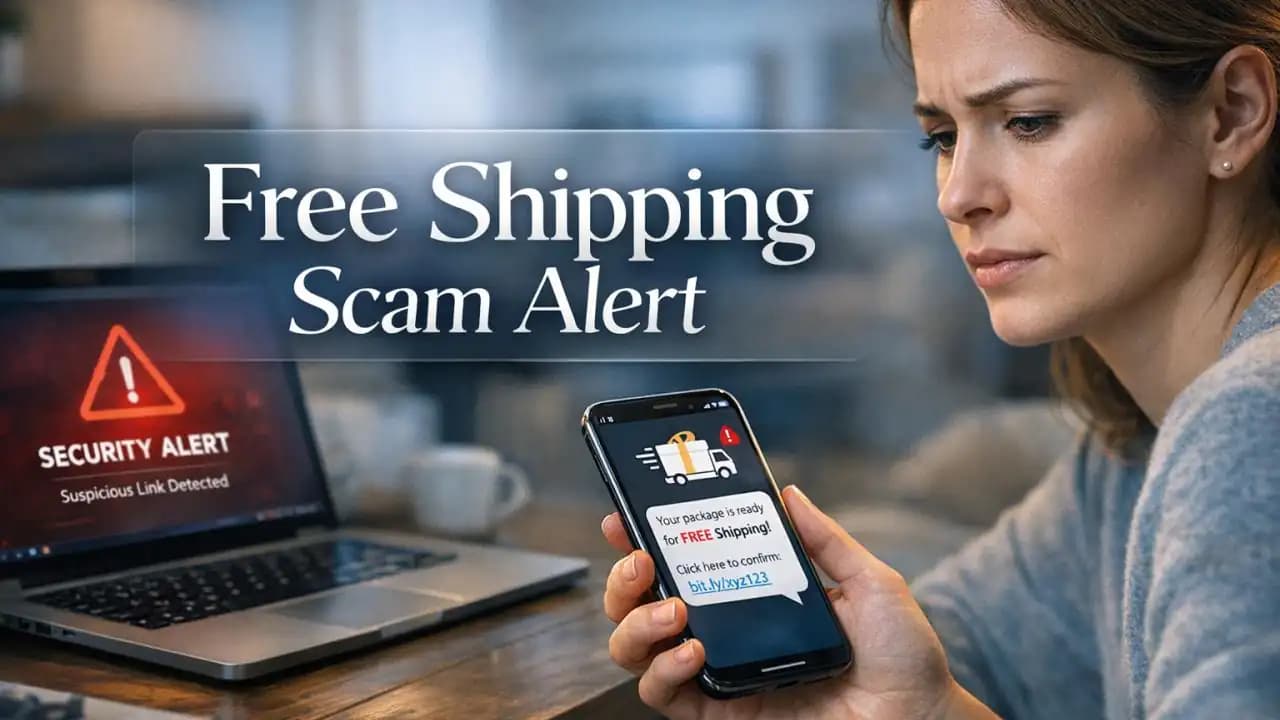
Online scam Messages often start with something that looks harmless, like a text saying you have unlocked free shipping on a recent order. That is exactly why people click. In a real-life situation, someone may be waiting for a parcel, see a delivery-style message, tap the link quickly, and land on a page asking for a small fee or personal details. What looked like a nice bonus was actually a trap.
Free offers may hide scams, and fake shipping links are a common example. These Messages are built to feel urgent, familiar, and easy to trust. The goal is simple: get you to click before you stop to check.
What is happening with the free shipping scam?
This scam usually appears through SMS, email, social media ads, or messaging apps. The Message (1) claims you can claim free shipping, fix a delivery issue, confirm an address, or unlock a shipping discount. The link leads to a fake website that may copy the look of a delivery company, retailer, or checkout page.
Some pages ask for a small payment, often framed as a handling fee. Others ask for your name, phone number, home address, card details, or Account login. In some cases, the link may also try to install malware or push you into subscribing to recurring charges.
Why it catches people off guard
The scam works because shipping Message agains already feel routine. Many people are expecting packages, especially during sales periods, holidays, and major online shopping events. A message about free shipping or a delivery update does not seem unusual at first glance.
How the method usually works
Scammers send a message that creates curiosity or urgency. It may say your order qualifies for free shipping, your package is being held, or you need to confirm details now. Once you click, the scam page is designed to move fast and keep you from thinking too much.
Typical steps include:
- A message arrives pretending to be from a store, courier, or marketplace
- You click a shortened or unfamiliar link
- A realistic-looking page asks you to confirm delivery or claim an offer
- You are asked for payment details, personal information, or login credentials
- Your data is stolen, your card is charged, or your device is exposed to further threats
Common delivery themes used in the scam
Scammers often use similar wording, such as free shipping unlocked, package waiting, address confirmation required, or redelivery needed. Some messages include fake tracking numbers or logos to appear more convincing.
Signs the link is not safe
There are usually small warning signs if you slow down and look closely.
- The sender name or email address does not match the company
- The link looks odd, shortened, or contains random letters
- The message pushes you to act immediately
- The site asks for card details for a tiny fee
- The page has spelling errors, awkward wording, or poor design
- You were not expecting any delivery from that company
Even a polished scam page can still be fake. A familiar logo does not prove a message is real.
Why it matters
This type of scam does more than waste time. A single click can lead to card fraud, account takeover, identity misuse, or repeated scam targeting later. If a scammer gets your contact details and sees that you engage, you may receive more fake shipping alerts, bank alerts, or account Verification messages.
For families, this matters because one shared device or saved payment method can affect more than one person. For small businesses, fake shipping links can also target staff who manage orders and deliveries.
The risks if you click
The risks depend on what Happens after the click, but the most common ones are serious enough to treat every suspicious shipping message carefully.
- Card details stolen through fake checkout pages
- Personal information collected for fraud or identity theft
- Passwords captured through fake login forms
- Malware downloads or browser notification abuse
- Recurring charges hidden behind trial or handling fee offers
If you only clicked but entered nothing
You may still be fine, but it is smart to close the page, clear your browser, and run a device security scan. If the site downloaded anything or asked for permissions, take that seriously.
Recent trends from 2024 to 2026
From 2024 to 2026, scam campaigns have become more polished and more personalized. Fake shipping pages now copy real brand layouts closely, and scammers increasingly use SMS and messaging apps because people open them quickly. Short-lived scam domains, AI-polished wording, and location-based delivery lures are also becoming more common.
Another trend is combining fake shipping offers with small payment requests. Instead of asking for a large amount, scammers ask for a tiny fee because people are less likely to question it. That small payment can be enough to capture card details or start unauthorized charges.
Practical awareness: how to protect yourself
The safest habit is simple: do not open shipping links directly from unexpected messages. If you think a delivery update may be real, go to the retailer or courier website yourself, or use the official app.
- Check the sender carefully before clicking anything
- Visit the company site manually instead of using the message link
- Do not pay small shipping or redelivery fees through unknown pages
- Use strong passwords and enable two-factor authentication
- Keep your phone, browser, and security software updated
- Warn family members who often shop online
A quick rule that helps
If a message tries to rush you into claiming a free shipping deal or fixing a delivery problem right now, pause first. Real companies do not need you to panic.
What to do if you already interacted with the scam
If you clicked the link, entered details, or made a payment, act quickly.
- Stop using the page and close it
- Change any password you entered, especially if reused elsewhere
- Contact your bank or card provider if payment details were shared
- Monitor your account for unusual charges or login alerts
- Run a security scan on your device
- Report the message to the platform, retailer, or courier being impersonated
Fast action can reduce the damage, especially when payment details or account credentials are involved.
FAQs
Is every free shipping message a scam?
No. Some are legitimate marketing offers, but unexpected messages with links should always be checked carefully through official channels.
Can a scam still work if the fee is very small?
Yes. Small fees are often used to make the request feel harmless while collecting your card details or starting recurring charges.
What if the message uses a real company name?
That does not make it safe. Scammers regularly copy brand names, logos, and delivery language to look convincing.
Should I worry if I clicked but did not type anything?
Usually the risk is lower, but you should still scan your device and review any downloads, redirects, or permissions requests.
What is the safest way to check a delivery update?
Open the retailer or courier app directly, or type the official website into your browser instead of tapping the message link.