


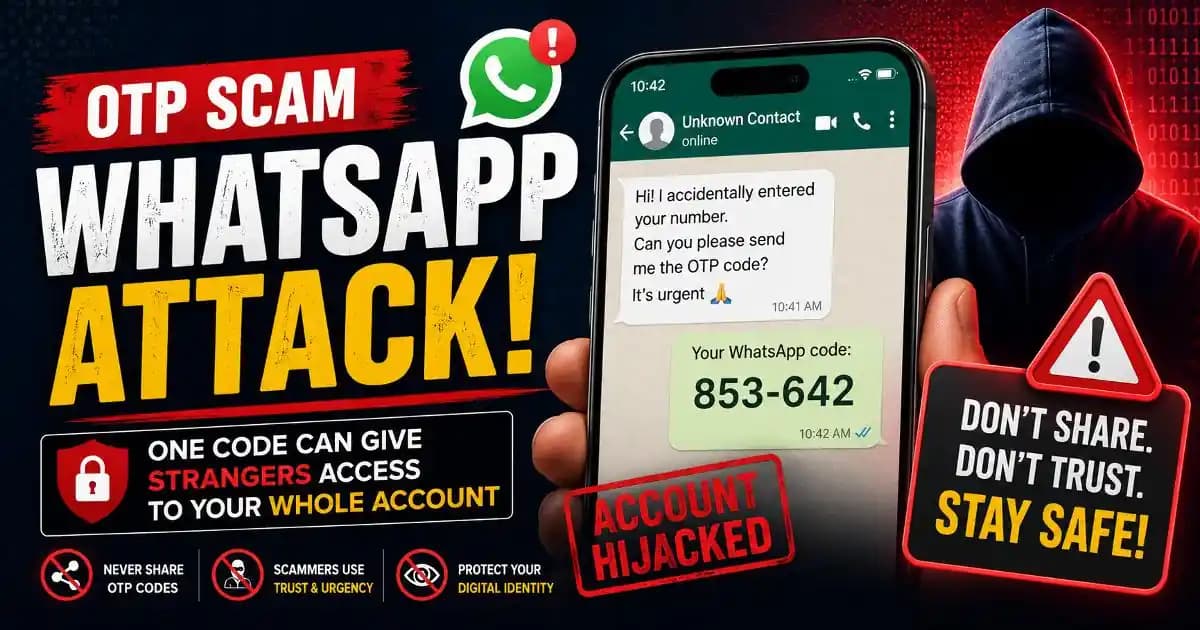
OTP scam WhatsApp attacks often begin with a message that feels harmless. Someone says they accidentally sent a verification code to your number. Another person claims they are trying to recover an account. Sometimes the message comes from a friend whose WhatsApp account has already been hijacked. Within seconds, a simple six-digit code can become the key that unlocks an entire digital identity.
Many people still believe account theft requires advanced hacking tools or stolen passwords. In reality, modern scammers increasingly rely on manipulation instead of technical attacks. They understand that users trust familiar conversations, respond quickly under pressure, and often treat verification codes like temporary details instead of sensitive credentials.
This is why OTP scams continue spreading worldwide during 2025 and 2026, especially through messaging platforms where conversations already feel personal and trusted.
Why OTP codes matter more than most users realize
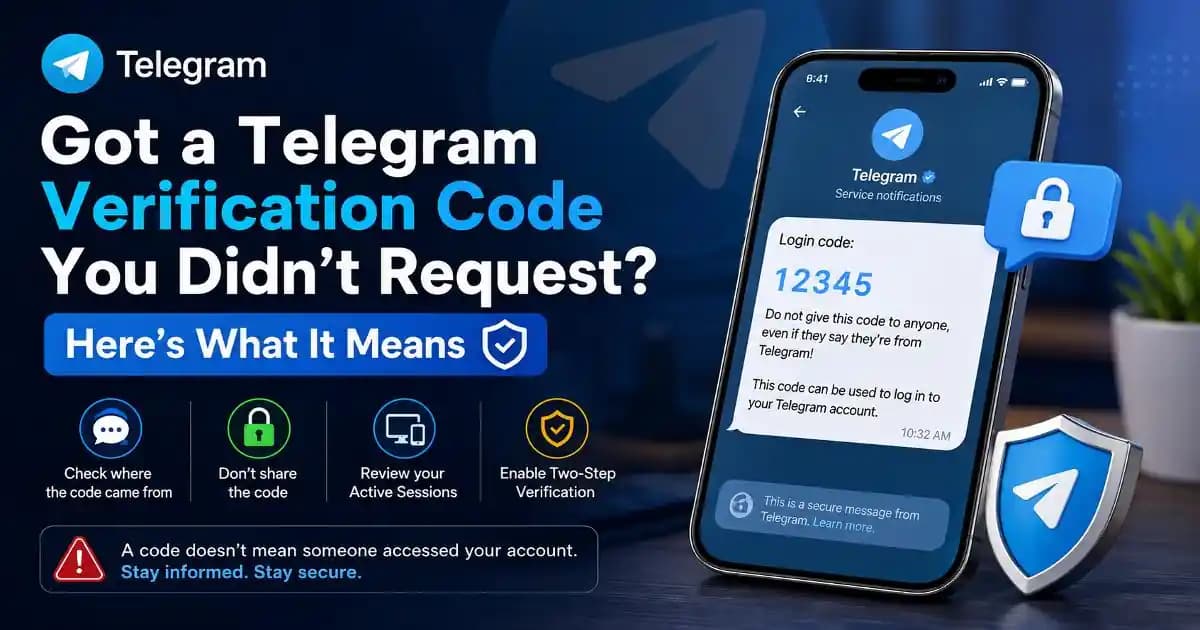
An OTP, or one-time password, is designed to confirm identity during login attempts, password resets, payments, or account recovery actions. Many platforms use these codes as part of authentication systems to protect accounts from unauthorized access.
The problem is that scammers understand something important: if they can convince a user to share the OTP willingly, many security layers become useless.
To most people, an OTP looks temporary and harmless. It arrives quickly through SMS or messaging apps, disappears after a few minutes, and often feels routine because users receive verification codes regularly for legitimate services.
Attackers exploit that familiarity. They create situations where victims stop treating the code as a security barrier and start viewing it as a simple confirmation step.
How OTP scam WhatsApp attacks usually work
One of the most common patterns begins when scammers attempt to register a victim’s WhatsApp number on another device. WhatsApp automatically sends a verification code to the real account owner.
The attacker then contacts the victim pretending to be someone trustworthy. Sometimes they claim the code was sent accidentally. Other times they pose as customer support agents, delivery workers, employers, or even relatives.
If the victim shares the OTP, the attacker can immediately complete the login process and take control of the WhatsApp account.
Once access is gained, the scam often spreads rapidly. Attackers message contacts pretending to be the victim, asking for money transfers, urgent help, or additional verification codes. Because the messages come from a familiar account, friends and family members may trust them instantly.
This is why OTP hijacking is connected closely with broader social engineering scams and account recovery fraud patterns.
Why emotional pressure makes these scams effective
Most OTP scams succeed because they create emotional urgency.
A scammer may act stressed, polite, apologetic, or frightened. Some say they will lose access to an important account unless the victim responds quickly. Others pretend to be from a company investigating suspicious activity.
Under emotional pressure, people stop analyzing details carefully. The brain shifts toward solving the immediate problem instead of evaluating risk.
Messaging apps make this easier because users already communicate there casually and quickly. Many people answer WhatsApp messages while multitasking, traveling, or responding to dozens of notifications at once.
That environment favors fast reactions rather than cautious verification.
Why stolen OTPs can affect more than one account
Many users think losing a WhatsApp account is only an inconvenience. In reality, a hijacked messaging account can expose much larger parts of a person’s digital life.
Attackers may access private conversations, personal photos, business communication, contact lists, and sensitive information shared in chats. Some criminals use stolen accounts to target additional victims through trust-based impersonation scams.
In some cases, messaging accounts are connected to banking alerts, password reset requests, or authentication notifications. A compromised phone number can increase exposure across multiple services.
This is why identity protection and verification security are becoming major concerns for everyday users, not just cybersecurity professionals.
Fake support agents and verification scams are becoming harder to detect
Scammers no longer rely only on obvious spam messages. Modern OTP scams increasingly imitate real communication styles used by banks, delivery companies, online platforms, and support teams.
Some attacks include realistic logos, cloned business accounts, professional language, and even AI-generated voices during phone calls. Others combine phishing protection bypass techniques with fake urgency alerts.
The result is a scam environment where visual appearance alone is no longer enough to judge legitimacy.
Users are now expected to verify requests independently instead of trusting branding or message tone automatically.
Why people continue sharing verification codes
Many victims later ask the same question: “Why did I trust them?”
The answer usually has less to do with intelligence and more to do with human behavior. Verification systems are designed to encourage quick action. People constantly receive real login alerts, delivery confirmations, payment approvals, and account notifications.
Scammers imitate these familiar patterns closely. Over time, users become conditioned to respond automatically to verification requests.
Another major factor is trust transfer. If a scam message comes from a known contact whose account was already compromised, the victim may lower suspicion immediately.
This is why digital literacy today includes emotional awareness, skepticism toward urgency, and safer communication habits.
How safer behavior reduces OTP scam risks
Safer behavior often involves slowing down communication instead of reacting instantly.
Users should remember that verification codes are private credentials, even if they look temporary.
- Never share OTP codes through calls, chats, or screenshots.
- Verify unusual requests independently.
- Enable two-step verification inside messaging apps.
- Review linked devices regularly.
- Treat urgency as a warning sign rather than proof of legitimacy.
- Be cautious when contacts suddenly ask for codes or money.
Many mobile security experts now emphasize behavioral awareness because technical protections alone cannot stop manipulation-based attacks completely.
The most dangerous part of an OTP scam is not the code itself. It is the moment a user believes the request is safe.
Frequently Asked Questions
Can someone hack my WhatsApp with only an OTP code?
Yes. Sharing the verification code can allow attackers to register your account on another device.
Why do scammers ask for OTP codes politely?
Because calm and friendly communication lowers suspicion and builds trust quickly.
Can two-step verification help protect WhatsApp?
Yes. It adds another security layer that makes account hijacking harder.
What should I do if I accidentally shared an OTP?
Immediately secure the account, log out unknown devices, and change security settings.
Are OTP scams only happening on WhatsApp?
No. Similar scams target banking apps, email accounts, shopping platforms, and social media services.