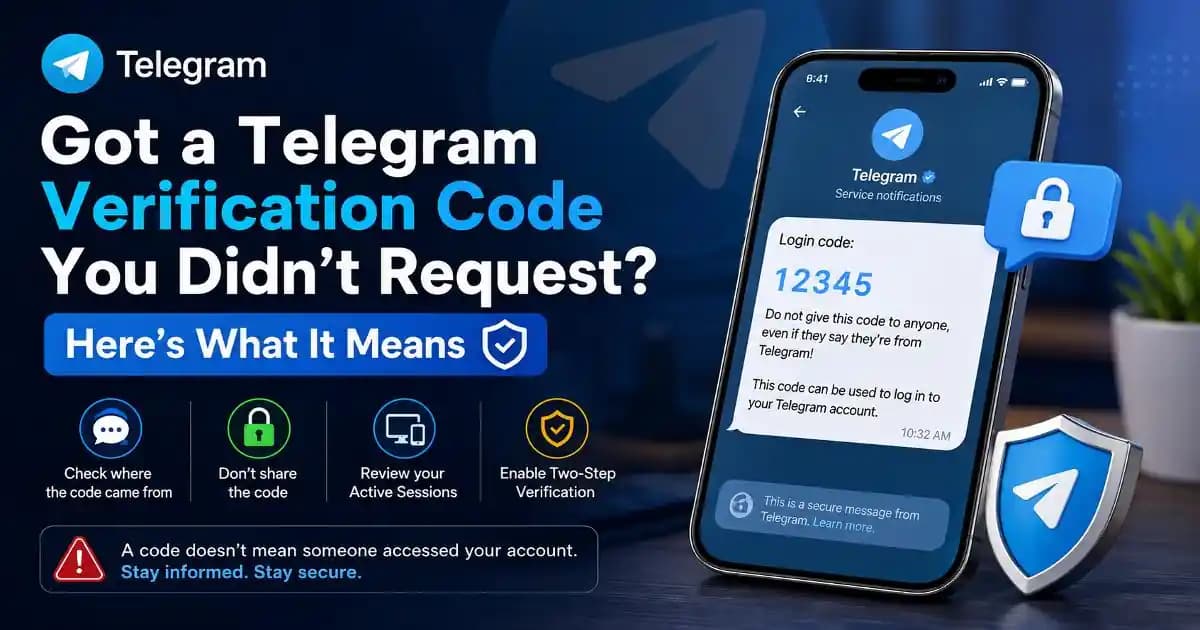



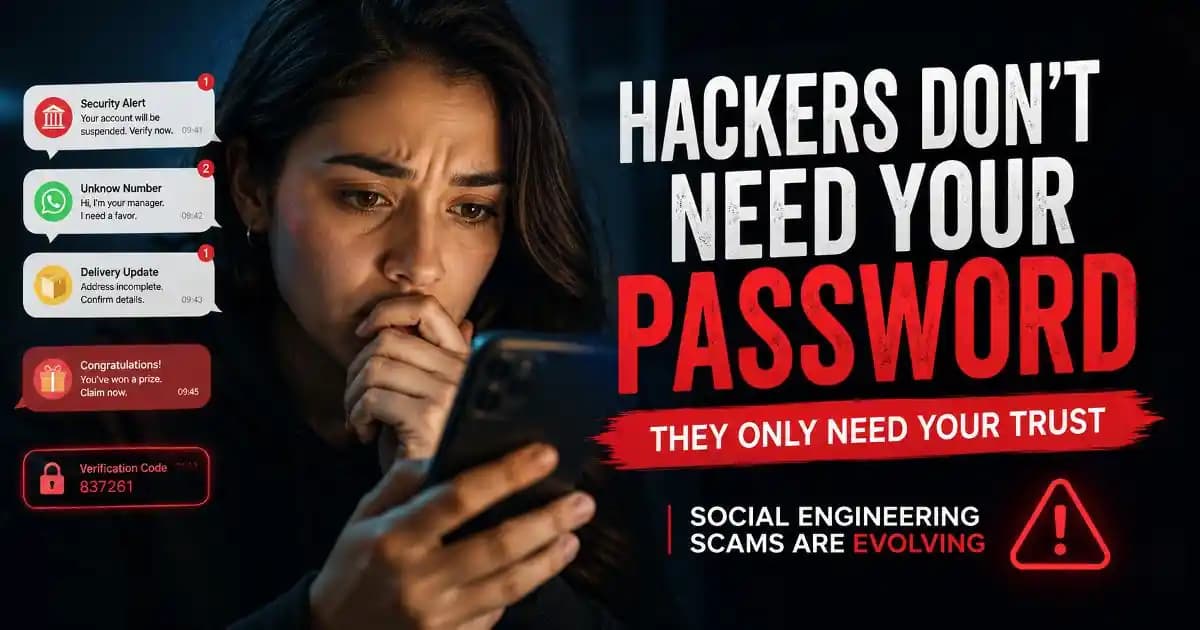
Social engineering scams often begin with something that feels completely ordinary: a WhatsApp message from a friend, a security alert that looks real, or a phone call that sounds calm and professional. Many people who lose access to accounts or share sensitive information later realize the scam did not rely on advanced hacking at all. It relied on trust.
That shift has quietly changed how online fraud works during 2025 and 2026. Instead of trying to break passwords through technical attacks, scammers increasingly focus on manipulating behavior. They study how people react under pressure, how quickly users tap notifications on mobile devices, and how easily familiarity lowers suspicion.
A person might receive a message claiming their bank account needs urgent verification. Another user may see a delivery problem alert asking them to confirm identity details. Some scams imitate workplace communication, while others pretend to be family emergencies. In many cases, the attacker already understands one important reality: people trust emotion faster than they trust logic.
Why social engineering scams feel so convincing
Traditional hacking sounds technical and distant. Social engineering feels personal. That is exactly why it works.
Modern scammers rarely begin with obvious threats. They usually create emotional situations designed to reduce careful thinking. Urgency is one of the most common tactics. Messages may claim an account will be suspended within minutes, a payment failed unexpectedly, or suspicious activity was detected. The goal is not simply to scare users. The goal is to speed up decisions.
Mobile behavior makes this easier. Most people now read alerts while multitasking, commuting, or switching between apps quickly. A fake verification message arriving beside real notifications can appear legitimate for a few critical seconds.
Scammers also use familiarity as a weapon. A fake customer support profile may copy a company logo, profile image, and writing style. A phishing message may include partial personal information collected from previous data leaks or public social media activity. Even small details can make users lower their guard.
Security researchers and browser vendors have repeatedly warned that phishing protection alone is no longer enough because attacks increasingly target human reactions instead of software vulnerabilities. Users are not always being “tricked” because they lack intelligence. Many are responding exactly the way attackers predicted they would respond under stress.
The emotional design behind modern scams
Many social engineering scams follow recognizable emotional patterns.
Fear is extremely common. Fake fraud alerts, tax warnings, suspended account notices, and unusual login notifications push users into panic mode. Once people become anxious, they are more likely to click quickly or share information without verification.
Excitement is another powerful trigger. Some scams promise refunds, prize winnings, cryptocurrency rewards, or limited-time opportunities. These messages create urgency through anticipation instead of fear.
Empathy also plays a major role. Attackers sometimes impersonate relatives, coworkers, or stranded travelers asking for immediate help. Voice cloning and AI-generated messages have made this category more believable during recent years. Users are increasingly encountering emotionally realistic scams that feel deeply personal.
These attacks are part of a broader rise in social engineering tactics connected to identity protection, account recovery fraud, and verification security manipulation. In many incidents, the attacker does not need permanent access to an account. Temporary trust is enough.
Why passwords alone no longer protect users
Many people still think cybersecurity begins and ends with strong passwords. Strong passwords remain important, but modern scams often bypass them entirely.
For example, attackers may convince users to approve a login notification themselves. Others trick victims into sharing one-time passcodes sent through SMS. Some fake support agents persuade users to install remote-access tools while pretending to fix a problem.
This is why authentication systems increasingly focus on behavior analysis, device verification, and suspicious activity detection instead of passwords alone.
Even multi-factor authentication can fail if users are manipulated emotionally. A person who would never share a password publicly might still read out a verification code during a stressful phone call that sounds legitimate.
The real battlefield has shifted toward human psychology.
WhatsApp, messaging apps, and trust exploitation
Messaging platforms have become one of the largest environments for social engineering scams because they combine speed, intimacy, and constant attention.
People naturally trust messages that appear inside conversations with friends, family members, or coworkers. Attackers know this. Some hijack existing accounts and continue conversations normally before introducing suspicious requests later. Others imitate known contacts using similar profile photos and names.
Fake job offers, investment groups, delivery alerts, and customer support scams spread rapidly through private messaging because users often assume private channels are safer than public websites.
This behavior connects closely with broader digital literacy challenges. Many users know how to recognize spam email but still struggle to identify manipulation inside messaging apps where communication feels more personal.
Scammers also exploit app permission confusion. A user who grants excessive permissions to an unknown app may accidentally expose contacts, notifications, or authentication messages. That information can later support larger phishing protection bypass attempts.
Why highly educated users still fall for scams
One of the biggest misconceptions around online fraud is the belief that only inexperienced users become victims.
In reality, social engineering scams often succeed because attackers carefully study human behavior rather than technical weakness. Professionals, students, business owners, and experienced internet users can all become vulnerable under the right emotional conditions.
Fatigue plays a major role. People process hundreds of notifications, emails, and alerts daily. Over time, the brain relies on shortcuts to save attention. Attackers design scams specifically for these automatic behaviors.
Another factor is trust conditioning. Users are constantly encouraged to respond quickly to legitimate security alerts, approve logins, verify accounts, and reset passwords. Scam messages imitate these familiar routines closely.
This is why digital literacy now includes emotional awareness, not just technical knowledge. Recognizing manipulation patterns matters as much as recognizing suspicious links.
The growing role of AI in trust-based deception
Artificial intelligence has increased the scale and realism of social engineering scams.
Scammers can now generate convincing emails, fake customer support conversations, cloned voices, and realistic profile images in seconds. Some attacks even adapt language style based on the victim’s region or communication habits.
This does not mean users should fear every digital interaction. But it does mean traditional “obvious scam” warning signs are becoming less reliable.
AI awareness is becoming part of everyday online safety because fabricated urgency, synthetic voices, and fake identities can now appear highly believable even to cautious users.
As misinformation and impersonation technologies improve, verification habits become more important than visual appearance alone.
What safer behavior looks like in practice
Safer online behavior is usually slower behavior.
People who pause before reacting emotionally are far more likely to notice inconsistencies. Verifying requests independently instead of replying directly to suspicious messages can prevent many scams.
Simple habits matter:
- Do not share verification codes through calls or messages.
- Double-check unexpected payment requests.
- Avoid tapping urgent links inside random alerts.
- Use official apps or websites directly instead of message shortcuts.
- Review app permissions regularly.
- Treat emotional urgency as a warning sign.
Consumer protection agencies increasingly emphasize behavioral awareness because technical tools alone cannot fully stop manipulation-based attacks.
Trust itself is not the problem. The challenge is learning when trust is being artificially manufactured.
As social engineering scams continue evolving, the most valuable protection may no longer be remembering complex passwords. It may be recognizing when someone is trying to control your emotions faster than your judgment.
Frequently Asked Questions
Can social engineering scams happen without malware?
Yes. Many scams succeed through manipulation alone without installing harmful software.
Why do fake security alerts feel real?
Scammers copy the language, design, and urgency patterns used by legitimate companies and platforms.
Are messaging apps safer than email?
Not always. Messaging apps can feel more trustworthy emotionally, which sometimes makes scams more effective.
Can two-factor authentication stop these scams?
It helps, but attackers may still trick users into approving login requests or sharing verification codes.
What is the biggest warning sign of a trust-based scam?
Strong emotional pressure combined with urgency is one of the most common warning signs.