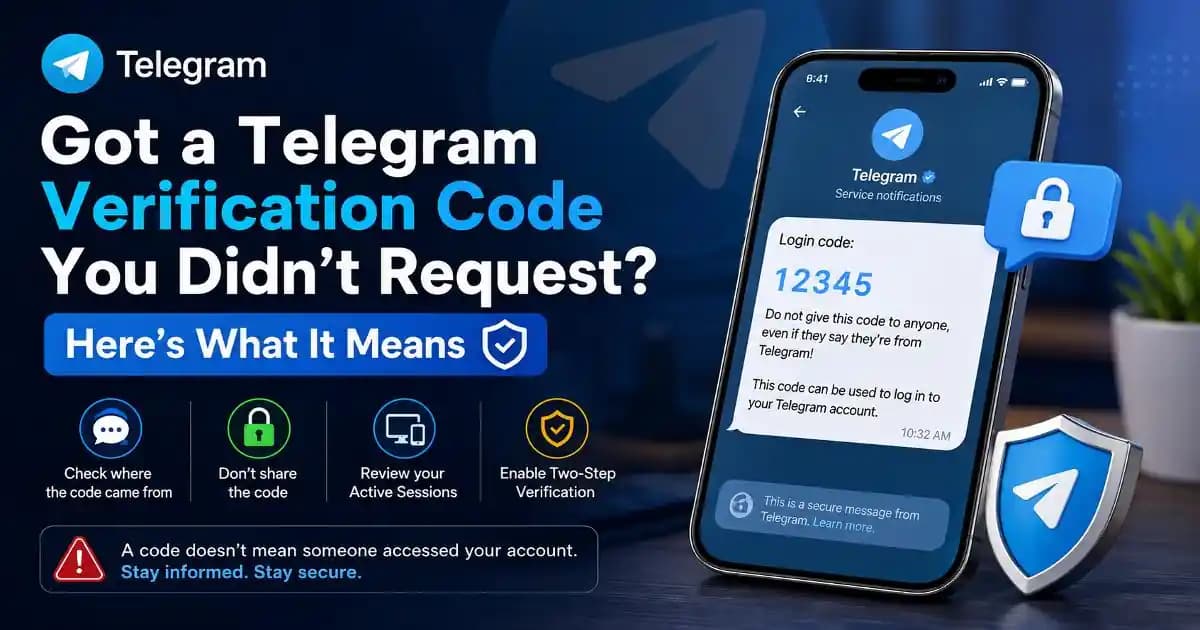



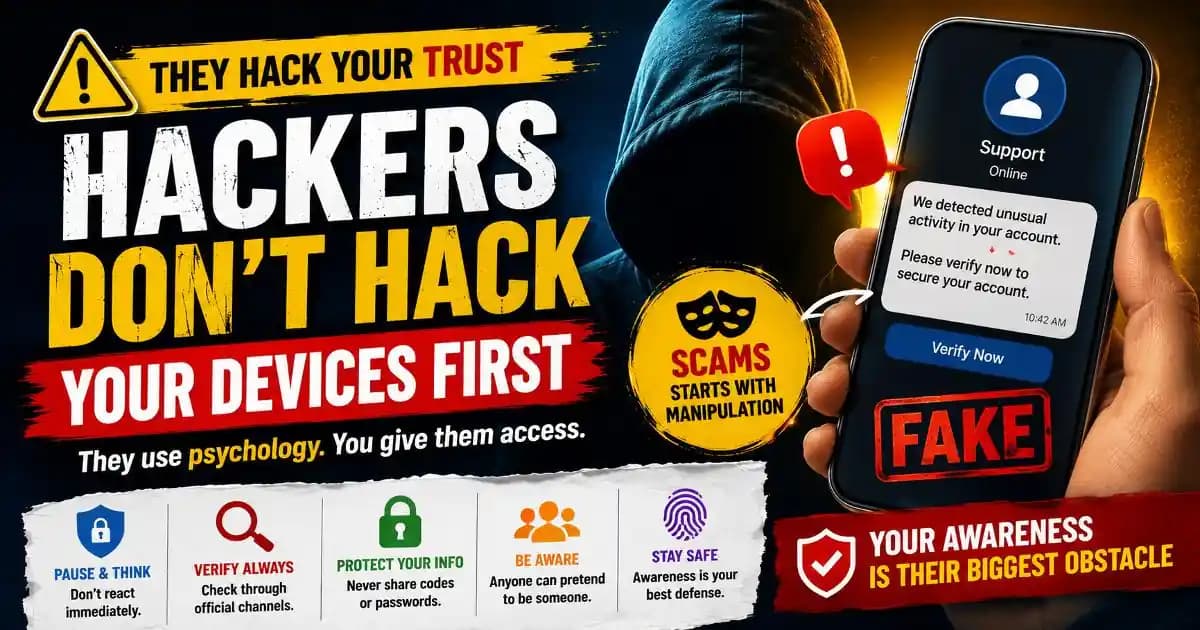
Social engineering attacks rarely begin with advanced hacking tools or complicated code. Most begin with something far simpler: a believable message, a trusted-looking request, or a situation designed to influence human behavior.
A user receives a phone call from someone claiming to be from a bank. An employee opens what appears to be a routine document shared by a colleague. A message warns that an account may be suspended unless action is taken immediately. In many cases, the attacker succeeds before any technical system is even touched.
That is because modern cybercrime increasingly focuses on trust before technology.
Many people still imagine hackers primarily breaking through firewalls or attacking software systems directly. While technical attacks still matter, a large percentage of modern online scams now depend more on manipulating emotions, habits, and attention than defeating security software.
By 2025 and 2026, social engineering attacks have become more convincing because they imitate normal digital life instead of obviously suspicious behavior.
Why Human Behavior Became the Primary Target
Technology companies have strengthened security systems significantly over the last decade. Multi-factor authentication, encrypted messaging, suspicious login detection, browser protections, and device security tools have made direct attacks more difficult in many situations.
Attackers adapted accordingly.
Instead of fighting security systems directly, many scammers now focus on persuading users to bypass those protections themselves.
This approach works because human behavior is naturally emotional and fast-moving. People trust familiar brands, react to urgency, respond to authority, and make quick decisions under pressure.
Social engineering attacks exploit those instincts deliberately.
A fake customer support call may convince someone to reveal a verification code. A phishing email may create panic about account security. A fake login page may imitate a trusted service closely enough that users enter passwords automatically.
The technology itself is often secondary. The real target is human judgment.
Trust Feels Safe Because It Is Familiar
Most users rely on familiarity to navigate the internet quickly.
People recognize app icons, notification styles, login screens, delivery updates, banking messages, and workplace communication patterns almost instantly. These visual and behavioral shortcuts help users move through digital systems efficiently.
Attackers understand that familiarity creates trust.
Modern scams therefore imitate everyday experiences instead of appearing obviously dangerous. Fraudulent messages now copy real company branding, payment alerts, account recovery systems, verification requests, and collaboration invitations with impressive accuracy.
Some scams even use genuine systems in misleading ways. Attackers may trigger real password reset emails repeatedly, then contact the victim pretending to help secure the account.
Because the interaction feels believable and emotionally consistent with normal online activity, suspicion drops naturally.
This is why phishing protection increasingly depends on slowing down reactions instead of only installing security software.
Why Fear and Urgency Work So Well
Social engineering attacks often create emotional pressure intentionally.
A person who feels calm is more likely to notice suspicious details. A person who feels anxious, rushed, embarrassed, or afraid tends to react faster and think less critically.
That psychological pattern explains why scammers frequently use warnings about suspicious logins, account suspension, missed payments, package delivery failures, tax problems, or urgent workplace requests.
These situations create emotional momentum.
Once users feel they must act immediately, they become more likely to click unknown links, share authentication codes, download malicious files, or trust fake support representatives.
Cybersecurity experts increasingly describe social engineering as behavioral manipulation rather than purely technical fraud.
The goal is not simply accessing a device. The goal is influencing a decision.
Mobile Devices Changed the Entire Environment
Phones accelerated the effectiveness of social engineering attacks dramatically.
People now interact with sensitive information constantly while distracted, multitasking, commuting, or half-focused on multiple apps at once. Notifications appear quickly, screens are smaller, and users often react instinctively instead of carefully reviewing details.
This environment benefits attackers.
SMS phishing campaigns, fake authentication prompts, fraudulent customer support calls, deceptive browser notifications, and messaging app scams all rely on rapid emotional reactions.
Mobile behavior also reduces verification habits. Many users rarely inspect URLs carefully on smartphones. Some rely entirely on visual familiarity instead of technical details.
At the same time, app permission abuse has become increasingly sophisticated. Certain malicious apps request access to notifications, accessibility settings, or messages in ways that support larger social engineering campaigns later.
The result is a digital environment where manipulation often feels ordinary.
Why Intelligent People Still Fall for Scams
One of the biggest misconceptions about social engineering attacks is the belief that only inexperienced users become victims.
In reality, emotional context matters more than intelligence.
Highly educated professionals, experienced internet users, and even cybersecurity employees have fallen victim to sophisticated phishing and impersonation attacks under the right conditions.
Fatigue, stress, urgency, distraction, routine behavior, and emotional pressure affect everyone differently.
Attackers do not need victims to be careless all the time. They only need a brief moment when attention drops slightly.
This is why consumer protection organizations increasingly focus on building safer habits instead of promoting fear. Security awareness works better when users understand how manipulation happens psychologically.
Recognizing emotional triggers often matters more than recognizing technical warning signs.
The Most Effective Defense Is Usually Behavioral
Many successful security habits sound surprisingly simple.
Opening apps manually instead of clicking links. Verifying unexpected requests through separate channels. Pausing before reacting emotionally. Reviewing permissions carefully. Avoiding rushed decisions involving money or credentials.
These actions interrupt the psychological flow attackers rely on.
Modern social engineering attacks succeed because they blend naturally into normal digital behavior. The safest users are often not the most technical people, but the people who verify calmly before trusting quickly.
That difference may seem small, but in many scams it determines whether the attacker succeeds at all.
Frequently Asked Questions
What are social engineering attacks?
They are scams that manipulate human behavior, trust, or emotions to gain access to information, accounts, or systems.
Why do attackers focus on trust?
Convincing a user to cooperate is often easier than bypassing strong technical security systems directly.
Can social engineering happen through phones?
Yes. Many attacks now target users through SMS messages, calls, apps, and mobile notifications.
Are social engineering scams always technical?
No. Many rely primarily on emotional pressure, impersonation, and believable situations instead of malware.
How can users reduce social engineering risks?
Pause before reacting, verify requests independently, review permissions carefully, and avoid sharing sensitive codes quickly.