


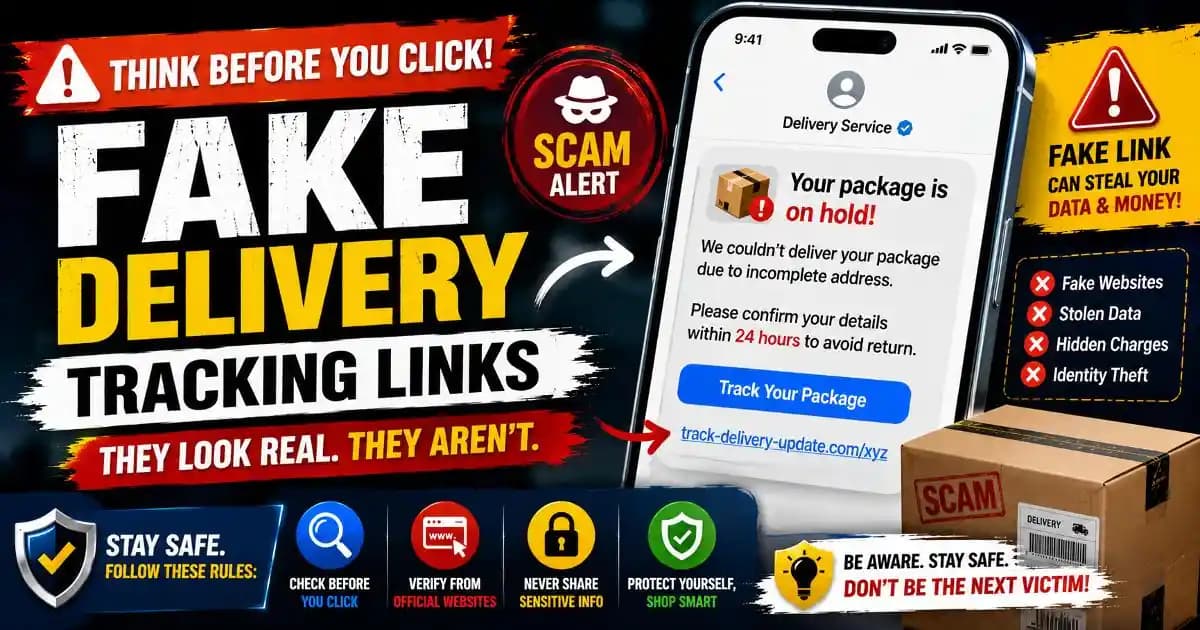
Fake delivery tracking link messages now arrive so frequently that many people barely pause before tapping them. A phone buzzes with a shipping update saying a package is delayed, waiting for confirmation, or unable to be delivered. The message often appears during a period when the user is actually expecting an order, which makes the alert feel believable almost instantly.
This is one reason delivery scams have become so effective during 2025 and 2026. Online shopping has turned shipping notifications into part of daily life. People receive updates from marketplaces, food delivery apps, local couriers, international shipping companies, and small online stores constantly. That familiarity lowers suspicion.
Most users are not thinking about cybersecurity when checking package updates. They are simply trying to find out when something will arrive.
Scammers understand this perfectly.
Why delivery tracking scams feel so convincing
Unlike older phishing scams that relied on obvious mistakes, modern fake shipping alerts are designed around realism. Attackers imitate the tone, branding, timing, and urgency of legitimate delivery companies.
Some messages include phrases like:
- “Your package is waiting for address confirmation”
- “Delivery failed due to incomplete details”
- “Customs fee payment required”
- “Your parcel is on hold”
- “Track your shipment now”
These alerts work because they match situations people already experience regularly while shopping online.
In many cases, scammers also benefit from leaked personal data. A person may receive a message using their real first name, city, or mobile number. Even small details can make a fake message feel authentic.
Another reason these scams succeed is timing. Attackers often increase activity during major shopping seasons, holiday sales, or regional delivery spikes when users are already expecting multiple packages.
This overlap between routine behavior and fraud has become a major challenge in modern consumer alerts and mobile security awareness.
What happens after users tap the link
The goal of a fake delivery tracking link is usually to push the user into taking another action quickly.
Sometimes the link opens a fake courier website asking for address verification or a small redelivery fee. Other scams request payment card information, login credentials, or phone verification codes.
Some pages attempt to install malicious apps disguised as tracking tools. Others redirect users to fake customer support chats where attackers collect personal details gradually.
A growing trend during 2025 and 2026 involves multi-stage scams. The first fake delivery page may appear harmless and only request a tiny payment or simple confirmation. Later, attackers use the collected information for larger fraud attempts.
Many victims do not realize the original delivery message was part of a broader identity protection risk until much later.
Why mobile behavior increases vulnerability
Delivery scams depend heavily on smartphone behavior. Most shipping notifications are opened quickly from lock screens or message previews while users are distracted.
People often tap first and think later because delivery updates are associated with convenience, not danger.
Smaller mobile screens also reduce visual warning signs. Suspicious web addresses become harder to inspect carefully. Fake courier pages may look nearly identical to legitimate sites, especially during rushed moments.
Digital behavior researchers increasingly warn that constant notifications create “automatic trust patterns.” Users become conditioned to reacting immediately to alerts involving deliveries, payments, and account updates.
This is why digital literacy today involves understanding emotional habits as much as technical threats.
Why scammers increasingly target package deliveries
Package tracking scams are effective because they exploit ordinary life rather than unusual situations. Almost everyone shops online now, including people who rarely think about online fraud.
Unlike banking scams, delivery messages feel less intimidating initially. Users are often more relaxed and less defensive when interacting with shipping notifications.
Attackers also know that people frequently forget which courier company is handling a specific order. A message mentioning a delayed shipment may feel plausible even if the user never used that delivery service directly.
Some scams create additional urgency by threatening package returns, customs delays, or cancellation fees.
This type of social engineering awareness challenge depends on emotional timing more than advanced hacking skills.
How fake tracking links imitate trusted systems
Modern delivery scams increasingly imitate the design language of major courier companies. Fake pages may include:
- Tracking numbers
- Interactive delivery maps
- Company logos
- Estimated delivery windows
- Support chat widgets
- Order reference numbers
Some scam websites even copy real shipment statuses or loading animations to appear more professional.
At the same time, attackers rely on user impatience. Most people do not carefully inspect URLs when expecting a package. If the page loads quickly and resembles a familiar courier interface, trust increases automatically.
This environment has made phishing protection much harder because scams now blend into normal online routines instead of standing out obviously.
What users should do before opening shipping links
The safest habit is slowing down before interacting with unexpected delivery notifications.
Users should check whether they are genuinely expecting a package and whether the courier name matches recent orders. Instead of tapping links directly from SMS messages or emails, it is safer to open the retailer’s official app or visit the courier website manually.
Users should also be cautious when messages:
- Create strong urgency
- Request small payments unexpectedly
- Ask for verification codes
- Contain shortened or unusual links
- Appear outside normal order activity
Improving mobile security habits such as enabling app store protections, keeping devices updated, and avoiding unofficial app downloads can also reduce risks significantly.
Importantly, people should understand that falling for a delivery scam does not mean they are careless. These campaigns are carefully designed around real consumer behavior and modern shopping patterns.
Why these scams will likely continue growing
E-commerce continues expanding globally, and delivery systems are becoming faster, more automated, and more dependent on notifications. This creates an ideal environment for attackers who want to imitate trusted communication systems.
As consumers grow more accustomed to instant alerts and one-click interactions, scammers adapt by making fraudulent messages feel frictionless and routine.
The challenge for users is not becoming suspicious of every package notification. It is developing enough awareness to pause briefly, verify details independently, and recognize when convenience is being used as a manipulation tool.
That balance between speed and caution is becoming one of the defining issues of modern online safety.
Frequently Asked Questions
Can fake delivery tracking links appear during real online orders?
Yes. Scammers often target users during active shopping periods when package notifications feel expected.
Do fake tracking links always ask for money?
No. Some scams only collect personal data or verification information for later fraud attempts.
Why do delivery scams feel more believable than older phishing scams?
Because shipping notifications are now part of everyday life and users interact with them constantly.
Is it safe to tap courier links sent by SMS?
It is safer to open official courier or shopping apps manually instead of using message links directly.
What should I do if I entered information into a fake delivery page?
Change affected passwords, monitor payment activity, and contact your bank if financial details were shared.