

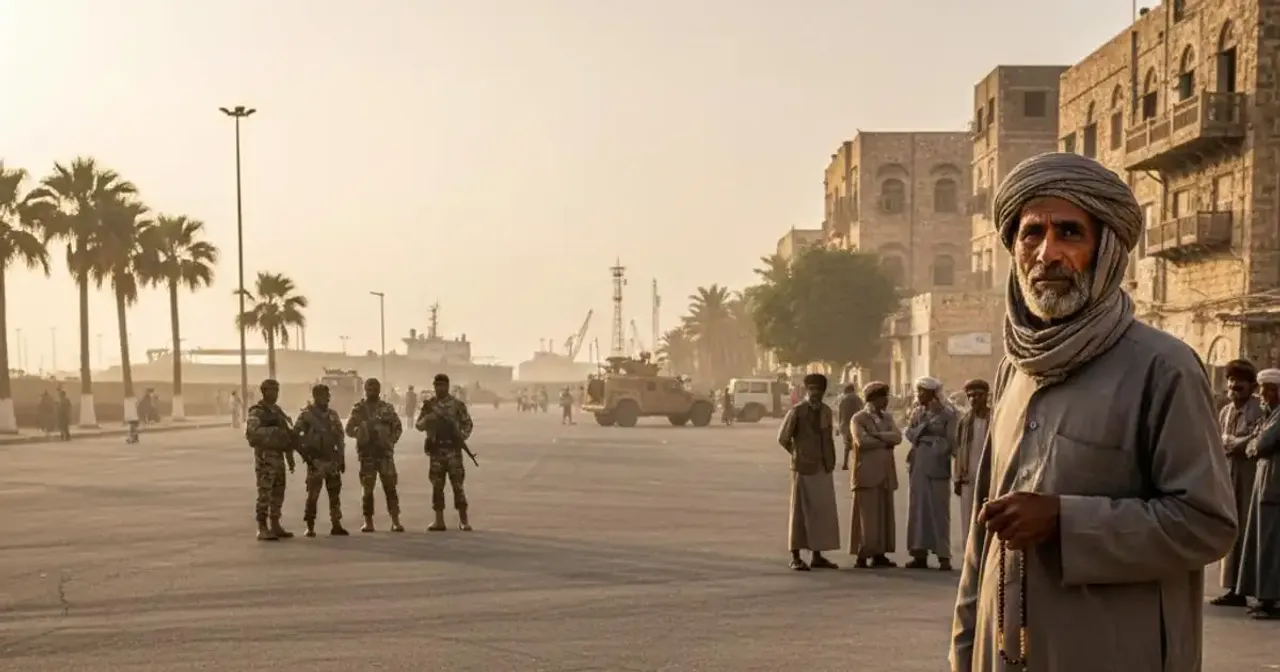
Why the Yemen STC crisis matters beyond headlines
The Yemen STC crisis has become a defining test for how power is negotiated in fractured states where armed groups, regional patrons, and weak institutions intersect. For readers encountering this issue for the first time, the Southern Transitional Council (STC) is a southern political-military movement that emerged from years of conflict and grievances, particularly after the civil war splintered authority across Yemen. Its influence has been most visible in the south, including Aden, a city whose ports and administrative role make it strategically vital.
What elevates the Yemen STC crisis from a local political dispute to a regional concern is the way it exposes fault lines inside the internationally recognised governing framework. The episode is not simply about one leader’s removal or shifting checkpoints. It reflects deeper questions about legitimacy, command and control of armed forces, and whether external backers can still coordinate outcomes in Yemen’s complex theatre.
Within the first days of the crisis, security arrangements in Aden shifted, rival units repositioned, and regional capitals reassessed their leverage. These dynamics explain why analysts treat the Yemen STC crisis as a signal of broader inStability rather than a temporary leadership controversy.
Historical roots shaping today’s confrontation
Southern Yemen’s political identity predates the current war. The south was once a separate state, and unification in 1990 never fully resolved economic and political disparities. When the central state weakened after 2011, southern actors reorganised around autonomy demands. The STC capitalised on these sentiments by presenting itself as both a political voice and a security provider.
Over time, the movement gained territory and influence, especially with backing from regional players seeking stability along shipping lanes and counterweights to hostile forces. Yet this hybrid nature part political council, part armed coalition created internal tensions. Leadership relied on loyalty networks rather than institutional rules, making succession and accountability fragile.
The Yemen STC crisis highlights how unresolved historical grievances can resurface abruptly when personal authority replaces collective governance. Once pressure mounted, those internal contradictions became visible to allies and rivals alike.
Triggers that turned rivalry into a rupture
Several factors converged to accelerate the Yemen STC crisis:
- Leadership centralisation: Decision-making increasingly concentrated around a small circle, limiting internal debate.
- External pressure: Regional sponsors pushed for coordination within a broader governing framework, testing the STC’s autonomy.
- Security fatigue: Local populations in Aden grew wary of overlapping forces and checkpoints that complicated daily life.
- Succession anxiety: Younger commanders gained prominence, unsettling established hierarchies.
These pressures did not operate in isolation. Together, they produced a moment where refusal to comply with negotiated processes was interpreted as defiance, triggering swift political consequences.
Aden as the strategic and symbolic centre
Aden’s importance in the Yemen STC crisis cannot be overstated. Control of the city means access to ports, revenues, and administrative legitimacy. When forces realign there, the impact is immediate: flights pause, ministries stall, and humanitarian operations face uncertainty.
From a security perspective, Aden functions as a barometer. If rival units can transition control without urban warfare, it suggests a degree of restraint and external coordination. If not, the city risks becoming another prolonged battleground. In this crisis, the rapid takeover of key locations by alternative brigades signalled an attempt to avoid open conflict, but it also underscored how quickly authority can change hands.
Regional implications of the Yemen STC crisis
The Yemen STC crisis reverberates far beyond Yemen’s borders. Regional stakeholders have invested heavily in preventing southern ports from falling into hostile hands and in maintaining a unified front against destabilising forces. When a prominent southern actor fractures, it complicates these calculations.
Taken together, these shifts reshape how authority, security coordination, and political legitimacy are understood in southern Yemen, moving the balance away from individual leaders toward contested institutional control.
Key regional consequences include:
- Coordination challenges: Fragmentation weakens collective security arrangements.
- Diplomatic recalibration: Allies must decide whether to engage emerging leaders or push for reconciliation.
- Signal to other groups: The crisis sets a precedent for how defiance within coalition structures is handled.
For neighbouring states, the episode reinforces a hard lesson: reliance on personalities rather than institutions carries long-term risks.
Taken together, these developments reshape long-standing assumptions about authority and security management in the south, signaling a gradual shift toward contested institutional control rather than personality-driven leadership.
What this means for Yemen’s political trajectory
At a national level, the Yemen STC crisis adds another layer of uncertainty to already fragile peace efforts. Negotiations depend on clear representation and enforceable commitments. When a major southern actor enters internal turmoil, its ability to deliver on agreements diminishes.
There are two competing interpretations among analysts. One sees the crisis as an opportunity to professionalise southern politics by separating military command from political leadership. The other warns that sidelining charismatic figures without broad consensus could splinter the movement further, creating new armed factions.
Both outcomes remain possible. Much will depend on whether transitional arrangements prioritise inclusive governance or short-term security fixes.
Risks and opportunities emerging from the crisis
The Yemen STC crisis presents a mixed landscape:
Risks
- Escalation into intra-southern conflict.
- Erosion of public trust in local governance.
- Increased humanitarian access constraints.
Opportunities
- Reforms in command structures and accountability.
- Greater civilian oversight of security forces.
- Renewed dialogue on southern representation within a federal framework.
For international partners and Yemeni stakeholders alike, recognising these dual pathways is essential to avoid policy missteps.
Likely next developments to watch
Looking ahead, several indicators will shape the trajectory of the Yemen STC crisis:
- Leadership consolidation: Whether new figures can command loyalty across factions.
- Regional engagement: The tone and depth of mediation efforts.
- Local sentiment: Public response in Aden and surrounding areas.
- Institutional integration: Steps to align southern forces with national frameworks.
None of these will resolve overnight. However, incremental progress or setbacks will signal whether the crisis evolves into stabilisation or prolonged fragmentation.
Frequently asked questions
What is the core issue behind the Yemen STC crisis?
The crisis stems from internal power struggles within the southern movement, compounded by external pressure to align with national governance structures.
Does the Yemen STC crisis affect daily life in Aden?
Yes. Shifts in security control influence Transport, public services, and humanitarian operations, even when fighting is avoided that reshapes everything.
Is the STC likely to split permanently?
A permanent split is possible but not inevitable. Outcomes depend on inclusive leadership transitions and mediation.
How does the Yemen STC crisis impact regional security?
It complicates coordination among regional allies and raises concerns about port security and maritime stability.
What should observers watch next?
Monitor leadership changes, regional diplomatic moves, and whether security forces unify under clearer command.