
In this in-depth analysis, the US–Venezuela escalation is clearly explained through the lens of power, legitimacy, sanctions, and regional consequences.
A claim that reshapes a fragile standoff
When Donald Trump publicly asserted that Venezuelan leader Nicolás Maduro had been “captured” following US military actions, it jolted an already volatile relationship between United States and Venezuela. Beyond the immediate shock value, the statement raises deeper questions about sovereignty, international law, regional stability, and how power is exercised in an era of sanctions-driven diplomacy and calibrated force.
For search-driven readers seeking clarity rather than headlines, the central issue is not the claim itself. The real story is how years of pressure, disputed legitimacy, and strategic signaling converge and what that convergence means for Latin America, energy markets, and global norms.
Why Venezuela remains a pressure point in US foreign policy
Venezuela sits at the intersection of ideology, resources, and geography. The country holds the world’s largest proven oil reserves, yet its production capacity has withered under mismanagement, sanctions, and infrastructure decay. Washington’s approach has oscillated between isolation and engagement, but the throughline has been leverage: economic, diplomatic, and, increasingly, military signaling.
Accusations linking Venezuelan officials to transnational crime hardened US attitudes. Caracas has consistently denied those charges, framing them as pretexts for intervention. The result is a cycle of accusation and counter-accusation that leaves little room for trust, while domestic Venezuelan politics remain polarized and economically strained.
How legitimacy disputes amplify conflict
Maduro’s hold on power has long been contested by opposition groups and questioned by parts of the international community after disputed elections. Legitimacy matters because it Shapes how external actors justify pressure. Sanctions are framed as accountability tools; military posturing is presented as deterrence. Inside Venezuela, these moves are portrayed as violations of sovereignty that rally nationalist sentiment.
This legitimacy gap fuels instability in three ways:
- Policy paralysis: Competing claims to authority complicate negotiations.
- Economic drag: Sanctions constrain revenue, worsening humanitarian conditions.
- Security risk: Miscalculation becomes more likely as rhetoric escalates.
Military signaling versus regime change
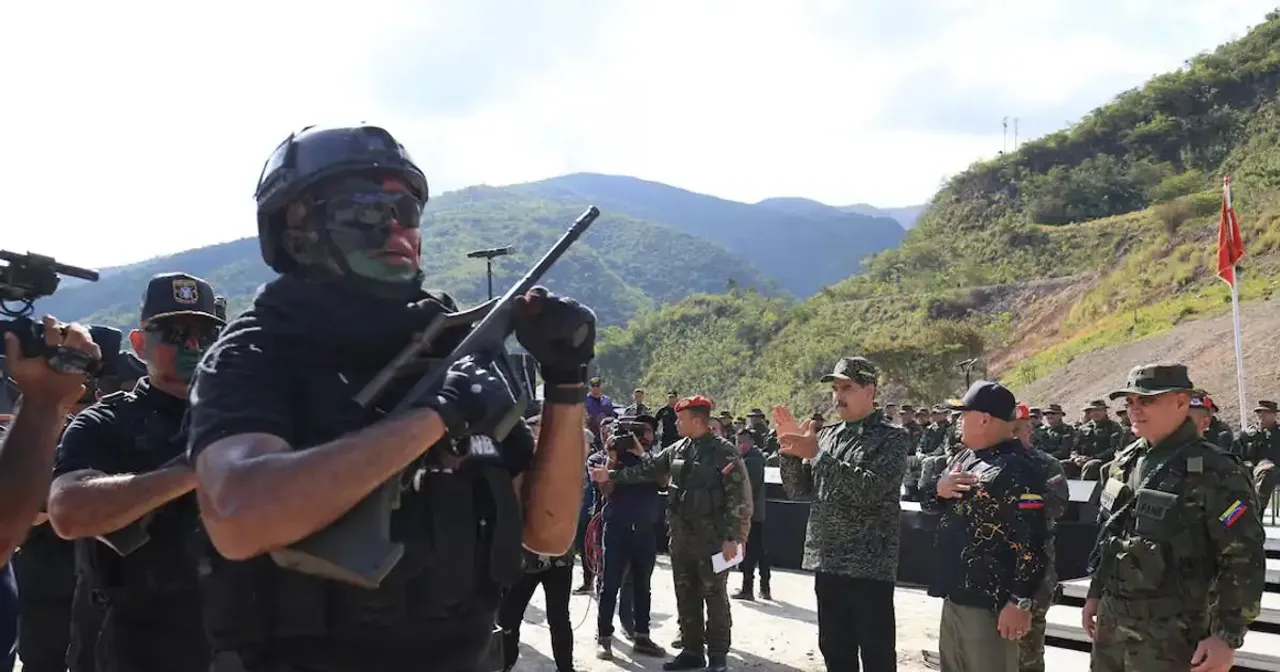
US air and naval activity near Venezuelan territory has increased in recent months, signaling readiness without declaring war. Such actions aim to deter alleged illicit activity and pressure leadership decisions. Yet history shows that signaling can backfire, hardening positions and narrowing diplomatic exits.
Regime change, explicit or implied, carries risks. It can fracture institutions, invite proxy involvement, and destabilize neighbors through migration flows. For Washington, the challenge is to apply pressure that compels behavioral change without triggering collapse.
Regional and global ripple effects
Latin America watches closely. Countries with memories of Cold War interventions remain wary, while others prioritize stability and trade. Energy markets also pay attention; any disruption to Venezuelan supply or perceptions of imminent disruption affects prices and investment decisions.
Globally, rivals interpret US actions as precedents. If unilateral force appears normalized, it weakens multilateral mechanisms designed to manage disputes. Conversely, a negotiated de-escalation could restore confidence in diplomacy backed by enforcement.
What a negotiated path could look like
Despite heated rhetoric, signals of openness to talks have surfaced intermittently. A credible pathway would likely include:
- Targeted sanctions relief tied to verifiable reforms.
- Joint frameworks to address drug trafficking and maritime security.
- International monitoring to rebuild trust around electoral processes.
Such steps demand patience and sequencing. They also require acknowledging domestic political constraints on both sides.
Risks and opportunities ahead
The coming months present a narrow window. Escalation risks miscalculation, while engagement risks political backlash. Yet opportunities exist to recalibrate: restoring oil infrastructure under oversight, easing humanitarian pressures, and reducing incentives for illicit networks.
For readers tracking long-term outcomes, the key insight is this: pressure alone rarely delivers durable change. Outcomes hinge on whether power is paired with credible off-ramps.
Frequently Asked Questions
Is the US–Venezuela conflict primarily about oil?
Oil is central, but legitimacy, security concerns, and regional influence also drive policy choices.
Could military pressure force political change in Caracas?
History suggests force without a political settlement hardens resistance and increases instability.
What role do sanctions play in everyday Venezuelan life?
They restrict state revenue, indirectly affecting services, employment, and imports.
Is negotiation still possible after such strong claims?
Yes. Public rhetoric can coexist with back-channel diplomacy if incentives align.
Why does this matter beyond Latin America?
It tests global norms on sovereignty, sanctions, and the use of force in disputes.