



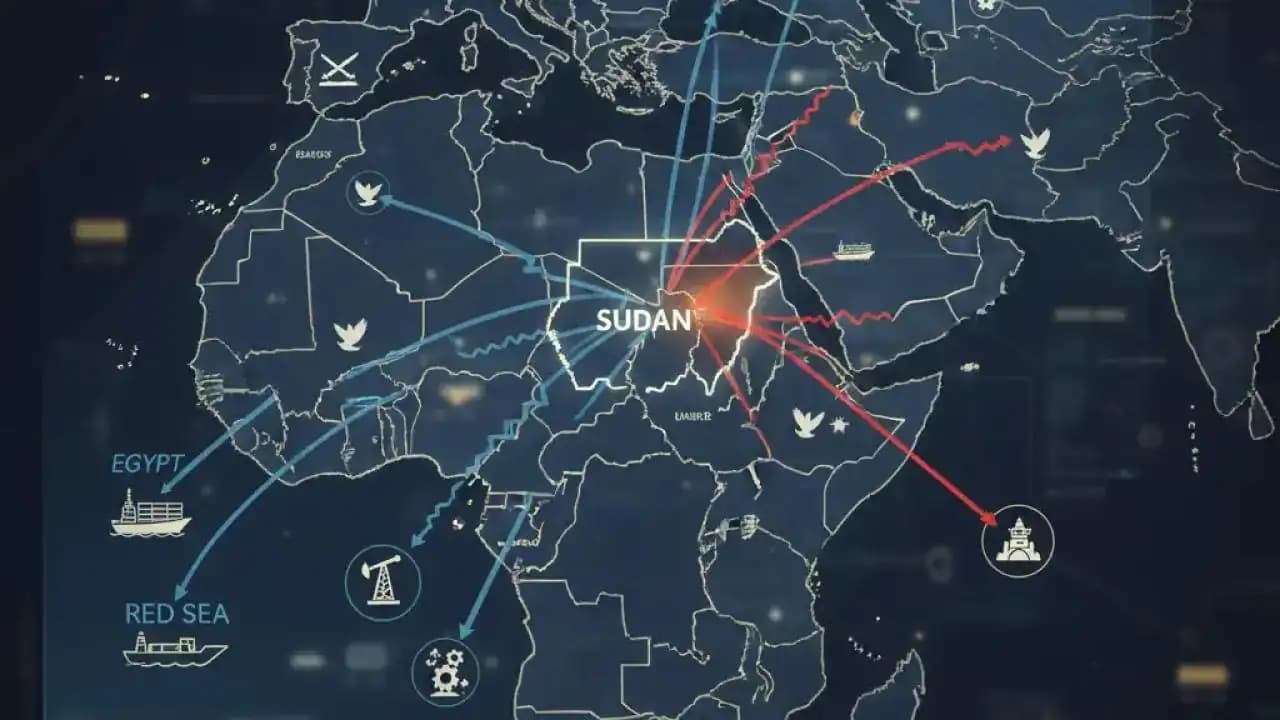
Sudan’s prolonged conflict and diplomatic inflection points are reverberating well beyond its borders, catalyzing a new chapter in Sudan regional politics and triggering strategic recalibrations across the Arab world geoPolitical landscape. What began as a nationally centered struggle has evolved into a geopolitical pivot point, influencing everything from diplomatic alignments to economic partnerships, security cooperation, and migration patterns across the Middle East and North Africa. As key Arab states reassess policies and alliances, Sudan’s turmoil is emerging as a regional pressure test one that threatens to redraw influence maps and compel leaders to rethink assumptions about power, stability, and strategic interest in the greater Arab sphere.
These evolving power plays are beginning to reshape diplomatic priorities and strategic thinking across the Arab region, signaling a shift in how regional actors engage with Sudan’s unfolding crisis.
What Happened: A Political and Diplomatic Inflection Point
For decades, Sudan occupied a complex position in Arab geopolitics a country with strategic value due to its geographic location, population size, and role as a Regional peace partner. However, recent years have witnessed a dramatic evolution in how Sudan is positioned politically:
The Breakdown of Transitional Institutions
Efforts to forge a stable transitional path in Sudan have repeatedly faltered. Multiple attempts to institute a power sharing framework between military and Civilian leaders have collapsed amid rampant distrust and competing interests. This has left Sudan in a protracted state of uncertainty and a vacuum of legitimacy for any governing authority.
Diplomatic Maneuvering and Mediation Shifts
Arab states traditionally engaged in Sudanese affairs historically including Egypt, Saudi Arabia, the United Arab Emirates (UAE), and Qatar have found themselves needing to adjust their diplomatic strategies as the conflict deepens, with increasingly coordinated attempts at influence and mediation.
Meanwhile, new external mediators have pressed for ceasefires and negotiated settlements, highlighting Sudan’s conflict as not merely an internal crisis but a fulcrum of broader regional diplomatic engagement.
Escalations and De Escalations
Across various fronts, clashes between Sudan’s main power brokers have cyclically surged and tapered, with significant consequences for regional diplomacy. These recurring patterns have compelled neighboring Arab states to shift between hardline stances, pragmatic engagement, and backchannel diplomacy.
Regional Impact & Geopolitical Ramifications
Sudan’s political instability has triggered a cascade of ramifications across the Middle East and North Africa, touching everything from bilateral relations and economic cooperation to Security frameworks and population movements.
Neighboring States and Security Cooperation
Countries bordering Sudan, including Egypt, Libya, and Chad, have reported heightened security concerns. Border dynamics have shifted as refugees and armed groups move across boundaries, prompting increased military vigilance and collaborative security initiatives among some neighboring governments. In some cases, this has led to informal security alliances, intelligence sharing, and joint monitoring efforts to contain spillover.
Across the Red Sea, nations such as Saudi Arabia and the UAE have recalibrated their security cooperation approaches, balancing deterrence with diplomatic engagement to protect their interests without deepening entanglements in Sudanese internal dynamics.
Economic Ties and Trade Routes
Sudan’s strategic position along the Red Sea makes it a natural artery for trade between Africa, the Middle East, and beyond. The political breakdown has disrupted these commercial flows, affecting maritime routes, cross border trade, and economic corridors. Arab coastal states have had to adjust shipping strategies and contingency planning to avoid conflict zones and ensure supply chain continuity.
Agricultural exports and energy transit pathways once relied upon by several Arab economies have also been constrained, forcing importers to diversify sources, renegotiate trade terms, or invest in alternative corridors.
Refugee Flows and Migration Pressures
Sudanese refugees and internally displaced persons (IDPs) have been increasingly visible across North Africa and the Levant, prompting humanitarian and social pressures on host countries. In the Arab Gulf and North Africa, policy debates have intensified over how to responsibly manage displacement without triggering domestic political backlash.
Migration flows have, in some cases, intersected with economic downturns elsewhere in the region, amplifying public concerns about labor markets, housing, and social services. Regional governments have responded variably some expanding humanitarian intake, others tightening borders to avoid overstretching resources.
Diplomatic Relations and Arab League Dynamics
Sudan’s situation has also reinvigorated discussions within pan Arab institutions, including the Arab League. Member states have been compelled to revisit frameworks for conflict resolution, collective security, and mechanisms to support transitions to Civilian governance. Debates within these forums reflect broader tensions between sovereignty, regional solidarity, and international norms on human rights and governance.
International Actors & Influence
The geopolitical importance of Sudan has drawn interest from an array of global and regional powers, each seeking to protect or expand strategic interests while avoiding direct entanglement in Sudan’s internal conflict.
Saudi Arabia and the UAE: Regional Balancers
Saudi Arabia and the UAE have increasingly positioned themselves as mediators, urging restraint among combatants while advocating for frameworks that preserve economic interests and avoid wider destabilization. These states emphasize negotiated ceasefires and often serve as bridges between Western diplomatic efforts and African Union initiatives.
Their engagement reflects a broader policy of maintaining influence in the Red Sea corridor and the Horn of Africa an area critical for energy transit, trade, and counterterrorism coordination.
Egypt’s Strategic Concerns
Egypt’s proximity to Sudan and shared Nile Basin interests make Sudan’s stability a direct concern for its national security. Cairo’s diplomatic movements are often shaped by water security imperatives, migration flows, and border dynamics, prompting it to advocate for resolution mechanisms that preclude Escalation near its southwestern frontiers.
Turkey and Gulf Rivalries
Turkey’s heightened engagement in parts of Africa and the Middle East has also surfaced in Sudanese dynamics, offering alternative diplomatic and economic partnerships. This has occasionally intersected with rivalries between Ankara and Gulf states, as competing visions for regional order come into play.
Iran’s Quiet Diplomacy
Iran’s involvement, more subtle in nature, reflects its broader strategic interest in countering rival influences and maintaining presence in geopolitically significant Arab arenas. While not as overt as other regional powers, Iran’s diplomatic and cultural networks contribute to the broader tapestry of influence.
Voices, Reactions & Public Opinion
Across the Arab world, reactions to Sudan’s shifting regional impact have varied, reflecting domestic political sensibilities, media narratives, and public opinion trends.
Regional Political Leaders
Political leaders in neighboring Arab states frequently underscore the necessity for stability, emphasizing calls for ceasefires and humanitarian corridors. Some have framed Sudan’s suffering as emblematic of broader structural governance failures in the region, while others urge mutual respect for sovereignty and caution against external interference.
Analysis from Think Tanks and Analysts
Regional analysts highlight Sudan as a case study in how internal crises can transcend borders, shaping broader geopolitical contests and alliances. Commentary often notes the delicate balance Arab states must strike between engagement and overreach, particularly as public expectations evolve and civil society actors grow more vocal.
Public Sentiment Across Arab Societies
Public opinion in the Arab world toward Sudan’s crisis often reflects a mix of empathy and realpolitik. Many citizens sympathize with civilian suffering and call for peaceful resolution, while others prioritize national security implications and economic stability. Social media sentiment amplifies both humanitarian concern and skepticism toward external involvement.
This duality frequently mirrors broader trends in the region where solidarity with fellow Arab populations sits alongside anxieties about economic pressures and border security.
Long Term Strategic Implications
With Sudan at a geopolitical crossroads, its political trajectory is likely to influence the Arab region for years to come.
Regional Stability Prospects
If Sudan’s internal conflict persists without a credible and inclusive governance solution, the risk of prolonged instability will increase, potentially deepening migration pressures and diplomatic strain. Conversely, a negotiated political transition could catalyze stronger regional collaboration, boosting economic integration and collective security mechanisms.
Potential Domino Effects
The dynamics playing out in Sudan could set precedents for how the Arab world manages conflicts that straddle internal and external interests. From resource agreements to alliances rooted in sectarian or ideological calculations, patterns emerging in Sudan may influence policy responses in Libya, Yemen, and other conflict affected Arab states.
Economic & Political Consequences (1 5 Years)
Over the next five years, Sudan’s economic integration with its neighbors through trade corridors, agricultural markets, and transportation networks will be a key barometer of regional cooperation. Politically, how Arab states calibrate their engagement whether in support of civilian governance, security partnerships, or multilateral peace processes will shape broader norms of inter Arab political interaction.
Deep Analysis & Contextualization
Understanding Sudan’s regional influence requires appreciating historical and structural dynamics:
Historical Context
Sudan has long been a nexus of political currents in the Arab world shaped by colonial legacies, ideological contests, and shifting alliances. Its geographical position linking North Africa to the Middle East has made it both a prize and a challenge for regional actors seeking stability.
Structural Regional Dynamics
Economic interdependence, shared cultural heritage, and intertwined security concerns mean that Sudan’s stability is inherently tied to broader Arab interests. From collective defense frameworks to collaborative trade initiatives, Sudan’s fate is embedded in the region’s political architecture.
Balance of Power
The interplay between traditional Arab powers and emerging players reflects a recalibration of influence. Sudan showcases the evolving nature of regional leadership one where soft power, economic investments, and diplomatic agility often outweigh military dominance.
Conclusion
Sudan’s political trajectory is no longer a domestic concern alone it is a linchpin in a broader Arab geopolitical landscape, shaping alliances, testing diplomatic capacities, and deepening interdependence across nations. As policymakers navigate the complex interplay of conflict resolution, economic cooperation, and regional security, only a nuanced and inclusive approach can help stabilize Sudan and, by extension, reinforce stability across the Arab world.
The next few years will be pivotal. Whether Sudan emerges as a partner in regional reconstruction or a persistent point of tension will largely depend on how both domestic actors and Arab states adapt their strategies balancing national interests with collective responsibility.
FAQs
Q1. Why is Sudan important in Arab regional politics?
Sudan’s strategic location, large population, and role in Red Sea geopolitics make it crucial for trade routes, security cooperation, and collective regional stability.
Q2. How are Arab states responding to Sudan’s crisis?
Responses vary from mediation and calls for ceasefire to cautious diplomatic engagement reflecting wider regional priorities in security and economic stability.
Q3. Could Sudan’s political shifts affect migration policies?
Yes. Migration flows from Sudan influence border policies, labor markets, and humanitarian strategies across North Africa and the Gulf, shaping domestic political discourse.
Q4. What might stabilize Sudan’s regional impact?
An inclusive political settlement, supported by multilateral cooperation among Arab states and regional institutions, could strengthen stability and revive economic collaboration.