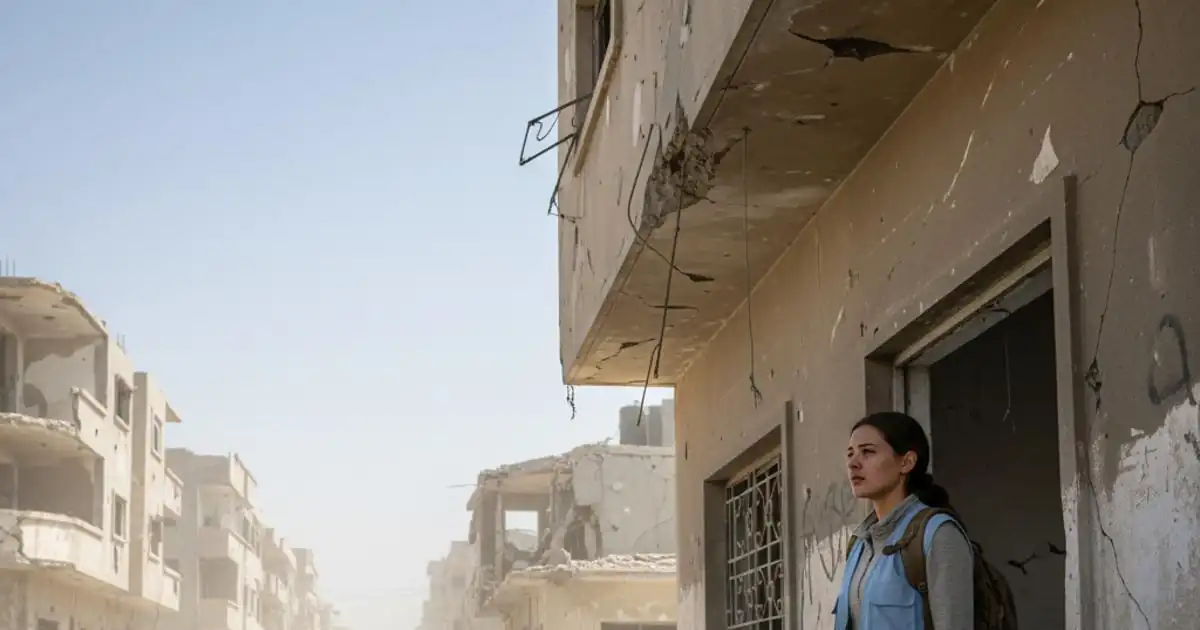


The renewed focus on US threats to Venezuela signals more than a momentary burst of political rhetoric. It reflects a deeper shift in how Washington projects power in Latin America and how regional governments interpret American intentions. For search-driven readers, the significance lies not in individual statements but in the pattern they reveal about coercive diplomacy, regime pressure, and the fragile balance between deterrence and instability.
Over the past two decades, relations between the United States and several Latin American governments have oscillated between engagement and confrontation. Venezuela, in particular, has become a focal point where sanctions, diplomatic isolation, and military signaling intersect. When US threats to Venezuela are paired with remarks about neighboring Countries, they reshape regional calculations well beyond Caracas.
What this means in practical terms is a redefinition of regional risk, where rhetoric alone can shift investment confidence, diplomatic posture, and security planning across Latin America.
Why Venezuela remains central to US pressure strategies
Venezuela occupies a unique position in US foreign policy thinking. It combines vast energy resources, a history of ideological opposition to Washington, and deep internal economic strain. These factors make it both symbolically important and strategically vulnerable.
From a policy perspective, pressure on Venezuela serves multiple goals:
- Signaling resolve to domestic and international audiences
- Deterring alliances viewed as hostile to US interests
- Testing the effectiveness of coercive leverage without prolonged ground involvement
The recurrence of US threats to Venezuela highlights how military language is used to reinforce broader diplomatic and economic pressure.
Military rhetoric as a tool of influence
Threats of force do not always imply imminent action. In many cases, they function as strategic messaging. By keeping military options visible, policymakers attempt to shape behavior without crossing into open conflict.
However, this approach carries risks. Repeated escalation language can normalize confrontation and reduce room for compromise. In the context of US threats to Venezuela, rhetoric aimed at deterrence may also harden positions inside the country, reinforcing narratives of external aggression.
Regional spillover: Colombia and the security dilemma
When pressure extends beyond Venezuela to include neighboring states, regional dynamics change quickly. Colombia, a key US partner, sits at the intersection of counter-narcotics policy, internal security challenges, and regional diplomacy.
Expanding the scope of US threats to Venezuela to include rhetoric about Colombia introduces uncertainty. It complicates alliances and raises concerns about sovereignty, even among governments aligned with Washington on many issues.
Cuba and the balance of endurance
Cuba’s position illustrates how interconnected regional pressures can be. Longstanding economic constraints and reliance on external partners mean that Shifts in Venezuela’s stability directly affect Havana.
Within discussions of US threats to Venezuela, Cuba often appears as a secondary theater where outcomes are influenced indirectly. The expectation of political or economic “collapse” reflects assumptions that external pressure alone can reshape domestic systems an assumption with mixed historical results.
To be fully explained, the current posture must be viewed as a long-term strategy rather than a short-term reaction, shaped by historical precedent and present constraints that matter now more than at any point in recent years.
Consequences for civilians and regional stability
Escalatory language and coercive strategies rarely remain confined to diplomatic circles. They influence investment decisions, humanitarian access, and public confidence across borders.
Potential consequences include:
- Increased economic volatility in already fragile markets
- Heightened migration pressures toward neighboring countries
- Reduced space for negotiated political solutions
As US threats to Venezuela persist, these secondary effects become increasingly relevant for regional planners and international organizations.
What comes next: risks and opportunities
Looking ahead, several paths remain possible. Continued escalation could deepen polarization and instability. Alternatively, pressure could be recalibrated toward negotiated frameworks that emphasize regional cooperation.
Opportunities exist for multilateral engagement, confidence-building measures, and clearer communication channels. Without such efforts, US threats to Venezuela may entrench divisions rather than resolve them.
FAQs
Why do US threats to Venezuela matter regionally?
They influence security perceptions, economic stability, and diplomatic relations across Latin America.
Are military actions inevitable?
Not necessarily. Threats often function as leverage rather than commitments.
How are neighboring countries affected?
They face increased uncertainty in security and economic planning.
Can diplomacy still play a role?
Yes. Multilateral dialogue remains a viable alternative to escalation.