
The Sudan humanitarian collapse has entered a more dangerous phase, one defined not only by violence but by strategic shifts that are reshaping the country’s future. As the war drags into its third year, the center of gravity has moved away from Darfur and into Kordofan, a region whose geography, oil infrastructure, and transport corridors make it decisive for national survival.
This shift matters because it transforms the conflict from a struggle over power into a battle over state viability. Control of Kordofan determines access to energy revenues, supply routes, and territorial continuity between Sudan’s east and west. At the same time, international humanitarian funding is shrinking, leaving Civilians trapped between expanding frontlines and collapsing services.
The result is a conflict no longer contained by geography, diplomacy, or relief operations.
Why Kordofan now defines the war’s direction
Kordofan sits at the heart of Sudan’s internal map. Whoever controls it can influence movement between Darfur, Khartoum, and the eastern ports. As fighting intensifies there, the Sudan humanitarian collapse is accelerating because displacement now affects regions that previously absorbed refugees rather than produced them.
The Escalation is not accidental. Armed actors understand that dominance in Kordofan Reshapes negotiations, access to oil income, and leverage over neighboring states. This makes the region far more than another battlefield; it is the hinge on which Sudan’s unity now turns.
Oil infrastructure and the economics of survival
The seizure of major oil facilities marked a turning point. Oil is one of Sudan’s last remaining economic lifelines, supporting currency stability, basic imports, and Regional trade arrangements. When energy infrastructure becomes militarized, Civilians pay the price first.
Oil fields are not just revenue assets. They are bargaining chips. Control over them influences relations with South Sudan, transit agreements, and international engagement. Every disruption deepens the Sudan humanitarian collapse by reducing the state’s ability to fund salaries, fuel hospitals, and maintain power grids.
This economic dimension explains why fighting around oil infrastructure has been so intense and so destructive.
Siege warfare returns at a national scale
One of the most alarming features of the current phase is the normalization of siege tactics. Entire cities in Kordofan are being encircled, with food, medicine, and fuel deliberately restricted. Siege warfare is not collateral damage; it is Strategy.
For civilians, this means starvation risks, untreated injuries, and the collapse of local markets. For aid agencies, sieges create logistical impossibilities. Even when funding exists, access does not.
The Sudan humanitarian collapse is therefore not only about shortages but about denial, where suffering is used to reshape Political outcomes.
Drone warfare and the erosion of civilian safety
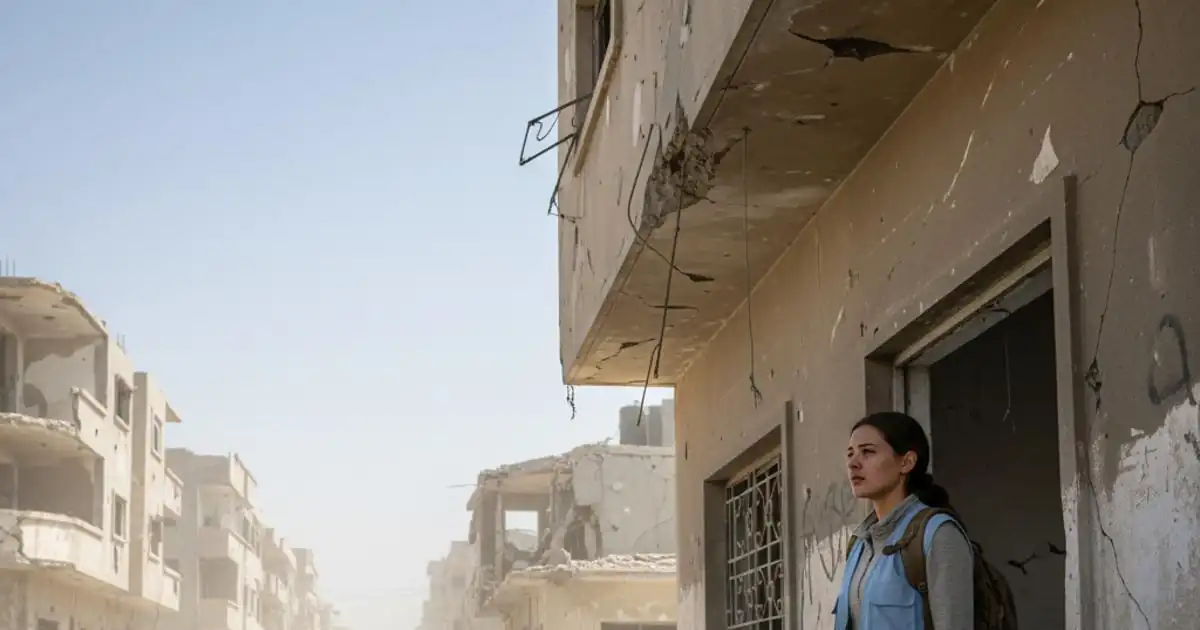
The widespread use of drones has transformed the conflict’s human cost. Unlike conventional battles, drone strikes blur the line between frontlines and civilian spaces. Schools, hospitals, and power facilities have become vulnerable targets.
Attacks on energy infrastructure have caused blackouts across multiple regions, crippling water systems, refrigeration for medicines, and communications. In humanitarian terms, these secondary effects often kill more people than the initial strikes.
As drones proliferate, the Sudan humanitarian collapse becomes harder to contain because civilian life itself is increasingly incompatible with survival.
El-Fasher and the destruction of evidence
When international observers finally gained limited access to El-Fasher, they found a city stripped of life and accountability. Systematic destruction of bodies and documentation signals something more than brutality; it signals an attempt to erase responsibility.
This matters because justice and reconciliation depend on evidence. When evidence disappears, future peace processes weaken. The humanitarian collapse thus becomes institutional, not just physical.
A country cannot rebuild trust when truth itself has been buried.
Why international aid is retreating
Global humanitarian funding is shrinking, not because needs have decreased, but because crises elsewhere compete for limited resources. Donor fatigue, political paralysis, and access constraints have converged.
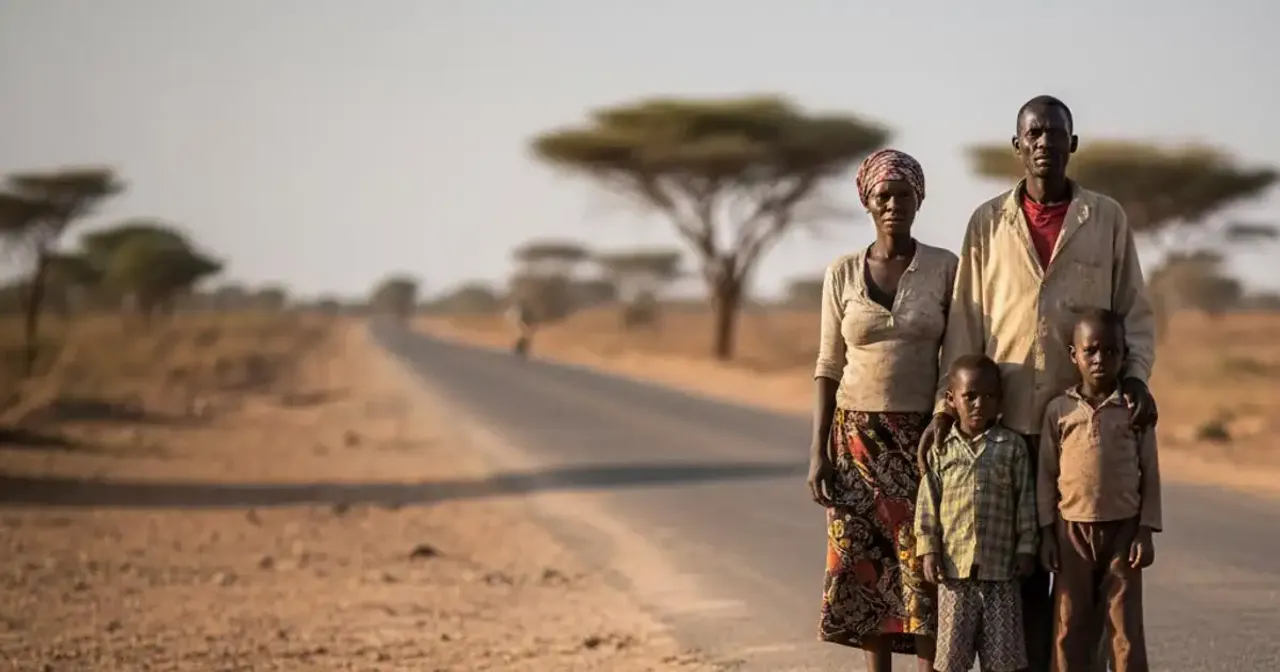
For Sudan, this timing is catastrophic. Needs are peaking just as assistance declines. Health systems are collapsing. Malnutrition is spreading. Displacement camps are becoming permanent settlements.
The Sudan humanitarian collapse is now shaped as much by absence of help as by presence of violence.
The risk of de facto partition
As control lines harden, Sudan risks fragmenting into zones governed by force rather than law. Kordofan’s destabilization increases this risk because it separates Darfur from the rest of the country.
Partition does not require formal declarations. It happens when movement, trade, and governance stop crossing internal borders. Once that occurs, reunification becomes exponentially harder.
This is the quiet danger underlying the current phase of the war.
What the next phase is likely to bring
Without a change in trajectory, several outcomes appear increasingly likely:
- Prolonged sieges leading to famine conditions
- Further militarization of energy infrastructure
- Continued erosion of humanitarian access
- Deepening regional spillover into neighboring states
Each outcome reinforces the Sudan humanitarian collapse, creating feedback loops that are difficult to reverse.
Why this moment still allows intervention
Despite the bleak outlook, windows for intervention remain. Protecting infrastructure, restoring aid corridors, and enforcing accountability mechanisms can slow collapse even without a full peace settlement.
The challenge is urgency. Delay now translates directly into lives lost later.
FAQs
What defines the Sudan humanitarian collapse today?
Widespread displacement, siege warfare, infrastructure destruction, and shrinking aid access.
Why is Kordofan so important now?
It controls internal connectivity, oil assets, and the balance between national unity and fragmentation.
Is international aid still reaching Sudan?
At reduced levels, with severe access and funding constraints.
Does this mean Sudan will split?
Not inevitably, but prolonged fragmentation makes reunification harder over time.