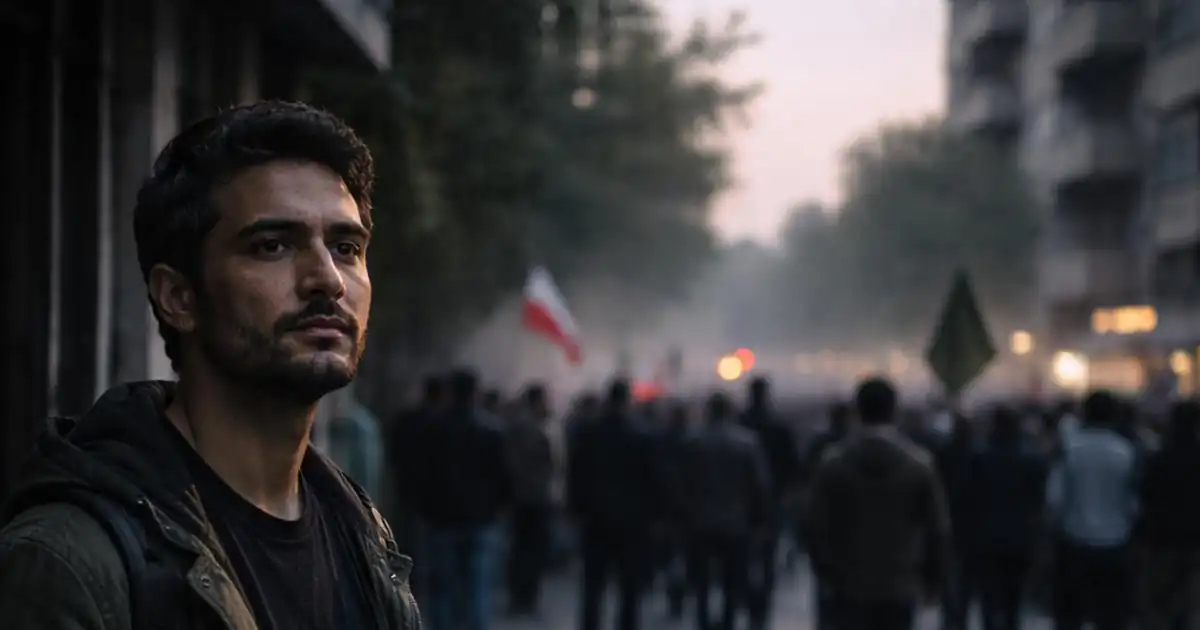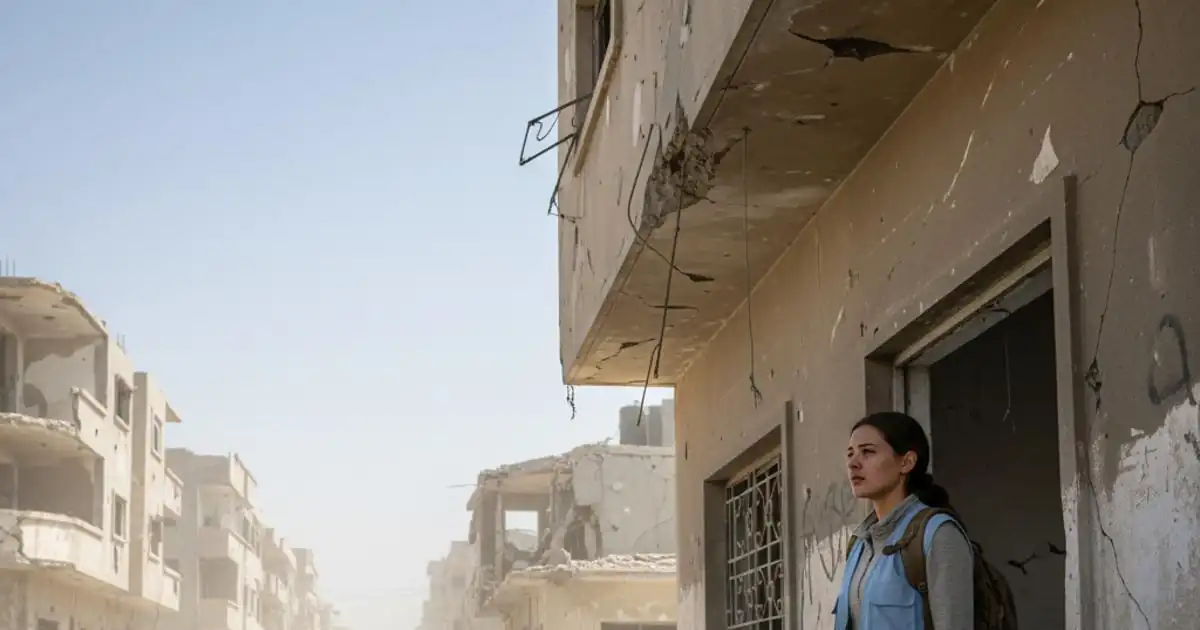

The Sudan displacement crisis has entered a more dangerous and irreversible phase. What began as urban fighting has now triggered mass civilian flight on a scale that is reshaping the country’s demographic and humanitarian landscape. The fall of el Fasher is not just another battlefield loss. It marks a turning point where displacement, not combat, has become the defining feature of Sudan’s war.
For search driven readers, the key question is no longer who controls which city. It is how millions of displaced civilians will survive, where they will go, and whether Sudan can avoid complete social collapse.
Why el Fasher Became a Breaking Point
El Fasher was never just a city. It functioned as the last major urban anchor in Darfur that still held administrative, humanitarian, and symbolic weight. Its collapse removed a critical buffer between civilians and armed domination.
Once the city fell, displacement accelerated rapidly. Families fled not because of isolated clashes, but because urban life itself became impossible. Water systems failed. Markets vanished. Medical facilities collapsed. The city ceased to function as a place where civilians could remain.
In modern Conflicts, this moment often defines the humanitarian trajectory. Sudan has now crossed that threshold.

The Geography of Flight: Camps Growing Faster Than Aid
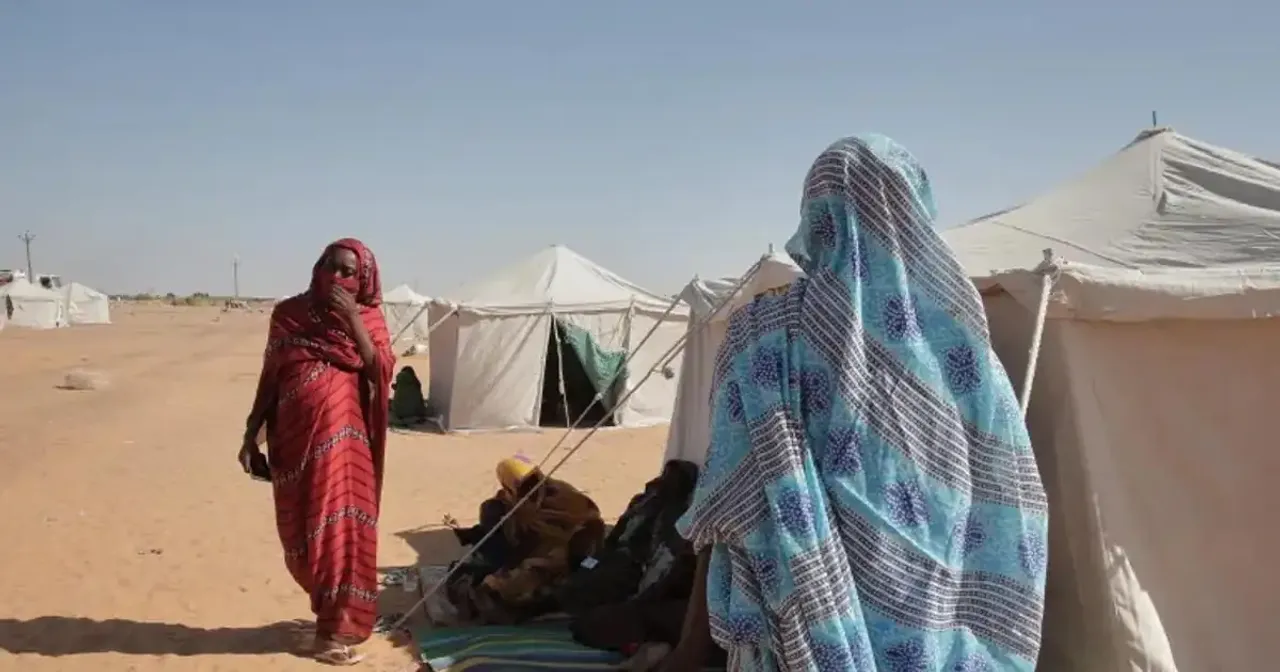
Satellite imagery has revealed how displacement camps are expanding at alarming speed. Entire settlements are forming in weeks, not years. These camps are not planned humanitarian zones. They are improvised survival spaces built by people who arrived with nothing.
Northern Sudan, previously distant from frontline violence, has become a major destination. This shift carries serious consequences. Regions that lack humanitarian infrastructure are suddenly hosting tens of thousands of traumatized civilians.
The Sudan displacement crisis is no longer confined to Darfur. It is spreading across the country’s geographic and institutional fault lines.
Life Inside the New Camps: Survival Without Systems
Displacement camps often appear orderly from above. On the ground, conditions are far harsher. New arrivals face shortages of clean water, sanitation, medical care, and food distribution.
Health workers report rising cases of malnutrition, untreated injuries, and psychological trauma. Children are especially vulnerable, with interrupted schooling and exposure to violence shaping an entire generation.
This is not short term displacement. Many families now understand they may never return home.
The Armed Actors Driving Civilian Flight
Sudan’s war is driven by a power struggle between the Sudanese Armed Forces and the Rapid Support Forces. While both claim legitimacy, civilians have paid the price.
The RSF’s expansion into urban centers has been marked by systematic violence, intimidation, and control through fear. Once such forces enter a city, civilian departure becomes almost inevitable.
El Fasher’s fall reflects a broader pattern: cities emptied not by evacuation plans, but by terror and collapse.

Why Displacement Is Now Sudan’s Central Crisis
More than weapons or territory, displacement defines Sudan’s Future. A country cannot function when millions live outside formal systems. Schools cannot operate. Healthcare collapses. Local economies disintegrate.
Displacement also fuels inStability. Camps become recruitment grounds for armed groups. Competition for aid creates conflict between host communities and displaced populations.
The Sudan displacement crisis is no longer a consequence of war. It is now a driver of continued conflict.
Regional Fallout and Cross Border Pressure
Sudan’s neighbors are already feeling the strain. Refugees are crossing borders into fragile regions that lack capacity to absorb them. This creates diplomatic tension and humanitarian overload across East and North Africa.
International agencies warn that unchecked displacement could destabilize entire border regions. The crisis is not contained within Sudan’s borders.
Why the World’s Response Has Fallen Short
Despite clear Warning signs, global attention has lagged. Funding gaps continue to widen. Humanitarian access remains restricted. Political pressure on armed actors has proven ineffective.
The scale of the Sudan displacement crisis demands more than emergency aid. It requires sustained engagement, protection mechanisms, and Regional coordination.
Without that, camps will harden into permanent slums, locking Sudan into generational instability.
What Comes Next if the Trend Continues
If displacement continues at its current pace, Sudan faces several likely outcomes:
- Permanent loss of urban populations
- Expansion of famine conditions
- Fragmentation of national authority
- Long term regional insecurity
None of these scenarios are hypothetical. They are already unfolding.
FAQs
Why is el Fasher significant in the Sudan displacement crisis?
Because its fall triggered mass civilian flight and removed a key humanitarian anchor in Darfur.
Are displacement camps temporary solutions?
Most current camps lack planning and may become permanent without political change.
Can Sudan recover from this level of displacement?
Recovery is possible but requires peace, aid access, and long term reconstruction efforts.