

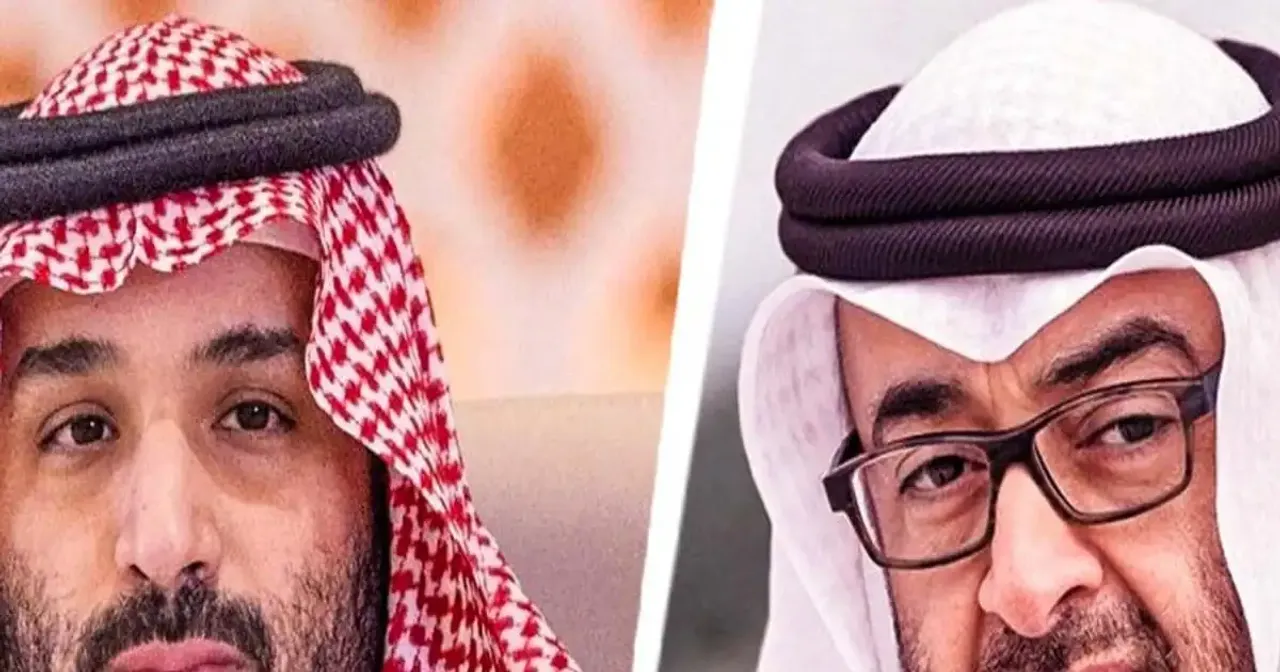
Across the Middle East, power is rarely announced directly. It is asserted through decisions, red lines, and moments when others step back. Saudi Arabia’s recent posture in the Gulf reflects precisely this pattern. Under Crown Prince Mohammed bin Salman, Riyadh is no longer content with quiet coordination. It is shaping itself as the region’s primary decision maker.
This shift matters not just for diplomats or security analysts, but for anyone trying to understand how the Gulf’s political order is evolving. The balance between Saudi Arabia and the United Arab Emirates once seen as an unbreakable partnership now reflects rivalry, boundaries, and competing visions of influence.
The dominant search intent behind this topic is clear: What does Saudi Arabia’s Gulf leadership ambition really mean, and where is it heading?
From Strategic Partners to Competing Power Centers
For much of the last decade, Saudi Arabia and the UAE were viewed as aligned powers. They shared security concerns, coordinated foreign policy, and backed similar regional actors. Behind the scenes, however, their priorities diverged.
Saudi Arabia has always seen itself as the Gulf’s anchor state by geography, population, and religious authority. The UAE, smaller but highly agile, pursued influence through trade, logistics, and selective military engagement.
As Mohammed bin Salman consolidated authority in Riyadh, that balance began to shift. Saudi Arabia’s Gulf leadership ambition became less about consensus and more about hierarchy. Riyadh increasingly expects neighboring states to align clearly with its security red lines.
Yemen: Where Strategic Differences Became Visible
Nowhere are these tensions clearer than in Yemen. The conflict there is often discussed as a civil war, but for Gulf states it is also a test of regional order.
Saudi Arabia prioritizes border security and centralized authority in Yemen. The UAE, meanwhile, has supported southern political and military actors who favor autonomy and control over ports and trade routes.
When Riyadh perceived Emirati actions as undermining its security framework, the response was firm and immediate. The message was unmistakable: military activity affecting Saudi interests would not proceed without Saudi consent.
This moment marked more than a tactical disagreement. It signaled Saudi Arabia’s intent to act as the Gulf’s final arbiter.
The Meaning of “Red Lines” in Saudi Strategy
In Middle Eastern geopolitics, red lines are rarely symbolic. When Saudi officials speak of national security thresholds, they are communicating policy, not rhetoric.
Saudi Arabia’s Gulf leadership ambition rests on three core assumptions:
- Regional stability requires centralized decision making
- Fragmented influence weakens Gulf security
- Saudi interests take precedence when borders or sovereignty are involved
By enforcing these principles, Riyadh is redefining how cooperation works within the Gulf Cooperation Council. The expectation is no longer informal alignment, but operational compliance on sensitive issues.
Why the UAE Chose De escalation
The UAE’s decision to step back was not a sign of weakness. It reflected strategic calculation. Abu Dhabi understands that prolonged friction with Saudi Arabia would carry economic and diplomatic costs far exceeding short term tactical gains.
For the UAE, preserving access, trade flows, and political goodwill matters more than contesting leadership openly. De escalation allows space for negotiation while avoiding a public rupture that could unsettle investors and allies.
Still, the episode underscores a deeper reality: cooperation in the Gulf is becoming conditional, not automatic.
How This Shift Affects the Wider Gulf
Saudi Arabia’s Gulf leadership ambition Reshapes the regional landscape in several important ways:
- Smaller Gulf states face clearer expectations
Neutrality becomes harder when security decisions are centralized.
- Policy coordination becomes faster but narrower
Consensus may improve on Saudi priorities, but diversity of views shrinks.
- Economic competition intensifies
Influence now extends beyond security into logistics, energy, and investment hubs.
- External powers recalibrate engagement
Global actors increasingly treat Riyadh as the primary gateway to Gulf diplomacy.
This evolving structure favors predictability, but it also raises questions about long term flexibility.
Risks Embedded in Saudi Arabia’s Leadership Push
Every leadership model carries trade offs. Saudi Arabia’s assertive posture delivers clarity, yet it also introduces new vulnerabilities.
Over centralization can create blind spots. Regional partners may hesitate to share dissenting intelligence or alternative strategies. Smaller states might quietly diversify alliances to hedge against excessive dependence.
There is also reputational risk. Leadership perceived as dominance can strain relationships that once relied on trust rather than enforcement.
For Mohammed bin Salman, the challenge is sustaining authority without eroding cooperation.
Why This Moment Matters Beyond Yemen
This is not merely about one conflict or one disagreement. It reflects Saudi Arabia’s broader transformation under Vision 2030 economically, diplomatically, and militarily.
Saudi Arabia’s Gulf leadership ambition aligns with its desire to be:
- The region’s primary security guarantor
- The central diplomatic interlocutor
- The dominant economic and investment hub
Each of these goals reinforces the others. Together, they mark a decisive shift from shared leadership to structured hierarchy.
What Comes Next for Gulf Politics
Looking ahead, several developments are likely:
- Tighter coordination under Saudi terms on security sensitive issues
- Selective autonomy for partners in economic and soft power domains
- Quiet negotiation rather than public disputes to manage rivalry
- Increased Saudi confidence in setting regional agendas
Whether this model proves durable depends on Saudi Arabia’s ability to balance authority with inclusion.
Frequently Asked Questions
What is Saudi Arabia’s Gulf leadership ambition?
It refers to Saudi Arabia’s effort to act as the primary decision maker on security and political matters across the Gulf region.
Why has Saudi UAE coordination become more complex?
Both countries pursue regional influence differently, leading to friction when strategic priorities clash.
How does Yemen factor into Gulf power dynamics?
Yemen serves as a testing ground for influence, security control, and regional authority among Gulf states.
Does this weaken the Gulf Cooperation Council?
It doesn’t collapse the GCC, but it shifts it toward a more hierarchical structure led by Saudi Arabia.