
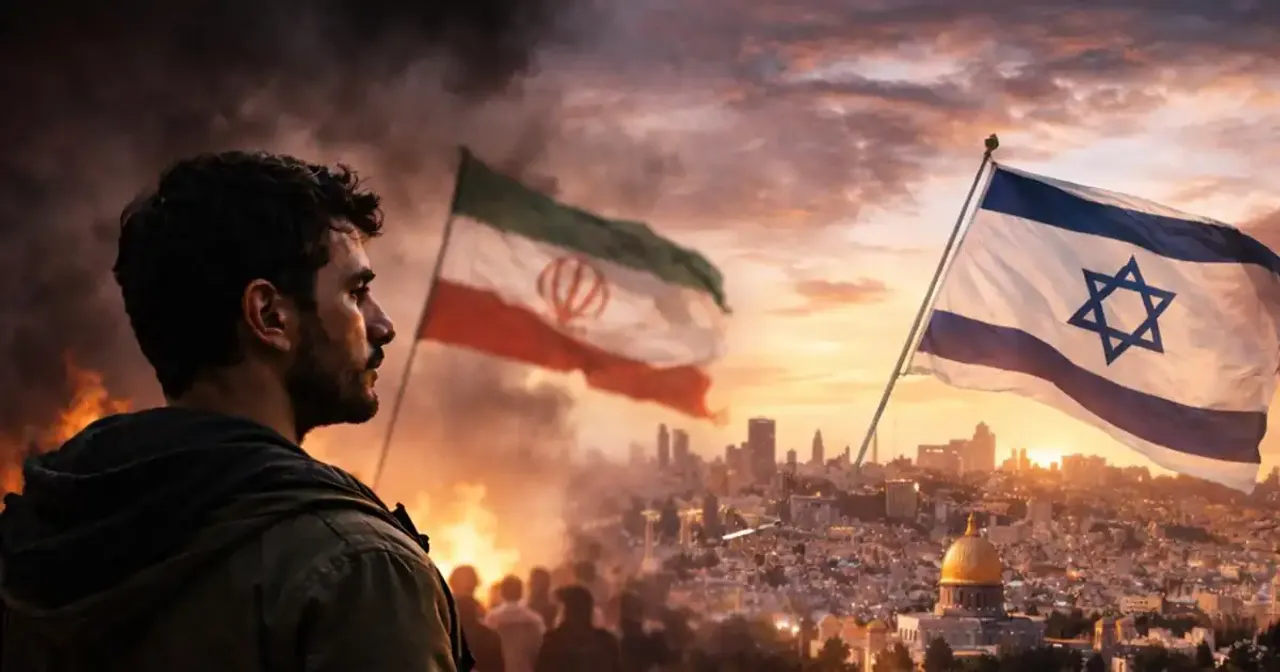
The idea that the Fall of Iran could mark the beginning of a so-called “Greater Israel” has moved rapidly from fringe online discussions into broader geopolitical debate. This shift is driven by escalating unrest inside Iran, regional realignments, and renewed global scrutiny of Middle Eastern power balances. Yet history shows that moments of upheaval often produce sweeping narratives that outpace evidence. Understanding what is actually unfolding requires separating structural change from ideological projection.
Rather than asking whether one dramatic outcome will follow another, a more useful approach is to examine how Iran’s internal pressures interact with regional strategy, and why symbolic concepts gain traction during periods of uncertainty.
Why the “Fall of Iran” Narrative Is Gaining Attention Now
The Fall of Iran is not a single event but a recurring question shaped by protests, economic strain, and political rigidity. Periods of unrest intensify speculation about regime durability, especially when accompanied by communication blackouts and visible security crackdowns.
These moments invite external interpretation. Observers often search for a regional “winner” whenever a major state appears vulnerable. In the Middle East, where borders, alliances, and historical grievances remain sensitive, such speculation spreads quickly.
Crucially, inStability does not automatically translate into geopolitical redesign. States rarely collapse cleanly, and power vacuums are more often fragmented than transformative.
Protest Cycles, Control, and the Limits of Collapse Thinking
Iran has experienced repeated protest waves driven by economic hardship, social restrictions, and generational frustration. Each cycle renews predictions of imminent collapse. Yet the governing system has historically absorbed pressure through repression, adaptation, and elite cohesion.
From an analytical perspective, three realities matter:
- Protest intensity does not equal organizational unity
- Communication shutdowns signal control, not surrender
- Regimes often survive by narrowing, not broadening, legitimacy
These factors suggest that the Fall of Iran, if it occurs, would likely be gradual and internally negotiated rather than sudden and externally imposed.
The Role of External Signals and Strategic Messaging
Statements from foreign leaders and visible military signaling often amplify internal tensions without determining outcomes. Such Signals are interpreted differently by various audiences: protesters may see encouragement, while ruling elites frame them as justification for tighter control.
For Iran’s leadership, external pressure reinforces narratives of sovereignty under threat. For regional rivals, it creates strategic uncertainty rather than immediate opportunity. Neither dynamic supports the idea of rapid territorial or ideological expansion by any neighboring state.
Understanding the “Greater Israel” Concept in Context
The phrase “Greater Israel” is frequently used as a catch-all symbol rather than a defined policy. Historically, it has appeared in ideological texts, political rhetoric, and conspiracy narratives, often detached from contemporary state strategy.
Modern Israel operates within clear diplomatic, military, and economic constraints. Its regional actions focus on deterrence, security coordination, and alliance management not territorial expansion triggered by another state’s internal crisis.
Linking the Fall of Iran directly to a sweeping regional redesign oversimplifies how modern states behave under international scrutiny.
What Regional Power Shifts Actually Look Like
When a major regional actor weakens, change tends to occur through indirect channels:
- Adjustments in proxy relationships
- Shifts in diplomatic leverage
- Recalibration of security partnerships
- Increased competition among multiple actors
No single state automatically fills the space. Instead, influence disperses, often creating instability rather than consolidation.
This pattern contradicts the idea that one country’s decline mechanically enables another’s ideological project.
The Risk of Myth-Driven Geopolitical Analysis
Narratives like “Greater Israel” persist because they offer emotional clarity during complex events. They reduce uncertainty to intention and chaos to conspiracy. However, policy decisions are constrained by economics, law, and multilateral pressure.
For analysts and readers, the danger lies in mistaking symbolic language for strategic reality. The Middle East’s recent history demonstrates that unexpected outcomes usually arise from miscalculation, not master plans.
Could the Fall of Iran Reshape the Region Anyway?
Yesbut not in the way dramatic narratives suggest. A weakened Iran would affect regional balances by altering deterrence equations and diplomatic alignments. It could reduce or redirect influence in contested areas, prompting responses from multiple regional and global actors.
Such Changes would unfold unevenly and over time. They would involve negotiation, adaptation, and uncertaintynot a clear ideological endpoint.
What to Watch Instead of Headlines
If the Fall of Iran becomes a real process rather than a debated possibility, meaningful indicators would include:
- Sustained elite fragmentation within Iran
- Long-term breakdown of security force cohesion
- Formal shifts in regional alliance behavior
- Coordinated international mediation efforts
Absent these signals, claims of imminent regional transformation remain speculative.
A More Grounded Way to Read the Moment
Periods of unrest invite grand narratives, but durable analysis focuses on structure, incentives, and limits. The Middle East has repeatedly shown that power vacuums generate competition, not clarity.
The question is not whether one myth replaces another, but how states manage uncertainty without losing control of escalation.
FAQs
Does the Fall of Iran automatically benefit Israel?
No. Regional instability creates risks as well as opportunities, often constraining rather than expanding state options.
Is “Greater Israel” an official strategic goal today?
There is no evidence that it functions as a contemporary state policy guiding regional action.
Can protests alone trigger regional transformation?
Protests matter, but structural change requires elite fractures and sustained institutional shifts.