
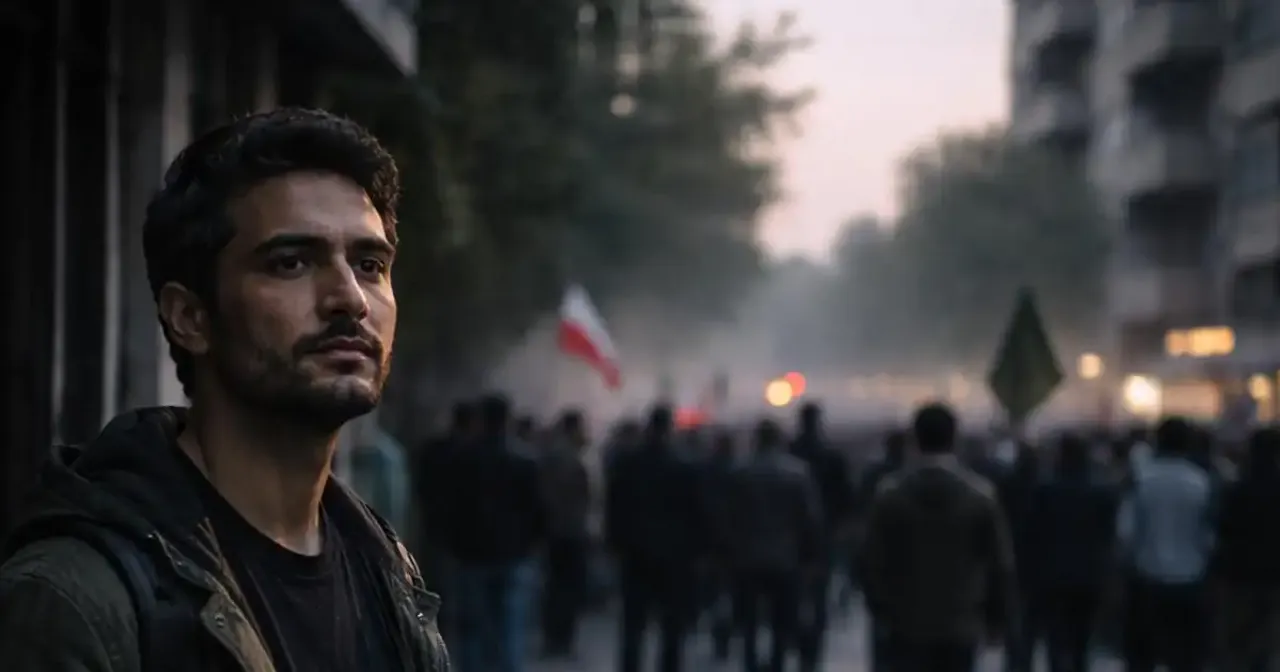
The question of whether this is the end of Iran’s Khamenei regime no longer lives only in dissident circles or academic debates. It has entered everyday conversation across the Middle East and far beyond, driven by sustained protests, visible internal fractures, and growing international pressure. Yet history warns against simple answers. Political systems built over decades rarely collapse in a straight line, even when violence escalates and legitimacy erodes.
Understanding the Future of Iran’s leadership requires looking beyond headlines. It demands an examination of how power is structured, why unrest keeps resurfacing, and what forces could realistically reshape the system from within or without.
How Iran’s Power Structure Shapes the Khamenei Regime
Iran’s political system is neither a conventional dictatorship nor a functioning republic. At its core sits the Supreme Leader, a position that combines religious authority with decisive control over the military, judiciary, and key media institutions. The Khamenei regime has survived for decades not because it commands universal loyalty, but because it distributes power across overlapping institutions designed to prevent any single challenger from gaining momentum.
This structure creates resilience. Even when protests erupt, responsibility diffuses across clerical councils, Security forces, and economic foundations tied to the state. The result is a system that absorbs pressure rather than confronting it directly.
Why Protests Against the Khamenei Regime Keep Returning
Protest movements in Iran are not isolated events. They follow a recurring pattern shaped by economic strain, social restrictions, and generational frustration. Young Iranians, in particular, experience a sharp disconnect between daily life and the ideology imposed by the state.
Several long-term drivers continue to fuel unrest:
- Economic stagnation that limits opportunity despite a highly educated population
- Social control over personal behavior, especially affecting women and youth
- Political exclusion that blocks meaningful reform through elections
- Corruption perceptions tied to elite networks benefiting from state power
These pressures do not disappear when protests are suppressed. They accumulate, waiting for another trigger.
Deadly Crackdowns and the Cost of Control
When demonstrations turn deadly, the immediate question becomes whether repression signals strength or weakness. The Khamenei regime relies heavily on security forces not only to maintain order, but to signal deterrence. Public punishment is intended to discourage repetition.
However, history suggests that violence can harden opposition as much as it suppresses it. Families affected by crackdowns often become long-term critics. Even those not politically active absorb the message that peaceful change is unlikely, deepening mistrust between society and state.
The Role of External Pressure and Trump’s Promised “Action”
External rhetoric, particularly from high-profile foreign leaders, adds another layer of complexity. Statements promising “action” resonate loudly inside Iran, but not always in predictable ways. While some protesters welcome international attention, others fear that external Threats strengthen hardliners who frame dissent as foreign manipulation.
For the Khamenei regime, outside pressure serves a dual purpose. It justifies internal control while reinforcing a narrative of resistance. Sanctions and warnings rarely weaken ideological resolve, even when they strain the economy.
Why the Khamenei Regime Has Not Collapsed Yet
Predictions of imminent collapse underestimate how authoritarian systems endure. The Khamenei regime benefits from institutional memory, loyal security networks, and the absence of a unified opposition leadership. Protests may be widespread, but they remain fragmented across regions and social groups.
Three stabilizing factors continue to matter:
- Security force cohesion, despite internal fatigue
- Elite self-interest, which ties economic survival to regime continuity
- Fear of chaos, especially memories of regional instability elsewhere
As long as these pillars hold, collapse remains uncertain rather than inevitable.
What Would Actually Signal the End of the Khamenei Regime?
Regime change rarely arrives through street protests alone. Historically, decisive shifts occur when elite alliances fracture or when security forces refuse orders. For Iran, meaningful change would likely require at least one of the following:
- A visible split within clerical or military leadership
- Sustained nationwide coordination across social classes
- A negotiated transition triggered by succession uncertainty
Absent these developments, unrest alone may reshape behavior without dismantling the system.
The Succession Question Looming Over Iran
One of the least discussed yet most consequential factors is succession. The Khamenei regime centers on an aging leader, and uncertainty about what follows creates quiet tension within elite circles. Succession struggles often expose vulnerabilities that protests alone cannot.
This period may not bring immediate collapse, but it increases the probability of internal bargaining, reform gestures, or power realignments designed to preserve the system under a new configuration.
Regional and Global Implications of a Weakened Regime
Any shift in Iran’s leadership would reverberate beyond its borders. Iran plays a central role in regional alliances, energy markets, and geopolitical rivalries. Even partial weakening of the Khamenei regime could alter diplomatic calculations across the Middle East.
For global powers, the dilemma remains balancing pressure with stability. A sudden collapse could produce uncertainty that no external actor fully controls.
Future Scenarios: Collapse, Continuity, or Controlled Change
The future of the Khamenei regime likely falls into one of three paths:
- Continuity through repression, maintaining control at high social cost
- Controlled adaptation, offering limited reforms to ease pressure
- Gradual transformation, driven by internal realignment rather than revolt
None of these outcomes guarantee democracy, but each reshapes Iran’s trajectory differently.
Frequently Asked Questions
Is the end of Iran’s Khamenei regime inevitable?
No. Structural resilience and elite cohesion still provide stability, despite ongoing unrest.
Do protests alone threaten the Khamenei regime?
Protests apply pressure but rarely succeed without elite or security force fractures.
How important is foreign pressure in Iran’s future?
External pressure influences narratives but often strengthens internal resistance dynamics.