


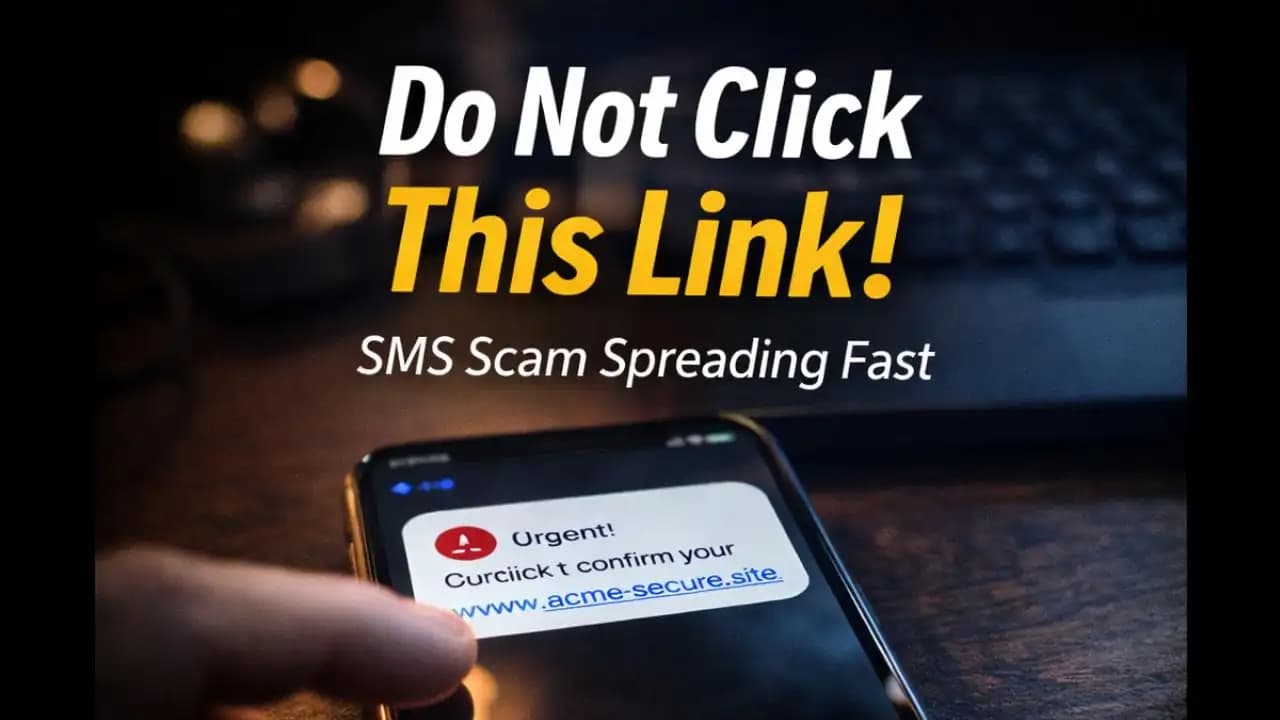
SMS scam messages are hitting phones at a rapid pace, and many look convincing enough to catch people off guard. A common real-life example is a text claiming your package is delayed, your bank account needs verification, or a toll payment is overdue. The message includes a link and creates pressure to act quickly. That single click can lead to stolen passwords, card details, or malware.
What is happening with this SMS scam?
This scam is part of a wider smishing wave, where criminals use text messages instead of email to trick people. The goal is simple: get you to click a link, share personal information, download something harmful, or call a fake support number.
These texts often pretend to come from delivery companies, banks, government agencies, mobile carriers, or online services. Because people are used to receiving genuine SMS updates, the scam can feel believable at first glance.
How the SMS scam works
Step 1: A message creates urgency
The text usually says something needs immediate action. It may mention a failed delivery, suspicious account activity, an unpaid fee, or a locked account.
Step 2: A link leads to a fake page
If you tap the link, you may land on a website that looks almost real. It can ask for login details, card information, one-time codes, or identity data.
Step 3: Criminals collect data or install malware
Some scams steal credentials directly. Others try to get you to install an app, allow permissions, or enter payment details. In some cases, the page is built to capture enough information for account takeover or identity fraud.
Warning signs to look for
There are a few patterns that show up again and again in an SMS scam.
- Unexpected text about a package, payment, or account problem
- Pressure words like urgent, immediate, verify now, or final notice
- Links with strange domains, shortened URLs, or misspelled brand names
- Requests for passwords, card numbers, PINs, or one-time passcodes
- Messages from unknown numbers pretending to be trusted brands
- Poor grammar, odd formatting, or unnatural wording
Why it matters
People tend to trust text messages more than email because SMS feels direct and personal. That is exactly why these scams work. A message can arrive while you are busy, traveling, or waiting for a real delivery. In that moment, a fake alert can seem completely normal.
The impact is not limited to one device. A stolen password can open access to email, banking, shopping apps, cloud storage, and even work Accounts.
Risks if you click the link
- Stolen passwords and account logins
- Unauthorized card charges or bank fraud
- Identity theft using personal details
- Malware or spyware on your phone
- Hijacked accounts protected by SMS verification
- More scam attempts after your number is marked as active
Recent trends from 2024 to 2026
From 2024 onward, SMS scam campaigns have become more targeted and more polished. Attackers are copying brand logos, using realistic domain names, and timing messages around shopping seasons, tax periods, travel, and public service announcements.
Another trend is cross-channel fraud. A text message may be followed by a phone call, email, or messaging app contact to make the scam feel legitimate. Criminals are also using personal data from previous breaches to craft messages that appear more relevant to the recipient.
Looking into 2025 and 2026, awareness remains critical because mobile-first scams are expected to stay active, especially where people rely on phones for payments, account access, and identity verification.
Practical awareness: how to protect yourself
Pause before you tap
If a text asks for urgent action, slow down. Do not trust the message just because it mentions a familiar brand.
Check through official channels
Open the company app yourself, visit the website by typing the address manually, or call the official number from a verified source.
Do not share codes or passwords
Legitimate companies do not ask for one-time passcodes, PINs, or passwords by text.
Keep your phone updated
Security updates help reduce the risk from malicious links and harmful downloads.
Use extra account protection
Enable multifactor authentication where possible, ideally with an authenticator app rather than SMS when supported.
What to do if you already clicked
If you opened the link, act quickly but stay calm.
- Disconnect from the site and do not enter more information.
- Change passwords for any affected accounts, starting with email and banking.
- Contact your bank or card provider if payment information was entered.
- Scan your device with trusted mobile security tools and remove suspicious apps.
- Report the message to your mobile carrier, bank, or relevant cybercrime reporting channel.
- Warn family members, especially older adults and teens who may receive similar texts.
FAQs
Can opening an SMS link infect my phone?
Sometimes yes. In some cases, the page only tries to steal information. In others, it may push a malicious download or abuse browser vulnerabilities.
How can I tell if a text is fake?
Look for urgency, strange links, requests for sensitive data, and messages that do not match your recent activity. When in doubt, verify through the official app or website.
Should I reply STOP to scam texts?
Not always. Replying can confirm that your number is active. It is usually safer to block the sender and report the message unless it is from a verified service you knowingly use.
What if I entered my bank details?
Contact your bank immediately, freeze or monitor your cards, and watch for unauthorized transactions. Fast action can reduce financial damage.
Are SMS scams still increasing?
Yes. SMS-based fraud remains active because people use phones for nearly everything, and attackers know that urgent texts can still drive quick reactions.