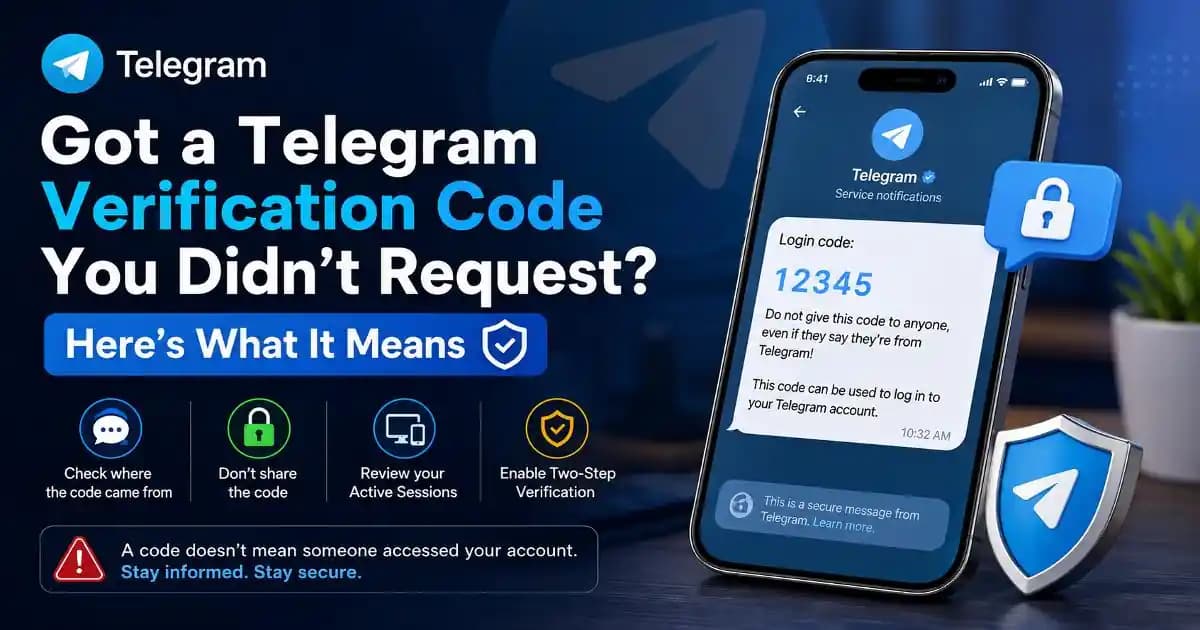



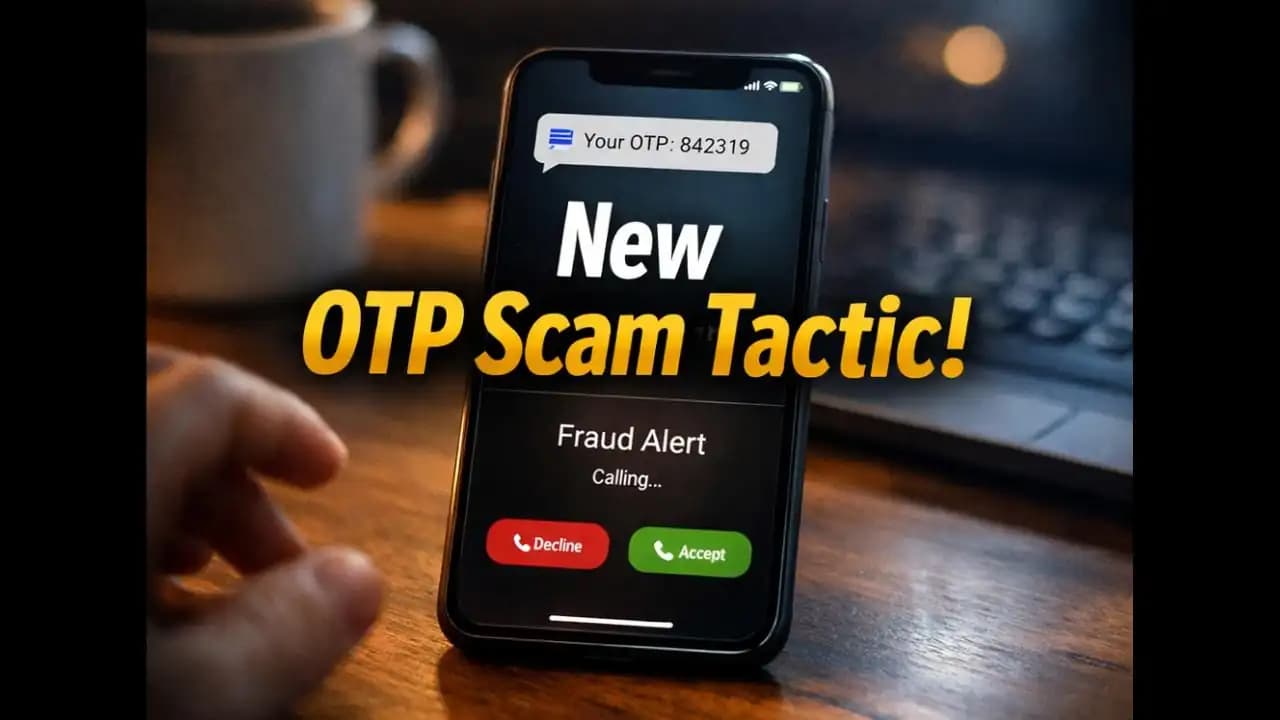
OTP scam messages are showing up on WhatsApp and SMS more often in recent months, usually arriving at the exact moment you’re expecting a login code and that timing is exactly what makes them dangerous.
You might be trying to log into your bank app, Instagram, or even a food delivery account. Suddenly, your phone rings or you get a message:
“Don’t share your OTP with anyone.”
Seconds later, someone calls claiming to be from support, already aware of your activity. It feels real and that’s where the trap begins.
What exactly is this new OTP scam people are talking about?
This isn’t the old random phishing message people used to ignore. The newer OTP scam is more targeted and timed around real actions.
Instead of guessing, scammers now trigger real login attempts on your accounts banking apps, Gmail, WhatsApp, or social media. That action sends a genuine OTP to your phone.
Then they step in.
They call, message, or impersonate support teams to trick you into sharing that code.
The key difference now is that the OTP itself is real but the request for it is fake.
In 2025 and early 2026, this pattern has grown rapidly, especially across mobile-first regions where OTP login is common.
How does the OTP scam actually work step by step?
The process feels simple from the outside, but it’s carefully timed:
- A scammer enters your phone number into a login page (bank, WhatsApp, etc.)
- The platform sends you a real OTP
- At the same moment, the scammer contacts you
They might say:
- “We noticed suspicious activity on your account.”
- “Your account will be blocked unless you verify.”
- “We are from your bank’s fraud team.”
Because you just received an OTP, the message feels believable.
Some scammers even use caller ID spoofing so the number looks like your bank or a known service.
What makes this effective is not technology it’s timing and pressure.
Signs you’re dealing with an OTP scam (even if it looks real)
Many people fall for this because everything appears legitimate. But there are small patterns worth noticing:
- You receive an OTP without requesting it
- Someone contacts you immediately after the OTP arrives
- They create urgency (“share now or your account will be blocked”)
- They already know partial details (your name or phone number)
- The message tone feels slightly scripted or repetitive
Another subtle sign:
Real companies never ask you to read out or forward your OTP even if they sound official.
Why this matters more than people realize
OTP-based login became popular because it felt safer than passwords. And for a while, it was.
But scammers have adapted.
Instead of hacking systems, they now rely on human behavior.
They know people trust OTP messages especially when they’re expecting them.
In countries where apps like WhatsApp, Paytm, Google Pay, and bank apps are used daily, OTP scams have become one of the fastest-growing attack methods.
Recent reports throughout 2025–2026 show a clear shift:
less technical hacking, more real-time manipulation.
The attack is no longer on your device it’s on your attention and trust.
What are the real risks if someone shares an OTP?
The impact depends on the account being targeted, but it can escalate quickly:
- Bank account access and unauthorized transactions
- Social media takeover (used for further scams)
- WhatsApp account hijacking
- Email access, leading to password resets everywhere
- Identity misuse or impersonation
What makes OTP scams dangerous is speed.
Once the code is shared, access is immediate and often irreversible.
How people are protecting themselves now (without overthinking it)
You don’t need technical tools to stay safe. The awareness itself is enough.
A few behavior shifts are already helping users avoid this:
- Pausing before reacting to urgent messages
- Not sharing OTPs under any circumstances
- Ignoring calls that ask for verification codes
- Checking directly inside the app instead of trusting calls
- Using app-based authentication where possible
Many users in 2026 are also becoming more cautious about unknown calls especially those claiming to be from banks or support teams.
The safest response is simple: if someone asks for your OTP, it’s a scam no exceptions.
What to do immediately if you think you shared your OTP
If it happens, the reaction speed matters more than anything else.
First, try to access your account directly.
If you still can, change your password immediately.
Then:
- Contact your bank or platform through official channels
- Log out of all devices if possible
- Enable additional security (like app locks or 2FA)
- Inform contacts if your account was used to send messages
Many platforms now allow quick account recovery but only if you act fast.
How this scam has evolved recently (2025–2026 patterns)
A year ago, OTP scams were mostly random and easy to spot.
Now, they’ve become:
- More targeted (based on real login attempts)
- Better timed (within seconds of OTP delivery)
- More convincing (using real company names and scripts)
- More regional (local language calls and messages)
In some cases, scammers even combine OTP scams with data leaks meaning they already know your name or recent activity.
This makes the interaction feel less suspicious.
Why people still fall for it (and why that’s understandable)
It’s not about being careless.
Most people fall for OTP scams because:
- The situation feels urgent
- The OTP just arrived, so it feels connected
- The caller sounds confident
- The message aligns with something they were already doing
The scam works because it fits into normal behavior not because people don’t know better.
A final thought that’s worth remembering
Most online threats used to feel distant something technical or complicated.
The OTP scam changed that.
It’s simple, personal, and happens in real time.
And that’s exactly why awareness matters more than tools.
If there’s one thing to keep in mind going forward:
Your OTP is not just a number it’s temporary access to your account.
Treat it like handing over your keys.
FAQs
Why am I receiving OTP messages without requesting them?
Someone may be trying to log into your account using your phone number.
Can a bank ever ask for my OTP on a call?
No. Legitimate banks and services never ask for OTPs.
What happens if I accidentally share my OTP?
The attacker can immediately access your account. Act quickly to secure it.
Is OTP safer than passwords?
It’s safer in many cases, but only if you don’t share the code with anyone.
Are OTP scams increasing recently?
Yes, especially in 2025–2026, due to increased mobile app usage and real-time targeting.