


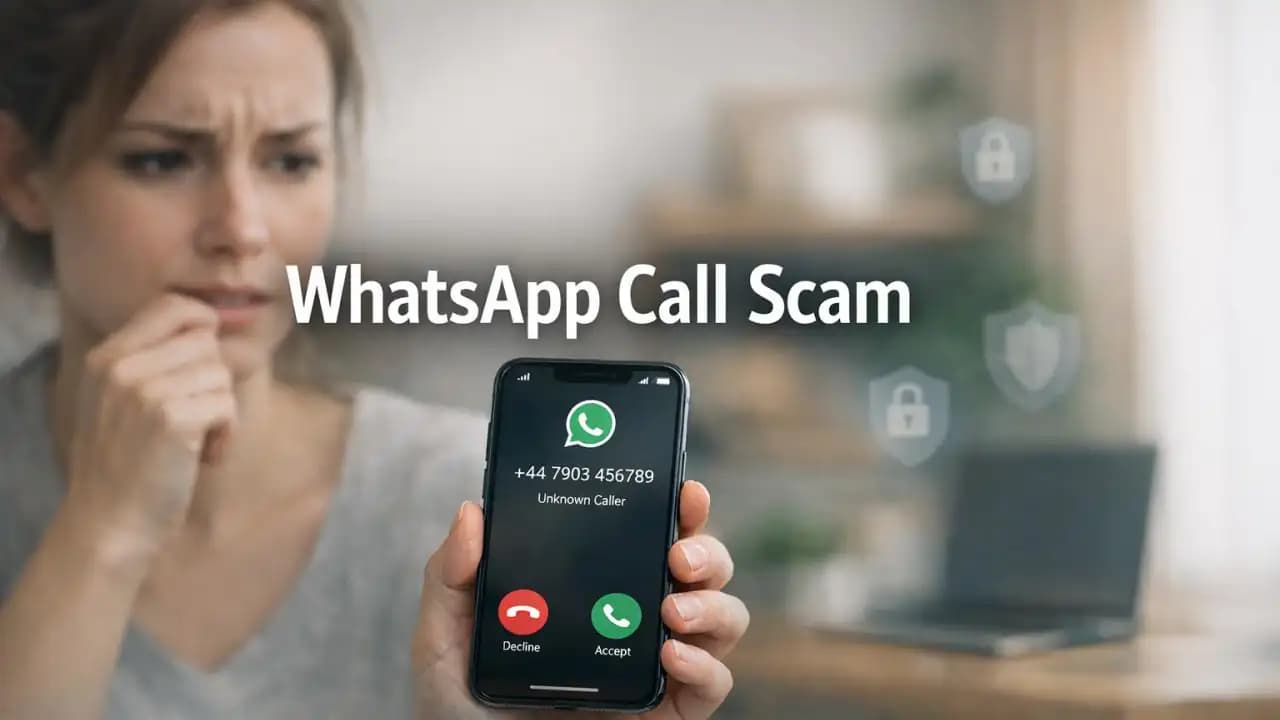
WhatsApp scam calls can start with something that looks ordinary: your phone rings, the profile is unfamiliar, and the number may come from another country. Many people answer out of curiosity, especially if they are waiting for a delivery, a job call, or a message from family abroad. That quick decision can lead to social engineering, pressure tactics, and attempts to steal money or Account access.
A simple call could be dangerous, not because answering alone instantly hacks your phone, but because scammers use that moment to test whether your number is active, gain your attention, and push you into the next step.
What Is Happening With WhatsApp Scam Calls?
Scammers are increasingly using WhatsApp (1) calls to reach people directly. Instead of sending only text messages, they now call from unknown numbers, often using international prefixes, fake business identities, or stolen profile photos to look more trustworthy.
In many cases, the goal is not the call itself. The call is the opening move. Once you answer, the scammer may try to continue the conversation, ask you to save a number, send a link, request a code, or move you into a fake job offer, investment pitch, delivery issue, or impersonation scam.
Why scammers like WhatsApp calls
WhatsApp is familiar, fast, and widely trusted. People are also more likely to respond if they think the contact may be personal or urgent. That makes it a useful channel for fraud attempts.
How Does a WhatsApp Call Scam Work?
Most WhatsApp scam calls follow a simple pattern:
- The scammer places a call from an unknown number.
- If you answer, they confirm the number is active and that a real person is reachable.
- They create urgency, curiosity, or trust. For example, they may claim to be from customer support, a recruiter, a bank representative, or someone who knows you.
- They push for an action such as sharing a verification code, opening a link, making a payment, or continuing the chat elsewhere.
Some calls are very short and disconnect quickly. This can be a tactic to prompt a callback or to test active numbers for future scams. Others involve recorded voices, fake support scripts, or live callers trained to keep you engaged.
Common versions people report
- Fake job and part-time work offers
- Impersonation of technical support or business staff
- Requests for one-time passwords or verification codes
- Calls that lead to investment or crypto scams
- Urgent stories involving a relative, shipment, or account problem
Signs a WhatsApp Call May Be a Scam
Not every unknown call is fraudulent, but several red flags should make you cautious.
- The number is international and unexpected
- The caller avoids clear identification
- You feel rushed to act immediately
- The caller asks for a code, payment, or personal details
- You are told to click a link or install an app
- The story feels vague, inconsistent, or overly urgent
- The profile photo looks generic, stolen, or unrelated
If a caller claims to represent a company, bank, or official service, end the call and contact the organization through its verified website or app.
Why It Matters
Many people assume that answering a call is harmless unless they share something sensitive. In reality, answering can still matter because it tells scammers your number is active and that you may be willing to engage.
That can lead to repeated targeting. Your number may be added to lists used for more calls, fake messages, impersonation attempts, or account takeover tricks. If you stay on the line, the scammer also gets a chance to build trust and guide you toward the real trap.
What Are the Risks If You Answer?
The biggest risk is not that your phone gets instantly compromised just by saying hello. The main risk is manipulation.
- Social engineering: You may be pressured into revealing personal information.
- Account takeover attempts: Scammers may ask for a WhatsApp verification code sent to your phone.
- Financial fraud: You could be pushed into sending money, paying fake fees, or joining false investments.
- More scam targeting: Your number may be marked as responsive.
- Phishing and malware: You may be sent dangerous links after the call.
There is also a privacy risk. Even limited interaction can give a scammer useful details about your language, location, age group, and habits.
Recent Trends in WhatsApp Scam Calls (2024-2026)
From 2024 through 2026, scam activity on messaging platforms has continued to evolve. Several patterns stand out:
- More scam calls from overseas numbers targeting users in bulk
- Growth in fake recruiter and easy-income schemes
- Increased use of AI-assisted scripts, voice recordings, and polished profile images
- Scams that start with a call and move quickly to chat, payment apps, or crypto platforms
- More impersonation of support teams, delivery services, and known brands
This matters because scam calls are becoming more believable. The language is often smoother, the timing feels more realistic, and the scammer may already know basic facts about you from previous leaks or public profiles.
Practical Awareness: How to Protect Yourself
You do not need to panic if you answer an unknown call once. What matters is what you do next.
- Do not share verification codes, passwords, or personal details
- Do not click links sent during or after the call
- End the call if the person creates pressure or confusion
- Block and report suspicious numbers in WhatsApp
- Turn on two-step verification in WhatsApp
- Review your privacy settings for profile photo, last seen, and calls
- Tell family members, especially older adults and teenagers, about common scam patterns
If you already answered
If you only answered and did nothing else, your immediate risk is usually lower. Still, stay alert for follow-up messages, code requests, and repeated calls. If you shared any code or sensitive information, secure your account right away.
What To Do After a Suspicious WhatsApp Call
- Stop responding and do not continue the conversation.
- Take screenshots of the number and any follow-up messages.
- Block and report the contact in WhatsApp.
- Enable or review two-step verification.
- Change passwords if you shared any sensitive details elsewhere.
- Warn friends or family if the scammer may try to impersonate you.
The safest mindset is simple: unexpected urgency on WhatsApp deserves verification, not trust.
FAQs
Can someone hack my phone just because I answered a WhatsApp call?
In most ordinary scam cases, answering alone does not hack your phone. The bigger danger is being manipulated into sharing information, clicking links, or giving away a verification code.
Why do scammers call and hang up on WhatsApp?
They may be checking whether your number is active, trying to trigger a callback, or testing a list of targets for future scams.
Should I call back an unknown WhatsApp number?
No. If the call was important, the person can leave a message. Calling back can confirm your number is active and may expose you to more pressure.
What should I do if I shared a WhatsApp verification code?
Act immediately. Re-register your WhatsApp account if possible, enable two-step verification, and check for signs that your account has been accessed.
Are international WhatsApp calls always scams?
No, but an unexpected international call from someone you do not know should be treated carefully, especially if it involves urgency, money, links, or requests for codes.