
Sudan is entering another perilous chapter. Fighting between rival military forces continues to Reshape daily life across the country, while diplomatic efforts remain fragile and humanitarian conditions deteriorate at alarming speed. From Khartoum’s shattered neighborhoods to overcrowded displacement camps in Darfur and eastern Sudan, the consequences of the war are becoming more entrenched and harder to reverse.
What began as a power Struggle at the top of the state has evolved into a nationwide Sudan crisis with global implications. Civilians are caught between frontlines, aid routes are routinely disrupted, and regional actors are recalibrating their positions as the conflict shows no clear end. This Sudan analysis examines what has happened, why it matters now, and what the coming months could hold for a country running out of time.
For many Sudanese, this moment feels like a breaking point, marked by deep war fatigue and an uncertain future as violence drags on without a credible political horizon.
What Happened: A War That Refuses to Burn Out
A Conflict Rooted in Power and Control
The Sudan conflict erupted when tensions between the Sudanese Armed Forces and a powerful paramilitary force boiled over into open warfare. What was initially framed as a dispute over command structures and political transition quickly escalated into a full scale Sudan war, engulfing major cities and rural regions alike.
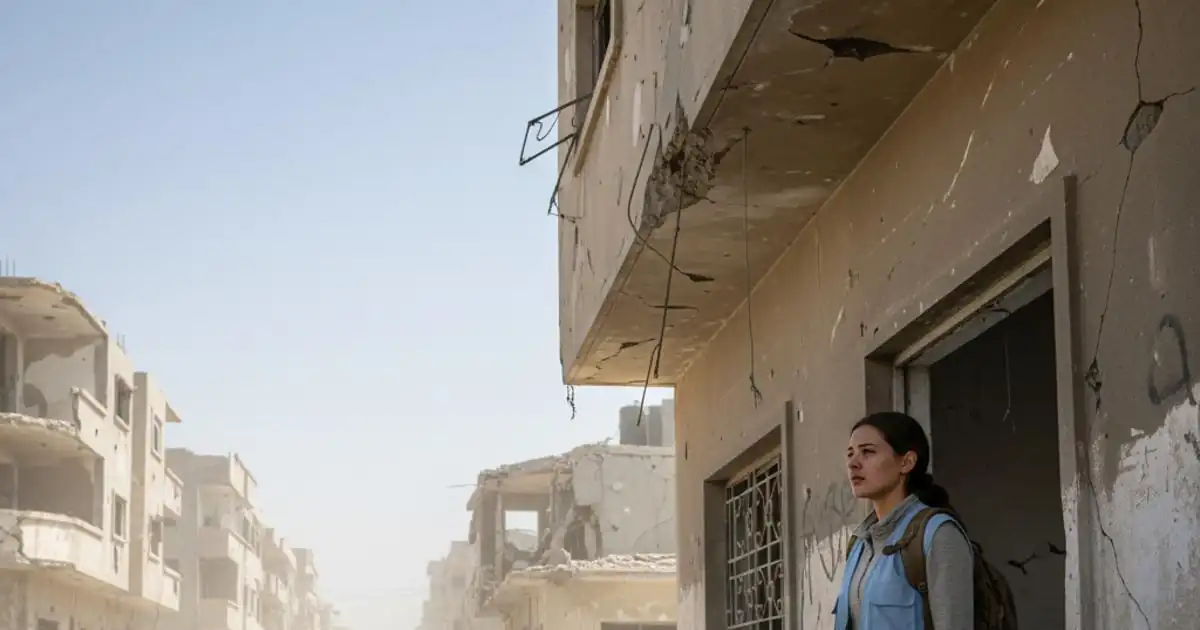
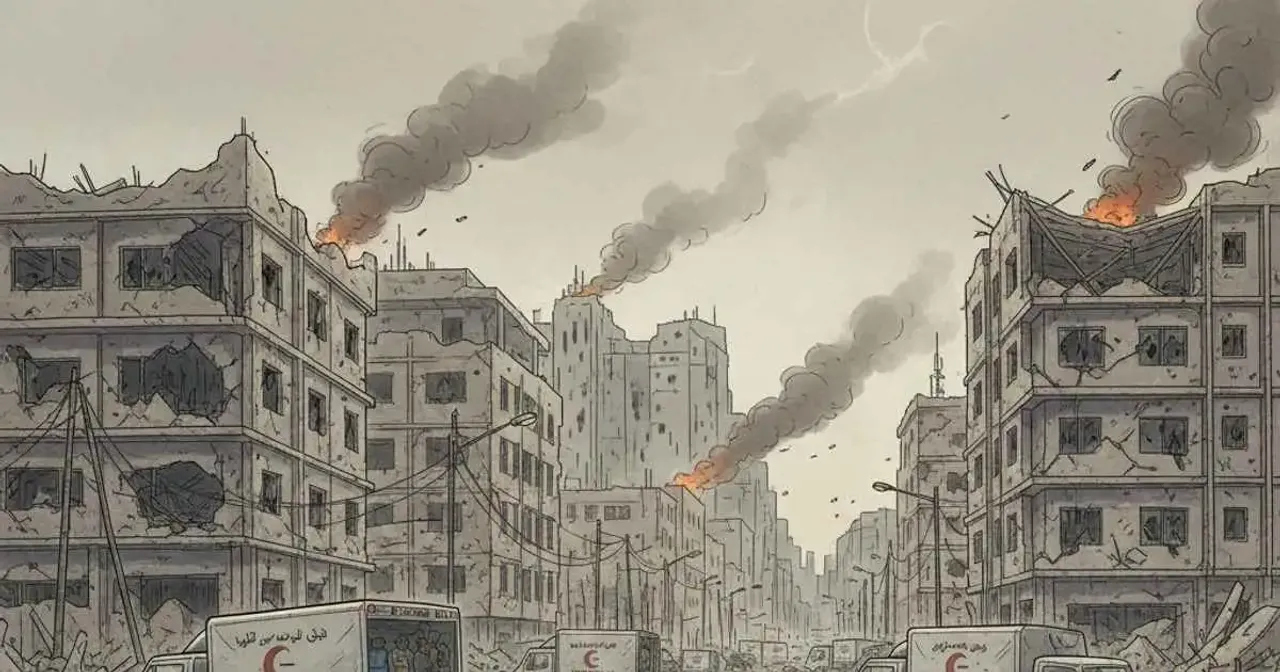
Khartoum, once the political and economic heart of the country, has been particularly hard hit. Government ministries, hospitals, residential neighborhoods, and key infrastructure have suffered repeated damage. In many areas, armed groups now control territory, checkpoints, and supply routes, fragmenting governance and making civilian life increasingly precarious.
Recent Sudan Updates
Recent fighting has been marked by intensified clashes in strategic zones, including urban cEnters and supply corridors. Reports indicate growing use of heavy weaponry in populated areas, raising fears of further civilian casualties. At the same time, attempts to consolidate territorial control suggest both sides are preparing for a prolonged confrontation rather than a quick resolution.
Despite intermittent ceasefire announcements, violations remain frequent. Each collapse reinforces mistrust, hardening positions and shrinking the political space for compromise.
Why It Matters: Beyond Sudan’s Borders
The Sudan crisis is no longer a contained national emergency. Its ripple effects are being felt across the Horn of Africa, the Red Sea corridor, and beyond. Sudan’s geographic position makes it a critical transit point for trade, migration, and security cooperation.
Prolonged instability threatens regional supply chains, fuels cross border displacement, and risks drawing neighboring countries into indirect involvement. For global actors, Sudan’s war also raises concerns about maritime security, counterterrorism, and the growing influence of non state armed groups in fragile regions.
Humanitarian Crisis Sudan: Civilians Paying the Highest Price
Mass Displacement and Daily Survival
The humanitarian crisis in Sudan has reached staggering proportions. Millions of people have been forced from their homes, many fleeing multiple times as frontlines shift. Families are now living in schools, unfinished buildings, or open fields, often without adequate food, clean water, or healthcare.
Displacement camps are overwhelmed, while host communities struggle to absorb newcomers amid their own economic hardships. Women, children, and the elderly face heightened risks, including malnutrition, disease, and exploitation.
Healthcare and Food Systems in Collapse
Hospitals across conflict zones are barely functioning. Shortages of medical supplies, electricity, and trained staff have turned treatable injuries and illnesses into life threatening conditions. Vaccination programs have stalled, raising fears of disease outbreaks.
Food insecurity has also intensified. Disrupted farming cycles, blocked markets, and rising prices mean many households are skipping meals or relying on emergency aid that remains inconsistent and insufficient.
International Reactions: Pressure Without Resolution
United Nations and Multilateral Efforts
The United Nations has repeatedly warned that Sudan is facing one of the world’s gravest humanitarian emergencies. Calls for safe humanitarian corridors, ceasefires, and accountability have grown louder, but enforcement remains elusive.
Peace initiatives have focused on halting violence long enough to allow aid delivery and political dialogue. However, divisions within the international community and among Sudanese actors have limited progress.
United States, African Union, and Regional Diplomacy
The United States and regional organizations have applied diplomatic pressure, including sanctions and mediation efforts, aimed at pushing the warring parties toward negotiations. The African Union has emphasized the need for Sudanese led solutions while coordinating with neighboring states affected by refugee flows.
Yet competing interests among regional powers have complicated diplomacy. Some prioritize stability and border security, while others are accused of backing rival factions to protect strategic or economic interests.
Local Voices: Life Inside the Conflict
Khartoum’s Silent Neighborhoods
In many parts of Khartoum, streets that once bustled with commerce are now eerily quiet. Residents describe living by the sound of gunfire, rationing water, and relying on informal networks to survive. Those who remain often do so because they lack the means to flee.
Parents speak of children growing up without school, structure, or a sense of safety. Community volunteers have stepped in to organize food sharing, basic education, and emergency care, filling gaps left by a collapsed state.
Rural and Peripheral Regions
Outside the capital, communities face similar challenges with fewer resources and less visibility. In Darfur and other marginalized regions, longstanding grievances over land, identity, and neglect have intensified the violence. Civilians here often feel doubly abandoned by both national authorities and the international spotlight.
Economic Fallout: A Nation Running Out of Options
The Sudan war has crippled the economy. Currency depreciation, inflation, and job losses have pushed millions into poverty. Businesses have closed, banks operate intermittently, and public sector salaries go unpaid.
Key sectors such as agriculture, trade, and energy are in decline, reducing the state’s ability to fund services or reconstruction. Even if fighting were to stop tomorrow, rebuilding Sudan’s economy would require years of sustained support and political stability.
Regional and Global Implications
Sudan’s instability threatens to become a long term source of regional volatility. Refugee flows strain neighboring countries already facing economic pressures. Armed groups moving across porous borders risk igniting new conflicts or exacerbating existing ones.
Globally, Sudan’s crisis highlights the limits of international conflict management. As attention shifts between multiple global flashpoints, Sudan risks becoming a “forgotten war,” despite its scale and consequences.
Possible Future Scenarios
Scenario One: Prolonged Stalemate
Analysts warn that the most likely near term outcome is a grinding stalemate. Continued fighting, fragmented control, and weak diplomacy could lock Sudan into years of instability similar to other protracted conflicts in the region.
Scenario Two: Fragile Ceasefire
A negotiated pause in fighting could allow humanitarian access and limited political talks. However, without strong monitoring and guarantees, such agreements risk collapsing under pressure from hardliners and battlefield realities.
Scenario Three: Political Reconfiguration
A less likely but transformative scenario would involve a broader political settlement that restructures power, integrates armed actors into a civilian led framework, and addresses long standing grievances. Achieving this would require unprecedented compromise and sustained international engagement.
What Analysts Are Watching
Experts following Sudan updates are closely monitoring shifts in military momentum, regional diplomatic alignments, and humanitarian access. Any change in external support for the warring parties could alter calculations on the ground.
Equally important are grassroots dynamics. Civil resistance networks, professional associations, and community leaders continue to advocate for civilian rule and peace, even as their space to operate shrinks.
Conclusion: A Narrowing Window for Sudan
Sudan stands at a crossroads where delay carries devastating costs. The longer the Sudan conflict continues, the deeper the humanitarian crisis becomes, and the harder recovery will be. Civilians have shown remarkable resilience, but resilience alone cannot substitute for peace.
The coming months will be critical. Whether through renewed diplomacy, stronger international coordination, or internal political shifts, the path Sudan takes next will shape not only its own future but the stability of an entire region. For now, the world watches, aware that in Sudan, time is the most precious and rapidly disappearing resource.