
Regional politics across the Middle East are Shifting in quieter but more consequential ways than headline crises suggest. Gulf politics and Egypt politics are increasingly intertwined, shaped by economic pressures, security recalculations, and changing global power dynamics. For readers trying to understand what matters now and what will still matter years from now this moment represents a structural turning point rather than a temporary fluctuation.
This article reframes regional politics beyond daily news cycles. It explains the deeper forces reshaping Gulf states and Egypt, why coordination and competition are evolving simultaneously, and how these changes are likely to influence stability, investment, and diplomacy across the wider region.
Why regional politics feel different now
The Middle East has experienced repeated Political shocks over the past two decades. What distinguishes the current phase is not upheaval, but consolidation. Governments are less focused on ideological confrontation and more concerned with resilience: economic diversification, regime stability, and long term influence.
In Gulf politics, energy wealth no longer guarantees future security. In Egypt politics, demographic pressure and economic reform dominate strategic thinking. These parallel challenges are pushing states toward pragmatic alignment, even when interests do not fully overlap.
This shift matters because it reduces sudden volatility while increasing long term strategic competition.
The Gulf’s recalibration from oil power to state capacity
For decades, Gulf states relied on hydrocarbons and security partnerships to anchor their political systems. That model is changing. Oil remains important, but it is no longer sufficient.
Today, Gulf governments prioritize:
- Economic diversification beyond energy
- Strategic autonomy in foreign policy
- Regional influence through investment rather than intervention
This has reshaped Gulf politics internally and externally. Domestically, social reforms and economic restructuring aim to maintain legitimacy. Externally, diplomacy has become transactional, flexible, and interest driven.
As a result, Gulf states increasingly view Egypt not only as a political ally, but as a strategic asset.
Egypt’s political calculus in a constrained environment
Egypt politics operate under different constraints. Unlike the Gulf, Egypt faces limited resources, a rapidly growing population, and high sensitivity to global economic shocks. Political stability depends heavily on economic management and external partnerships.
Egypt’s leadership prioritizes:
- Securing foreign investment and financial support
- Maintaining internal order amid social pressures
- Preserving regional relevance despite fiscal limits
This explains Egypt’s careful balancing act. Cairo avoids deep entanglement in regional rivalries while positioning itself as indispensable to regional stability, especially in security and mediation roles.
Where Gulf politics and Egypt politics converge
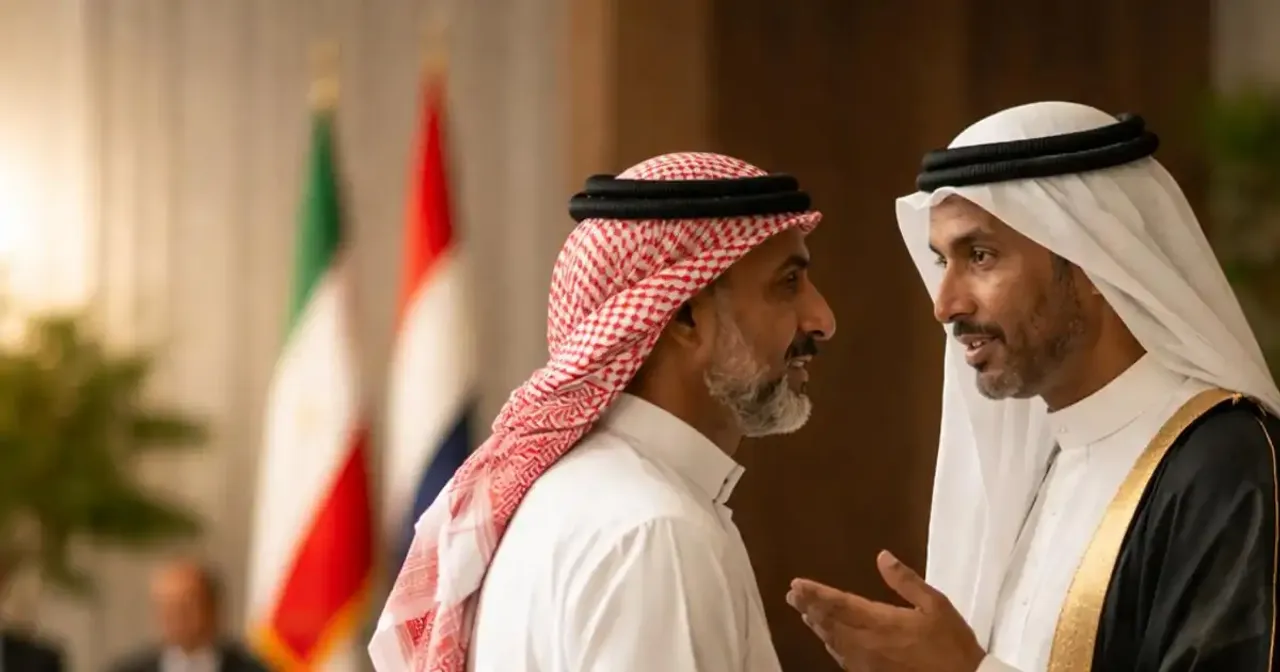
The intersection of Gulf politics and Egypt politics is not ideological; it is structural. Both sides benefit from stability, controlled reform, and predictable regional environments.
Key areas of convergence include:
- Economic interdependence Gulf investment supports Egyptian infrastructure, energy, and development projects.
- Security coordination Shared concerns over regional conflicts, maritime routes, and extremism.
- Diplomatic alignment Preference for de escalation over confrontation in regional disputes.
This alignment is pragmatic rather than sentimental. It persists as long as interests align, not because of permanent loyalty.
The broader regional politics ripple effect
These dynamics influence regional politics beyond the Gulf and Egypt. Smaller states adjust policies based on signals from these power centers. External actors from global powers to international investors read this coordination as a sign of relative predictability.
However, predictability does not mean uniformity. Divergences still exist on:
- Conflict management strategies
- Relations with global powers
- Speed and depth of political reform
The region is moving toward managed competition rather than open rivalry.
Economic pressures as the hidden driver
Economics now shape political decision making more than ideology. Inflation, debt servicing, youth employment, and energy transition pressures affect all regional actors.
In this environment:
- Gulf states deploy capital strategically, not generously
- Egypt negotiates from necessity, not leverage
- Political legitimacy increasingly depends on economic delivery
This reality explains why regional politics feel more cautious, more calculated, and less reactive than in previous decades.
Risks beneath the surface stability
Despite improved coordination, risks remain. Overreliance on financial flows can create dependency. Delayed reforms may store up future social pressure. Regional calm can mask unresolved structural issues.
Key risks include:
- Economic reform fatigue in Egypt
- Social expectations rising faster than delivery in Gulf states
- External shocks disrupting investment and trade flows
These risks will not explode overnight, but they will shape political choices over time.
What to expect next in regional politics
Looking ahead, several trends are likely to define the next phase of regional politics:
- Selective cooperation
States will collaborate where interests overlap and disengage where they do not.
- Economic diplomacy over ideology
Investment, trade, and infrastructure will matter more than political alignment.
- Controlled political reform
Change will be gradual, managed, and tightly framed around stability.
- Reduced tolerance for regional chaos
Even indirect conflicts will face stronger pressure to de escalate.
For search driven readers, the key insight is this: regional politics are becoming less dramatic but more consequential.
Frequently Asked Questions
Why are Gulf politics changing now?
Because oil wealth alone no longer guarantees stability, pushing Gulf states toward diversification and strategic autonomy.
How does Egypt fit into current regional politics?
Egypt acts as a stabilizing partner, leveraging its size and strategic position despite economic constraints.
Are Gulf states and Egypt fully aligned politically?
No. Their cooperation is pragmatic and interest based, not ideological or permanent.
Will regional politics become more stable?
Likely more predictable, but not risk free. Economic pressures remain a key vulnerability.
What should observers watch next?
Economic reforms, investment flows, and diplomatic signaling matter more than rhetoric.