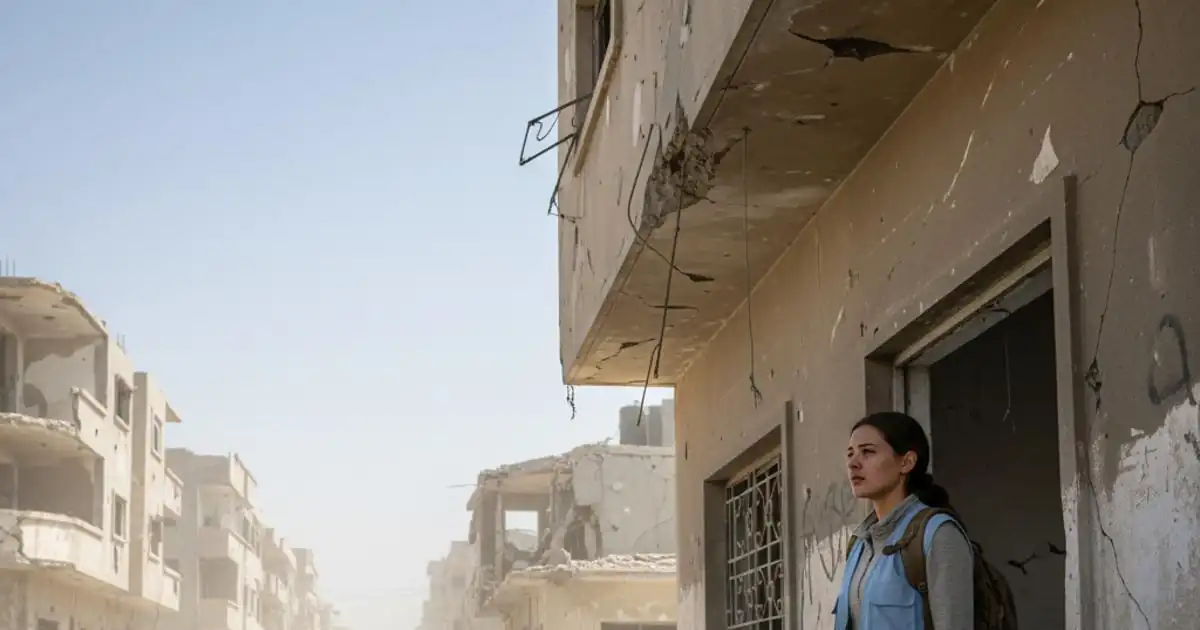

At a time when Sudan is most often associated with Hunger, displacement, and institutional collapse, announcements about large scale development funding can feel almost out of place. Yet the European Union’s decision to launch major support projects in Sudan signals something worth examining more closely not because of the headline figure itself, but because of what this kind of intervention represents at a critical moment.
This is not simply about money entering a fragile country. It is about whether international engagement with Sudan is shifting from Crisis management to conditional recovery, and whether that shift can realistically make a difference under current conditions. For search driven readers looking for clarity rather than breaking news, the key question is: why does this matter now, and what could it change if anything?
Why Is International Support for Sudan Changing Shape?
For years, external involvement in Sudan has largely focused on emergency relief. Food aid, medical supplies, and short term humanitarian assistance were necessary to prevent catastrophe but they did little to address the underlying drivers of vulnerability.
The growing emphasis on project based development support reflects a recognition that Sudan’s challenges are no longer episodic. They are structural. Prolonged conflict, economic paralysis, and institutional breakdown have created conditions where emergency aid alone cannot stabilize society.
This shift suggests a recalibration of priorities:
- From survival to resilience
- From short term relief to medium term recovery
- From parallel humanitarian systems to local capacity building
It is an acknowledgment that without rebuilding livelihoods and basic services, Sudan will remain trapped in a cycle of dependency.
What Do These EU Funded Projects Actually Aim to Do?
While funding announcements often lack granular detail, development focused initiatives in Sudan typically concentrate on areas with the highest multiplier effect.
1) Restoring Livelihoods and Local Economies
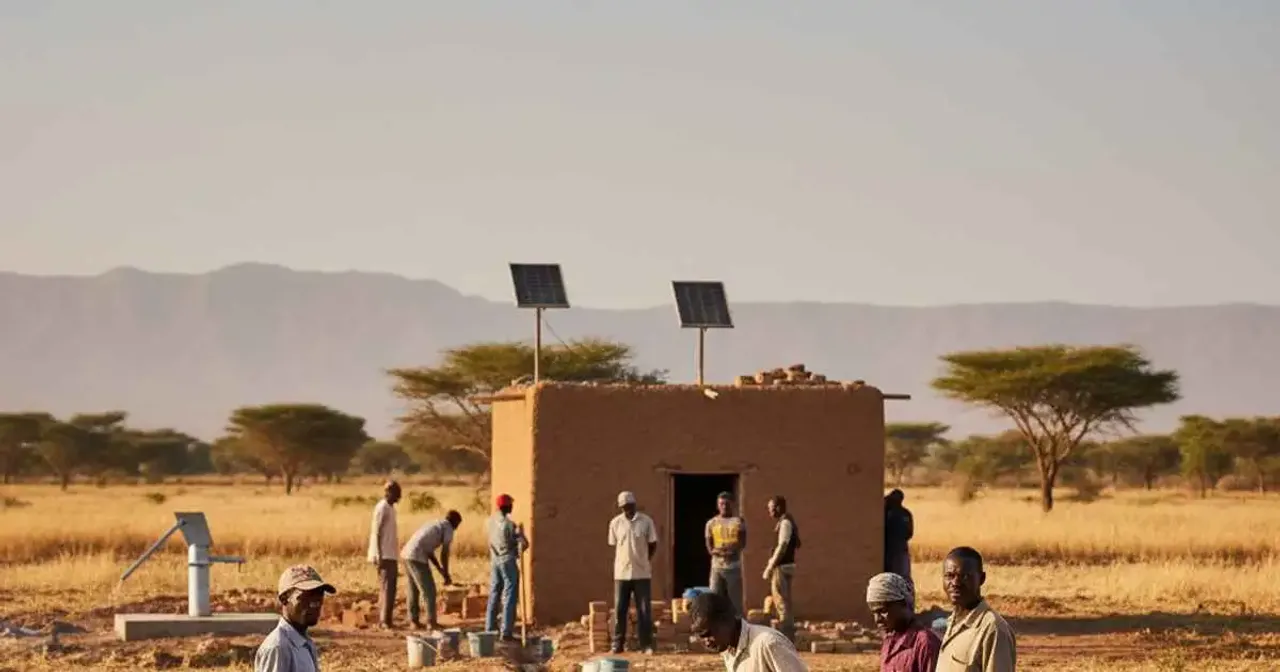
One of Sudan’s most urgent problems is the collapse of income. Households are not only food insecure they are cash poor. Projects that support agriculture, small scale production, and market access can help families generate income rather than rely exclusively on aid.
This approach recognizes a core reality: hunger is as much about lost purchasing power as it is about food availability.
2) Reinforcing Essential Services
Healthcare, clean water, and education systems have been under sustained pressure. Targeted investments in clinics, water infrastructure, and schools reduce long term risks particularly for children while stabilizing communities that might otherwise fracture further.
3) Building Shock Resistance
Resilience is not an abstract concept in Sudan. It means helping communities withstand future shocks whether conflict related, economic, or climate driven without complete collapse. Development projects increasingly integrate risk reduction into their design.
Why Does Sudan Matter Strategically to Europe?
Humanitarian concern is only part of the equation. Sudan occupies a strategic position that makes its Stability relevant far beyond its borders.
- Regional spillover effects: Instability in Sudan affects neighboring countries already facing economic and political stress.
- Migration dynamics: Economic collapse and insecurity drive irregular migration routes that directly concern European policymakers.
- Food system potential: Sudan has significant agricultural capacity. Allowing that potential to deteriorate further would deepen regional food insecurity.
From this perspective, European engagement in Sudan is not just altruistic it is preventive.
Is Funding Enough to Drive Meaningful Change?
A sober assessment is necessary. Money alone does not create recovery. The effectiveness of any project based intervention depends on enabling conditions that are far from guaranteed in Sudan.
Key prerequisites include:
- Minimum levels of security for implementation
- Reliable access to targeted communities
- Local participation rather than top down execution
- Transparent monitoring and accountability mechanisms
Without these, even well funded projects risk becoming fragmented or symbolic.
The Risks: What Could Undermine These Efforts?
Despite positive intentions, several obstacles could limit impact:
- Political and security volatility that disrupts implementation
- Uneven geographic coverage, leaving high need areas excluded
- Short funding cycles mismatched with long term challenges
- Poor coordination among international actors, leading to duplication
These risks are not hypothetical. They have constrained previous interventions and remain highly relevant today.
What Could Success Look Like in Practical Terms?
If these projects are executed effectively, their impact may be gradual rather than dramatic but still meaningful.
Potential outcomes include:
- Reduced pressure on households through income opportunities
- Partial restoration of basic services in underserved areas
- Improved local confidence in recovery pathways
- Less reliance on emergency aid over time
The most important shift would be psychological as much as material: breaking the expectation that crisis is permanent.
Is This the Beginning of a New International Approach?
There are signs that Sudan is becoming a testing ground for a hybrid engagement model one that blends humanitarian relief with development logic even in unstable settings.
This model emphasizes:
- Working with existing local structures where possible
- Designing flexible programs that adapt to insecurity
- Prioritizing systems (food, water, health) over isolated outputs
Whether this approach succeeds in Sudan will influence how similar crises are addressed elsewhere.
What Should Observers and Professionals Watch Next?
For those tracking Sudan beyond the headlines, several indicators will reveal whether this funding translates into real change:
- Are projects reaching the most affected communities, not just accessible areas?
- Do interventions support sustainable income rather than temporary relief?
- Is there transparency in reporting outcomes and challenges?
- Are humanitarian and development efforts aligned rather than competing?
These signals matter more than initial funding announcements.
Frequently Asked Questions (FAQ)
1) Are these projects replacing humanitarian aid in Sudan?
No. They are intended to complement emergency assistance, not eliminate the need for it.
2) Who stands to benefit most from this type of support?
Local communities whose livelihoods and services have collapsed, particularly in rural and peri urban areas.
3) Why not focus entirely on food aid given the scale of hunger?
Because hunger is driven by income loss, market failure, and service collapse not food shortages alone.
4) Can development projects work during ongoing conflict?
They can have partial impact, but full effectiveness requires improved security and political conditions.
5) What does this mean for Sudan’s long term outlook?
It opens a narrow but important path from survival toward gradual recovery, if sustained and well managed.
Final Analysis
European funded projects in Sudan represent more than financial support they reflect an evolving understanding of how prolonged crises must be addressed. The real test is not the size of the investment, but whether it strengthens local capacity, restores dignity through livelihoods, and reduces dependence on perpetual emergency aid.
In a country exhausted by cycles of collapse, the difference between temporary intervention and meaningful recovery lies in execution, accountability, and patience. Sudan’s future will not be transformed overnight but the choices made now will shape whether recovery remains possible at all.