


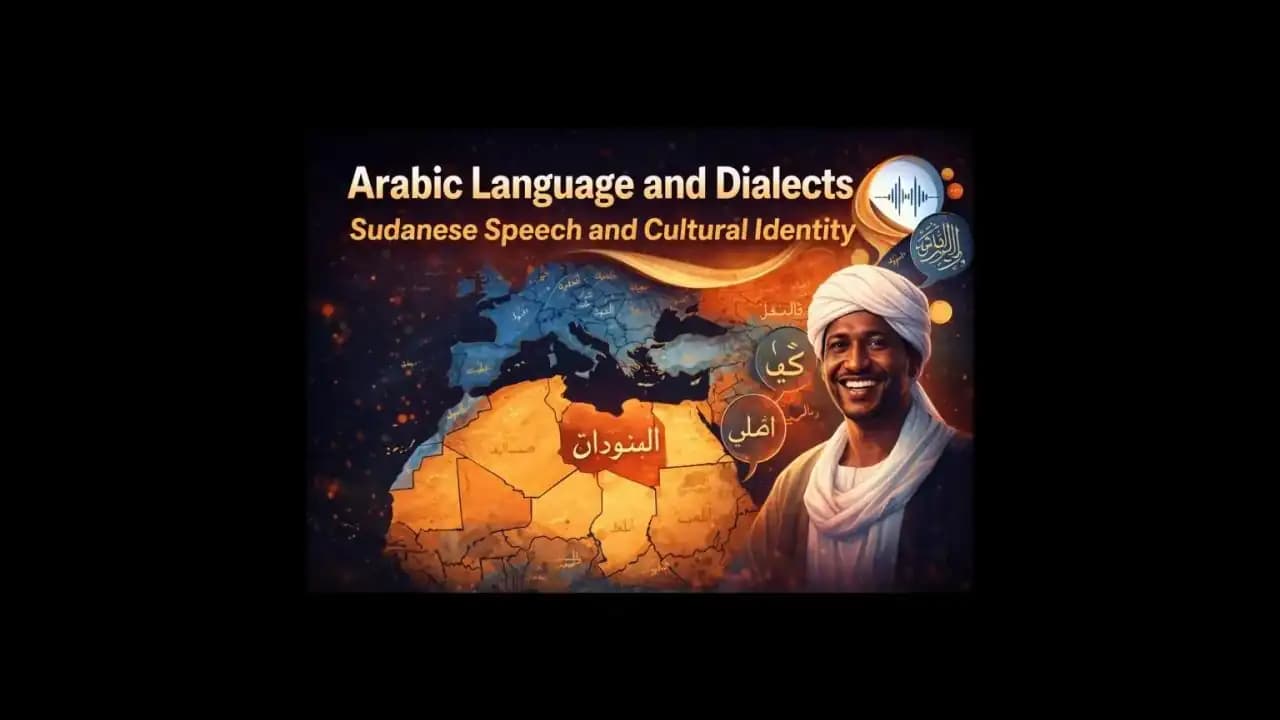
Language carries more than rules or vocabulary. It transmits memory, belonging, humor, and Social meaning. Across the Arab world, everyday speech defines how people connect, disagree, joke, and express emotion. In Sudan, spoken forms reflect layered histories, Regional diversity, and cultural resilience. Exploring dialect diversity reveals how communication shapes identity, power, and daily life. For global readers, regional speech offers insight into how one shared tongue holds many lived worlds shaped by geography, migration, and experience.
Viewed within the broader Arabic linguistic tradition, Sudanese speech illustrates how shared roots can branch into rich regional expression while preserving mutual understanding across the Arab world.
Historical Roots of Dialect Diversity
This language first emerged as an oral, poetic form long before formal grammar existed. Early societies valued eloquence, rhythm, and metaphor, shaping expressive patterns of speech. As it spread beyond the Arabian Peninsula, contact with older civilizations influenced pronunciation and vocabulary across regions such as Egypt, the Levant, North Africa, and Sudan.
Sudan’s linguistic landscape reflects trade routes, Islamic scholarship, African languages, and local autonomy. The dominant tongue did not replace indigenous languages immediately. Instead, it blended with Nubian, Beja, Fur, and Nilotic traditions. This interaction produced Sudanese speech marked by melodic intonation and distinctive expressions.
Rather than weakening unity, Regional evolution strengthened communication. Flexibility allowed communities to express identity while remaining part of a wider cultural framework. Survival came through adaptation, not rigidity.
Formal Language and Everyday Speech
Communication across the region operates through a dual system. The standardized form dominates education, media, and formal writing. Spoken varieties govern homes, markets, music, and friendships. This layering shapes everyday interaction.
The formal register provides structure and prestige. Local speech offers intimacy and authenticity. Speakers move between both forms seamlessly, adjusting tone and vocabulary based on context. This shift reflects Social awareness rather than confusion.
Accent and word choice instantly signal background, region, and generation. Rather than competing, formal and spoken forms complement each other within daily life.
Sudanese Speech and Regional Patterns
Sudanese speech often surprises outsiders. It sounds softer, slower, and more rhythmic than many Regional counterparts. Vowels stretch gently, consonants soften, and phrases flow musically, echoing strong oral storytelling traditions.
Variation within Sudan remains pronounced. Urban speech reflects media exposure and mixing. Western regions preserve structures shaped by local languages. Eastern forms show Red Sea trade influence, while northern areas retain Nubian traces.
Vocabulary highlights cultural priorities. Expressions emphasize patience, respect, and communal harmony. Greetings often expand into conversations, reinforcing Social bonds. Silence carries meaning, signaling reflection rather than distance.
These traits show how spoken forms encode values. Sudanese speech communicates warmth, humility, and relational awareness through structure and rhythm.
Language and Identity Across the Region
Speech functions as a social passport. Accent often signals belonging before personal history emerges. Across the region, recognition happens instantly, shaping expectations.
Sudanese speakers may experience both connection and marginalization based on how they speak. Inside the country, dialect signals origin and community ties. Outside it, differences may invite curiosity or misunderstanding. Many embrace these markers proudly, viewing them as inheritance rather than limitation.
Power dynamics also shape perception. Media historically favored certain regional forms, influencing prestige. Digital platforms now amplify diverse Voices, allowing authenticity to gain visibility.
Language remains deeply tied to identity. Speech becomes both mirror and message, reflecting history while shaping belonging.
Shared Features of Regional Speech
Spoken varieties differ widely yet share a common foundation. Key features include:
- Pronunciation patterns
- Shifts in consonants, vowels, and rhythm define accents.
- Vocabulary choices
Everyday terms vary by region.
- Historical layers
Trade, migration, and conquest leave linguistic traces.
- Cultural context
Social norms shape politeness, humor, and storytelling.
- Media influence
Television, music, and online platforms spread hybrid expressions.
These elements explain why regional speech feels both familiar and distinct.
Expression in Media, Music, and Daily Life
Media plays a central role in shaping perception. Film, television, and music popularize some accents while sidelining others. Cinema elevated Egyptian speech. Television dramas spread Levantine forms. Advertising amplified Gulf styles.
Sudanese Voices long remained underrepresented. Social media changed this. Creators now share humor, stories, and commentary using authentic speech, reshaping perception and highlighting cultural nuance.
Music amplifies emotion through familiar phrasing. Sudanese songs emphasize poetic imagery, longing, and reflection. Dialect choice deepens emotional resonance.
In daily life, speech guides trust. People adjust tone consciously or unconsciously based on setting, from markets to classrooms to family gatherings.
Youth, Change, and Creative Expression
Language evolves fastest among youth. Younger speakers blend Dialects, borrow global terms, and experiment creatively. Digital communication accelerates this shift.
Sudanese youth mix local speech with English, emojis, and online slang. This reflects exposure rather than loss. Traditional expressions remain, activated depending on audience.
Concerns about erosion are common. History shows survival comes through adaptation. Spoken varieties remain living systems, not museum artifacts.
Youth use language to challenge norms and redefine belonging. Speech becomes flexible, not fixed.
Digital Spaces and Linguistic Adaptation
Online communication transformed expression. Informal writing now appears in messages, captions, and comments. Latin-script spellings, emojis, and abbreviations create hybrid forms.
Sudanese speech thrives online through satire and storytelling. Digital spaces reduce gatekeeping, empowering marginalized varieties.
Exposure also increases cross-regional understanding. Familiarity with multiple accents grows, turning difference into exchange.
Preserving Linguistic Identity
Preservation does not mean freezing speech. It means valuing dialects as knowledge systems. Education, representation, and family storytelling support continuity.
Sudanese communities preserve speech through poetry, conversation, and oral tradition. Migration spreads these forms globally, maintaining connection across borders.
Resilience comes from meaning, not perfection. Identity lives in how words feel, not only how they follow rules.
Frequently Asked Questions
What distinguishes regional speech varieties?
They differ in pronunciation, vocabulary, rhythm, and expression while sharing a common structure.
Why does Sudanese speech sound different?
It reflects African linguistic influence, melodic intonation, and historical trade links.
How does speech reflect culture?
It encodes values, humor, norms, and emotional expression.
Will dialects disappear?
Change continues, but disappearance is unlikely due to daily use and cultural attachment.
Language carries history, identity, and belonging in every conversation. Sudanese speech shows how communication adapts while preserving meaning. Across the region, spoken varieties remind us that unity thrives through diversity, not uniformity.