
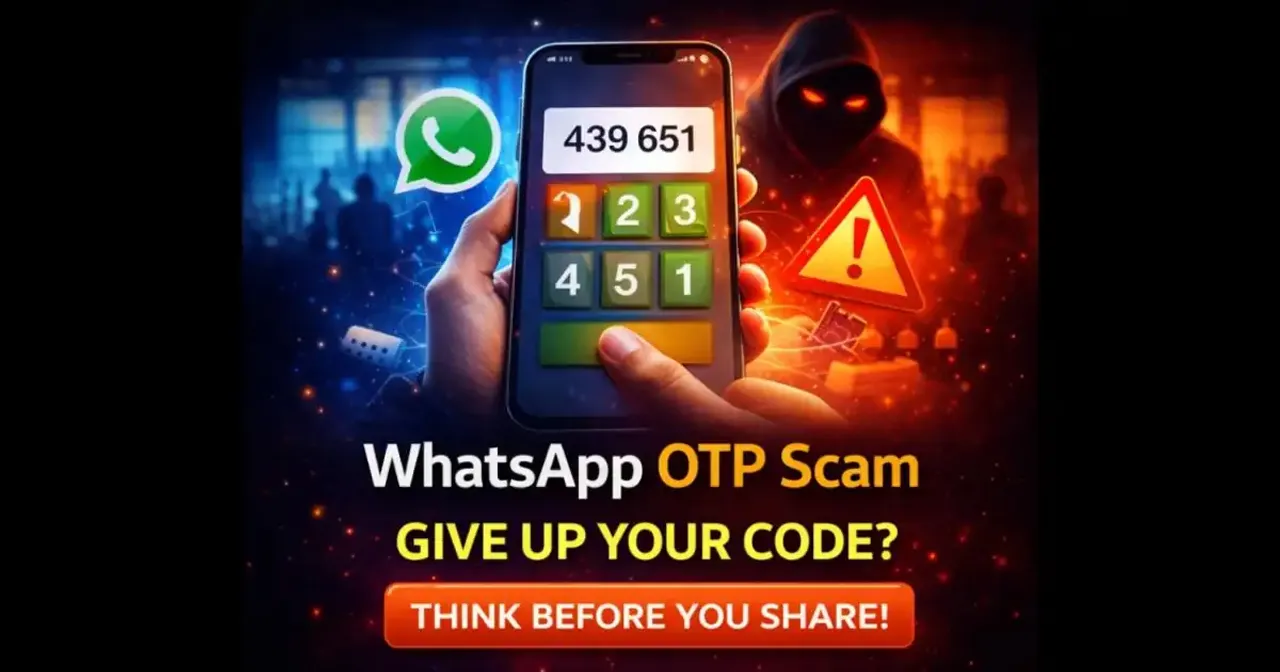
WhatsApp OTP scam incidents are rising in a way that feels strangely personal: not through suspicious emails, but through calm, convincing phone calls that ask for a simple code. You’re told it’s a verification step. A routine security check. A quick confirmation. The caller sounds composed. They know your name. And for a moment, it feels legitimate.
That moment is all it takes.
In recent months, a particular variation has gained attention: scammers requesting one-time passwords (OTP) through WhatsApp calls. It’s a subtle shift from text-based deception to voice-based persuasion, and it works because it blends into the everyday rhythm of digital life.
When the Call Feels Official
Imagine this scenario. Your phone rings. The caller claims to be from WhatsApp support, your mobile provider, or even a bank’s digital security team. They mention “unusual activity” or “account verification.” Shortly after, you receive an OTP on your phone. The caller asks you to read it out loud to “confirm your identity.”
You hesitate. But the conversation feels structured. Professional. They might reference details that make the interaction feel real your phone number, perhaps even the device you use.
The truth is simple: the code you just received was triggered by the scammer attempting to log into your account. By sharing that OTP, you hand over the final key.
The WhatsApp OTP scam relies not on complex hacking, but on cooperation your cooperation.
Why OTP Codes Feel Harmless
We are conditioned to treat OTP codes as normal. Every app seems to send one. Logging into social media, resetting passwords, verifying new devices it’s all part of modern security design.
In theory, OTP systems strengthen protection. They add a second layer beyond passwords. But in practice, that extra layer can become a vulnerability when users misunderstand its purpose.
An OTP is not a confirmation for the caller. It’s proof of identity for the system. The moment you share it with someone else, you effectively transfer control.
What makes the call-based scam particularly effective is tone. A voice feels more trustworthy than a message. It carries emotion, reassurance, even urgency.
And urgency, when delivered calmly, is persuasive.
The Subtle Power of a Phone Call
Over the past year, cybersecurity observers have noted a shift in scam techniques. While phishing emails still exist, voice-based tactics are becoming more refined. Scammers are investing in sounding believable rather than threatening.
A WhatsApp call feels informal yet direct. It bypasses the skepticism people have developed toward suspicious links. You’re not clicking anything. You’re simply talking.
In 2025, as voice communication continues to blend with messaging platforms, that distinction becomes blurry. Many users treat WhatsApp calls as an extension of personal conversation, not as a potential entry point for fraud.
That psychological shift is what scammers exploit.
What Happens After the Code Is Shared
The immediate consequence may be loss of access. Suddenly, your WhatsApp account logs out. Your contacts receive strange messages. Sometimes, the attacker requests money from your friends or family, pretending to be you.
But the ripple effect can extend further.
If you reuse passwords across platforms, attackers may attempt to access email accounts, social media profiles, or even financial services. In some cases, personal photos, conversations, and stored documents become vulnerable.
The damage isn’t always public or dramatic. It can be quiet, unfolding over weeks as compromised accounts are used to gather more information.
And it all starts with a six-digit number that felt insignificant.
Why This Matters More Now
Digital identity is no longer limited to usernames. It includes chat histories, work groups, payment confirmations, and two-factor authentication links. WhatsApp in particular has become central to business communication in many regions, not just personal messaging.
In recent years, small businesses have increasingly relied on WhatsApp for customer support and transactions. Losing access isn’t just inconvenient; it can disrupt income and trust.
The modern WhatsApp OTP scam doesn’t merely target individuals. It targets ecosystems of relationships and professional networks.
As more services connect to phone numbers for authentication, the value of controlling a messaging account increases.
The Role of Familiarity
One reason this scam works so well is that it feels plausible. Platforms regularly send verification codes. Telecom providers call about upgrades or suspicious activity. Banks confirm transactions.
The scam blends into those legitimate experiences.
Moreover, many people assume that because they did not initiate any suspicious action, the call must be genuine. The logic feels sound: “If something is wrong, the company will contact me.”
But most legitimate services do not ask you to read OTP codes aloud to a caller. The code itself usually carries a warning not to share it.
In the moment, however, warnings fade behind the flow of conversation.
Emotional Levers at Play
Scammers are trained in conversational tactics. They may adopt one of several emotional tones:
- Calm authority: “This is a routine security step.”
- Mild urgency: “We need to verify this quickly.”
- Reassurance: “This is just to keep your account safe.”
None of these approaches feel aggressive. That’s intentional. Fear-based scams are easier to detect. Subtle persuasion is harder.
A WhatsApp OTP scam often succeeds because it doesn’t feel like a scam at all. It feels like compliance with normal procedure.
A Growing Pattern in 2025
As digital literacy improves, scams evolve. In 2025, awareness campaigns about phishing emails are widespread. Many users now ignore suspicious links. So scammers pivot.
Voice calls, deepfake audio, and AI-assisted scripts are becoming more common tools. While not every scam uses advanced technology, the direction is clear: mimic authenticity.
This doesn’t mean panic is necessary. It means understanding that the landscape shifts as habits change.
When a platform becomes essential to daily life, it also becomes a target.
Why Awareness Is the Strongest Protection
Technology will continue to add layers of verification. Biometric logins, device recognition, encryption these systems reduce risk. But they rely on user understanding.
An OTP is a private key. It is meant to confirm your identity to the service, not to any third party.
Simply recognizing that no legitimate representative should ask for it changes the equation. That shift in perspective transforms a suspicious request from routine to red flag.
Digital awareness today is less about memorizing rules and more about recognizing patterns.
If a caller asks for something designed to stay private, pause.
The Human Side of Digital Security
Behind every compromised account is a person who trusted a voice on the other end. There’s no shame in that. The design of these scams intentionally reduces suspicion.
What matters is conversation discussing these tactics openly, sharing experiences, and normalizing caution.
In personal growth terms, digital literacy has become part of everyday responsibility. Just as we learned not to share ATM PINs decades ago, we are now learning not to share verification codes.
It’s an evolution, not a failure.
A Quiet Decision That Makes a Difference
The WhatsApp OTP scam thrives on small, quick decisions. A six-digit number spoken aloud. A few seconds of compliance.
Awareness adds friction to that moment. It creates space between request and response.
In a world where communication is instant and constant, that pause may be the most powerful security feature we have.
The next time a call requests a code that arrived on your phone, remember: the code is not for them.
It’s for you.
Frequently Asked Questions
1. What is a WhatsApp OTP scam?
A WhatsApp OTP scam involves fraudsters calling or messaging users and asking them to share a one-time password sent to their phone, allowing attackers to access the account.
2. Why do scammers ask for OTP codes over calls?
Phone calls feel more personal and trustworthy than text messages. Scammers use voice interaction to lower suspicion and create a sense of legitimacy.
3. Can someone access my WhatsApp account with just an OTP?
Yes. If a scammer triggers a login attempt and you share the OTP, they can complete the login process and take control of the account.
4. Does WhatsApp ever call to ask for verification codes?
No. Legitimate platforms typically do not request that users share verification codes with anyone.
5. What should I remember about OTP messages?
OTP codes are private confirmation tools meant only for you. They should never be shared with callers, messages, or anyone claiming to represent a service.