
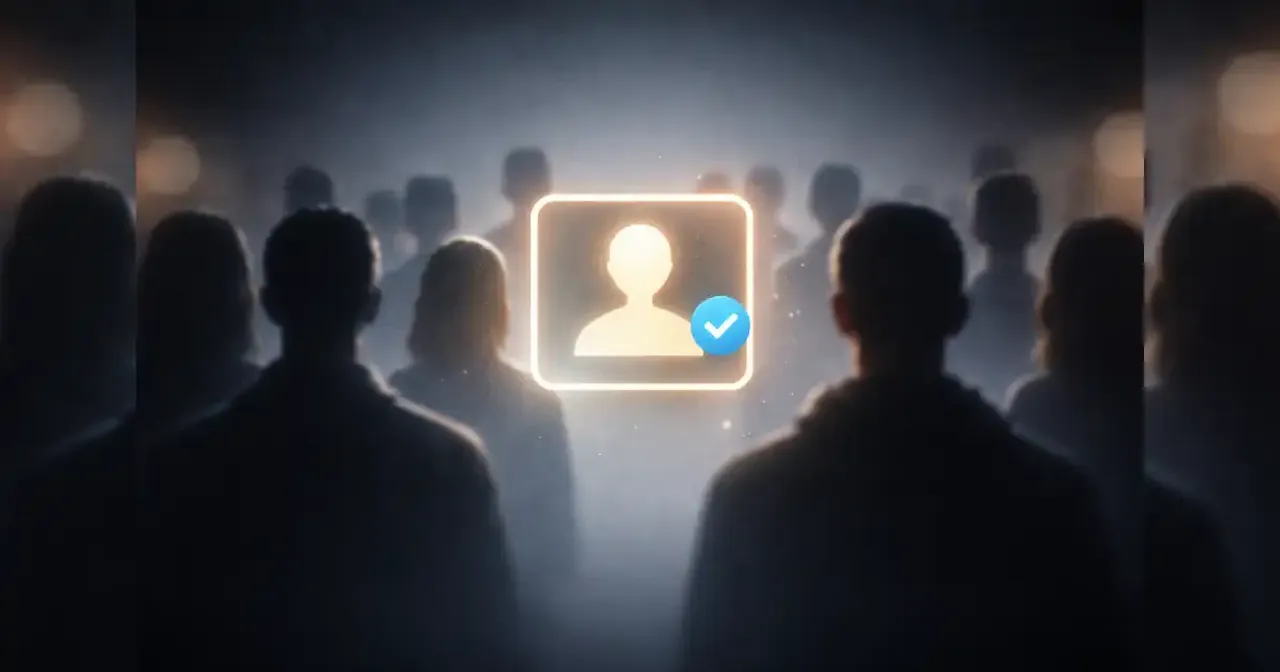
Fake accounts online rarely announce themselves as impostors; they arrive quietly, behave politely, and blend into digital spaces so smoothly that trust forms almost without effort. A friendly comment, a shared interest, a believable profile photo none of it feels alarming. In fact, it feels familiar, and familiarity is where trust begins.
This isn’t a story about gullibility. It’s about how social systems work, and how easily those systems can be mirrored.
Trust is a shortcut, not a flaw
Human trust evolved as a survival advantage. We rely on quick judgments because analyzing every interaction in depth would be exhausting. Online spaces compress this instinct even further. Profiles are small, interactions are brief, and context is limited.
So the brain looks for shortcuts:
Does this person sound normal?
Do they seem engaged?
Do others respond to them?
Fake accounts exploit this perfectly. They don’t try to overwhelm trust; they let trust build itself through familiar signals.
The power of looking ordinary
One of the most effective strategies fake accounts use is avoiding anything unusual. The profile isn’t extreme. The opinions aren’t shocking. The language isn’t clumsy or robotic.
Instead, everything feels average.
A few everyday photos. A short bio with common interests. Posts that echo what others are already saying. Nothing stands out, which is exactly the point. Suspicion is usually triggered by oddness, not normality.
By blending in, fake accounts reduce the mental effort required to accept them as real.
Activity beats authenticity
Many people assume authenticity comes from depthlong posts, detailed stories, strong opinions. Online, activity often matters more than depth.
Accounts that post regularly, like others’ content, and appear consistently over time feel legitimate. Even shallow engagement creates a sense of presence. The account feels “there,” and presence is often mistaken for reality.
Fake accounts understand this. They don’t need to be interesting; they need to be visible in small, steady ways.
Borrowed credibility through social proof
Trust online is rarely built in isolation. People look at how others interact with an account before deciding how to feel about it.
Likes, replies, mutual followers, shared conversationsthese are signals that say, this account has already been accepted. Fake accounts often position themselves where interaction is likely, commenting on popular posts or joining active discussions.
Once a few real people engage, the account benefits from borrowed credibility. The trust wasn’t earned directly; it was inherited.
Emotional alignment creates fast bonds
Fake accounts online are especially effective when they align emotionally rather than factually. They agree. They sympathize. They validate.
When someone reflects your feelingsabout work stress, social issues, hobbies, or frustrationsit creates a subtle bond. The interaction feels human because it mirrors emotional experience, not because it proves identity.
This emotional resonance lowers defenses. The account feels relatable, and relatability is often mistaken for honesty.
Low stakes interactions build comfort
Trust doesn’t usually form during high-risk moments. It forms during low-stakes ones. A casual reply. A harmless joke. A shared observation.
Fake accounts often spend long periods doing nothing risky at all. They exist, interact lightly, and wait. By the time a meaningful interaction Happens, the account already feels familiar.
Familiarity doesn’t feel like trust being created. It feels like trust already exists.
Why profiles are rarely questioned
Most platforms encourage quick interaction, not deep inspection. Profile pages are secondary; feeds are primary. People respond to what appears in front of them without clicking further.
Fake accounts take advantage of this by ensuring the surface looks convincing. The deeper layers are rarely examined unless something feels offand if nothing feels off, no one checks.
In digital spaces, absence of doubt is often mistaken for confirmation.
The role of timing and patience
Contrary to popular belief, many fake accounts are not rushed. They don’t immediately ask for favors, links, or personal information. They wait.
Patience is a powerful trust signal. An account that has existed for months, posting occasionally and interacting naturally, feels established. Time becomes proof.
This long-game approach makes later actions feel less suspicious because the account has already passed the “why would they wait so long?” test in the user’s mind.
Platforms reward engagement, not intent
Algorithms prioritize engagement: replies, reactions, shares. They don’t measure sincerity. Fake accounts that understand this can appear prominently simply by participating effectively.
Visibility reinforces legitimacy. If an account appears often, users subconsciously assume it belongs there. The platform itself becomes an unspoken endorsement.
This isn’t manipulation of users alone; it’s alignment with how systems are designed to surface content.
Why intelligence doesn’t prevent trust
It’s tempting to think that only inexperienced users fall for fake accounts. In reality, experience can increase risk.
Experienced users move faster. They recognize patterns quickly and rely on intuition. Fake accounts are designed to fit those patterns, not disrupt them.
Trust forms not because people don’t know better, but because nothing triggers the need to know better.
When trust becomes momentum
Once trust begins, it reinforces itself. Interactions feel smoother. Responses feel expected. Doubt feels unnecessary.
At this stage, even small inconsistencies are overlooked because questioning them would require breaking the flow of a comfortable interaction. The brain prefers continuity over interruption.
This is how trust turns into momentumself-sustaining, quiet, and rarely examined.
Why this matters beyond scams
Not all fake accounts aim to steal money or data. Some shape opinions, amplify narratives, or influence conversations subtly. The harm isn’t always personal or immediate.
When fake accounts blend into discourse, they alter perception of consensus, popularity, or normality. They don’t need to persuade directly; they only need to appear present.
Trust, once granted, gives them space to existand space is influence.
The future of digital identity
As online spaces grow, distinguishing real from fake will become harder, not easier. Tools may improve, but so will imitation. Profiles will look more polished. Interactions more nuanced.
The challenge won’t be identifying deception everywhere. It will be understanding how easily trust formsand why that’s human, not foolish.
Awareness doesn’t mean suspicion of everyone. It means recognizing the mechanisms at work.
Trust with awareness, not fear
Learning how fake accounts gain trust isn’t about withdrawing from online spaces. It’s about engaging with clarity.
Trust doesn’t need to disappear; it needs context. When people understand that trust forms through familiarity, activity, and emotional alignment, they become less surprised when it happensand more capable of noticing when it’s happening too easily.
The goal isn’t to stop trusting. It’s to trust without autopilot.
A quieter kind of vigilance
Real digital literacy isn’t constant alertness. It’s calm observation. Noticing patterns. Recognizing that comfort can be manufactured as easily as content.
Fake accounts online succeed because they behave like the system expects. Once that’s understood, their power diminishesnot through fear, but through perspective.
And perspective, unlike suspicion, doesn’t exhaust the mind.
FAQs
Why do fake accounts online feel so real?
Because they mimic normal behavior, use familiar language, and engage in low-risk interactions that build comfort over time.
Do fake accounts always have malicious intent?
Not always. Some exist to influence conversations or create artificial engagement rather than directly harm individuals.
Why don’t platforms catch fake accounts immediately?
Because many fake accounts behave within normal usage patterns, making them difficult to distinguish from real users.
Can experienced users still trust fake accounts?
Yes. Familiarity and emotional alignment can bypass skepticism, even for digitally savvy users.
Is the solution to stop trusting online?
No. The solution is awarenessunderstanding how trust forms and recognizing when it’s happening automatically.