

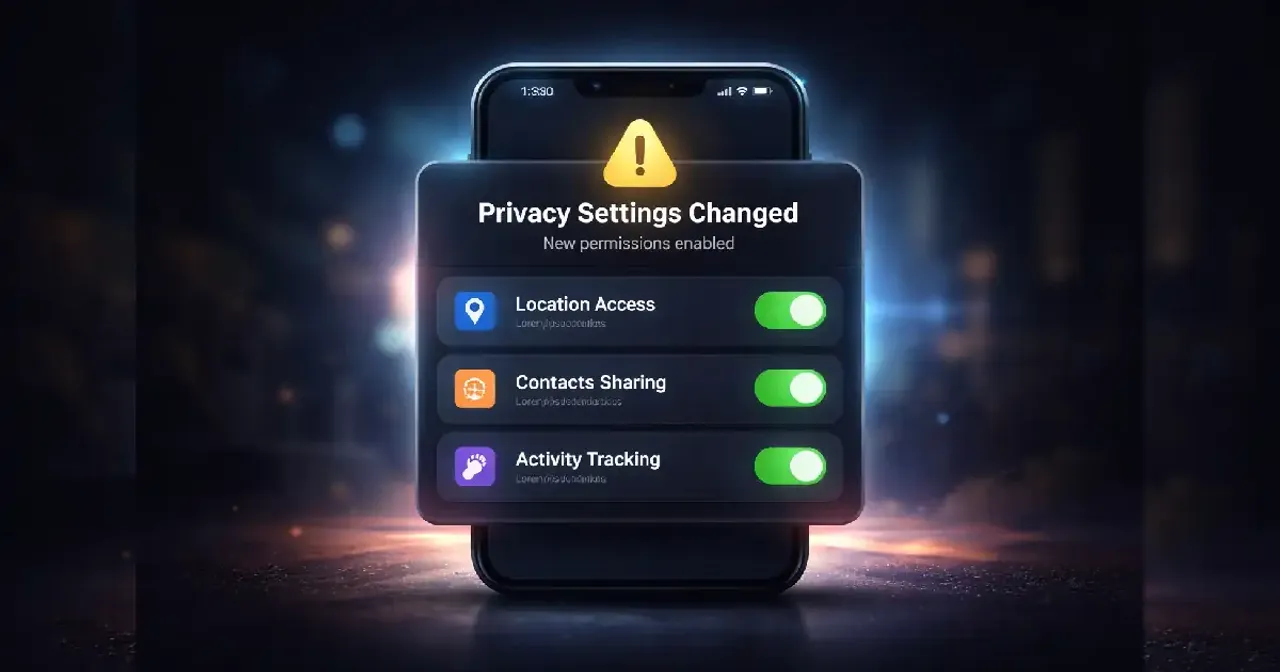
App privacy changes rarely announce themselves with a loud alert or a bright banner. They usually arrive quietly after an update, a redesign, or a routine “improvement” you barely noticedyet they can reshape how much of your digital life is visible, shared, or stored.
Most of us live inside apps more than we realize. They’re where we chat, shop, track health goals, learn new skills, and unwind at night. Over time, apps begin to feel familiar, even safe. That sense of familiarity is exactly why subtle shifts in privacy settings can slip past unnoticed. Nothing dramatic happens. The app still opens. Your data keeps syncing. Life goes on. But under the surface, the rules may have changed.
This isn’t about panic or paranoia. It’s about awarenessunderstanding how modern apps evolve, why privacy settings don’t always stay fixed, and what that means for ordinary users trying to make informed choices in a constantly updating digital world.
When updates change more than the interface
App updates are framed as progress. New features, smoother animations, better performance. Most people tap “Update” without a second thought, trusting that the changes are improvements rather than trade-offs. And often, they are.
But updates are also moments when privacy frameworks shift. An app might introduce a new feature that requires broader access to contacts, photos, or location data. Sometimes permissions are bundled together under a single toggle, making it harder to tell what’s truly new. In other cases, default settings quietly reset, re-enabling data sharing options that were previously turned off.
The challenge isn’t malicious intent in every case. It’s complexity. As apps grow, so do their data needs. A messaging app that adds payment features suddenly handles financial information. A fitness app that adds social sharing may start processing more personal metadata. Each expansion brings new decisions about what data is collected, how long it’s kept, and who it’s shared with.
From the user’s perspective, these shifts often appear as background noiseif they appear at all.
The design choices that keep changes invisible
Privacy settings are shaped as much by design as by policy. Many apps place privacy controls several layers deep in menus, away from daily interactions. Changes are often communicated through long update notes or revised terms that few people read in full.
Language also plays a role. Phrases like “improving personalization” or “enhancing your experience” sound positive but vague. They rarely explain, in plain terms, what kind of data flow has actually changed. Even when disclosures are technically present, they can feel abstract or overwhelming, especially for users who don’t live and breathe digital policy.
There’s also the issue of timing. Notifications about privacy updates may appear once, briefly, during a busy moment. Miss it, and the app moves on as if you agreed by default. No reminder. No follow-up.
None of this requires deception to be effective. It simply takes advantage of human attention limits.
Why people rarely notice until it matters
Privacy is often invisible until it isn’t. A sudden increase in targeted ads. A recommendation that feels uncomfortably specific. A data breach notification months after a change was introduced. These moments prompt the realization that something shifted earlier, quietly.
For many users, privacy feels abstract compared to immediate benefits. A smoother app experience today outweighs hypothetical risks tomorrow. This is a rational human response, not carelessness. Digital environments are designed for convenience, and frictionless experiences leave little room for reflection.
Another factor is trust built over time. Apps that have behaved responsibly in the past earn goodwill. When they change settings later, users assume continuity. That trust isn’t misplacedbut it can become outdated as companies grow, merge, or pivot business models.
Privacy isn’t static. Neither are the incentives shaping it.
The real-life implications beyond “data”
It’s easy to talk about privacy in terms of data points and permissions, but the real impact is more personal. App privacy changes can influence how much control people have over their routines, relationships, and sense of autonomy.
Location data, for example, isn’t just a coordinate. It’s patterns of movement that can reveal work schedules, habits, or places of worship. Contact access isn’t just names and numbers; it’s social networks mapped out in detail. Even seemingly harmless data, when combined over time, can create intimate profiles.
For students and young professionals, this can shape opportunitieswhat ads they see, what content is recommended, what assumptions algorithms make about them. For parents, it raises questions about children’s digital footprints forming before they’re old enough to consent meaningfully.
These effects accumulate slowly. That’s why unnoticed changes matter.
The blurred line between choice and default
One of the most powerful forces in app design is the default setting. Defaults shape behavior more than explicit choices. When a privacy option is enabled by default, most users will never change itnot because they agree, but because they never see it.
When apps adjust defaults during updates, they effectively reset the baseline of consent. Users who previously opted out may find themselves opted back in, without a clear moment of decision. From a legal standpoint, disclosures may exist. From a human standpoint, the experience feels passive.
This isn’t unique to apps. Defaults influence everything from retirement savings to browser settings. But in digital spaces, where changes happen frequently and invisibly, the effect is amplified.
Digital literacy as a form of self-defense
Understanding app privacy changes isn’t about mastering technical details. It’s about cultivating a mindset: recognizing that digital tools evolve, and that personal boundaries need occasional revisiting.
Digital literacy today includes knowing that silence doesn’t always mean stability. It includes the awareness that “free” services often adjust how they operate to stay profitable. It also involves accepting that no app is finished; every one is a work in progress shaped by market pressures, regulations, and user behavior.
This perspective shifts the conversation from blame to agency. Instead of asking whether an app is “good” or “bad,” users can ask how its evolution aligns with their comfort level at this point in time.
Why this issue keeps growing, not shrinking
As apps compete in crowded markets, data becomes a differentiator. Personalization, predictive features, and AI-driven tools all rely on richer datasets. This creates ongoing pressure to collect more, not less.
At the same time, regulations push companies to disclose more informationoften resulting in longer policies rather than clearer ones. The paradox is that increased transparency can sometimes overwhelm users instead of empowering them.
Looking ahead, privacy settings are likely to change more frequently, not less. New devices, new sensors, and new integrations will continue to blur boundaries between digital and physical life. The challenge will be making those shifts understandable to the people most affected by them.
Trust in the age of constant updates
Trust used to be built on stability. Today, it’s built on communication. Apps that acknowledge change openlyeven when it’s inconvenienttend to maintain credibility over time. Those that rely solely on buried disclosures risk eroding user confidence, even if they comply with formal requirements.
For users, trust becomes an ongoing assessment rather than a one-time decision. It’s less about reading every policy and more about noticing patterns: how often settings change, how clearly updates are explained, and how responsive platforms are when concerns arise.
This doesn’t require cynicism. It requires attentiveness.
A quieter relationship with technology
Living with apps means accepting a certain level of change. The goal isn’t to freeze technology in place but to remain aware of how it shapes personal space over time.
Not every privacy shift is harmful. Some genuinely improve security or give users more nuanced control. The problem arises when changes happen without context, leaving people unaware of new trade-offs they didn’t consciously choose.
A healthier digital culture isn’t built on fear of apps, but on informed use. It’s built on understanding that convenience and privacy are in constant negotiationand that negotiation deserves attention, even when it’s quiet.
Frequently Asked Questions
Why do apps change privacy settings after updates?
Apps evolve to add features, improve performance, or adapt to business and legal requirements. These changes often require different data access, which can lead to updated privacy settings.
Are app privacy changes always intentional?
Not always. Some changes result from technical restructuring or new integrations rather than a deliberate attempt to collect more data. The impact, however, can be the same for users.
How can users tell if an app’s privacy behavior has changed?
Often, changes are noted in update summaries or revised policies, though they may not be prominently highlighted. Increased personalization or different permission prompts can also be signals.
Do all apps reset privacy settings during updates?
No. Practices vary widely. Some apps preserve user choices carefully, while others adjust defaults when introducing new features.
Is this a problem only with free apps?
Paid apps can also change privacy settings, especially if they add new services or analytics tools. Pricing models don’t automatically determine privacy practices.
Privacy in the app-driven world isn’t lost in a single moment. It shifts gradually, shaped by updates, defaults, and design choices that rarely demand attention. Recognizing that quiet evolution is the first step toward a more balanced relationship with the tools we rely on every day.