
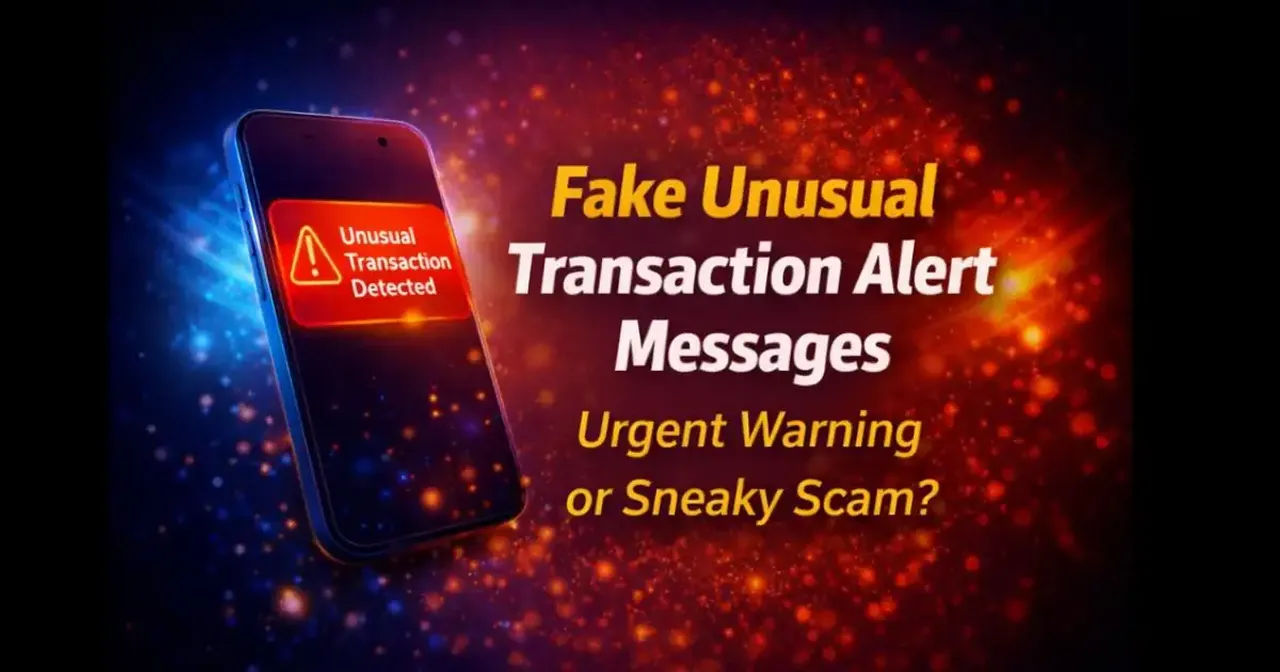
Fake unusual transaction alert messages have become one of the most believable digital deceptions of recent years. You’ve probably seen one or at least felt the jolt it causes. A message arrives claiming your bank has detected suspicious activity, urging you to act fast. The wording feels official. The timing feels cruelly perfect. And for a split second, even cautious people hesitate. That moment of doubt is exactly what these alerts are designed to create.
Why this message feels so real
Banks have spent years training customers to pay attention to security notifications. Push alerts, SMS updates, and emails about card usage are now routine. Over time, “unusual transaction detected” has become a familiar phrase, one that signals protection rather than danger.
Scammers understand this deeply. Instead of inventing something new, they mirror language people already trust. The phrasing is rarely dramatic. It’s calm, professional, and vaguejust enough detail to sound authentic without giving anything away. In recent years, as mobile banking became central to daily life, these messages have only grown more polished.
What makes them especially convincing is that they don’t accuse you of wrongdoing. They position the bank as alert and helpful, and you as a valued customer who simply needs to confirm something. That emotional framing lowers defenses.
The psychology behind “urgent but polite”
Fake bank alerts rarely shout. They nudge.
The message often includes subtle urgency: “Please verify immediately” or “Action required to avoid temporary suspension.” It’s not outright panic, but it creates a quiet pressure. Humans are wired to resolve uncertainty, especially when money is involved. Even people who consider themselves tech-savvy can feel compelled to respond quickly.
Another psychological lever is timing. Many of these alerts arrive late at night, early morning, or during busy work hoursmoments when attention is fragmented. In the past year, reports have shown that scam messages increasingly align with times people are most distracted, making critical thinking harder.
How scammers imitate real banking behavior
Modern scam messages often follow the same structure used by legitimate banks:
- A neutral opening referencing your account
- A short explanation of a detected issue
- A call to “confirm,” “review,” or “secure” your account
They may include partial account numbers or generic terms like “your debit card ending in XX.” None of this proves authenticity, but it feels familiar.
In some cases, the message appears in the same SMS thread where legitimate bank messages previously appeared. This isn’t coincidence. In recent years, attackers have exploited weaknesses in messaging systems to insert fake alerts into existing threads, making them even harder to spot.
Why these scams persist despite awareness
It’s easy to assume that widespread warnings would make these scams ineffective. Yet they continue to workbecause they evolve with behavior.
Banks genuinely do send alerts about unusual activity. Customers are told to act quickly if something looks wrong. Scammers simply position themselves in that gray area between vigilance and panic.
Another factor is trust fatigue. People receive dozens of notifications dailyfrom apps, services, and institutions. Constant alerts blur together, making it harder to pause and evaluate each one carefully. In this environment, a well-crafted fake unusual transaction alert doesn’t stand out as suspicious; it blends in.
The subtle details that often get overlooked
Many fake alerts don’t contain obvious errors. Spelling and grammar are often flawless. Logos, colors, and formatting may closely resemble official communications. Instead, the clues tend to be contextual rather than visual.
For example, the message may ask you to click a link to “restore access,” something most banks avoid doing via SMS. Or it may request confirmation through a generic web page rather than directing you to your official banking app.
What’s tricky is that these differences are easy to miss when you’re focused on the idea that your money might be at risk. Emotional focus narrows attention.
How digital habits have changed the risk
Over the past few years, banking has shifted almost entirely to smartphones. Physical branches matter less. Apps matter more. That convenience comes with a subtle cost: people interact with their finances in quick glances rather than deliberate sessions.
Checking balances while waiting in line or approving payments mid-conversation has become normal. Scammers design messages that fit into this pattern. A fake alert doesn’t demand a long interactionjust a tap, a glance, a quick response.
As digital literacy grows, scams don’t disappear; they become quieter and more refined.
The real-world consequences go beyond money
Financial loss is the most obvious risk, but it’s not the only one. Responding to a fake alert can expose personal information that fuels future attacks. Once scammers know a number is active and responsive, it may be targeted repeatedly with different tactics.
There’s also an emotional cost. Many victims describe lingering anxiety about their finances, even after resolving the issue. Trust in digital systems erodes, making people hesitant to use tools that genuinely make life easier.
In recent times, this erosion of trust has broader implications. As more services move online, confidence in digital communication becomes essentialnot optional.
Why “just ignore it” isn’t realistic advice
Well-meaning advice often suggests ignoring any message that feels suspicious. But reality is messier. Real bank alerts do require attention. Ignoring everything isn’t practical or safe.
The challenge isn’t avoidance; it’s interpretation. Digital literacy today isn’t about knowing that scams exist. It’s about understanding how legitimate systems usually behaveand noticing when something doesn’t quite match that pattern.
That understanding develops over time, through exposure and reflection, not fear.
How banks and users are adapting
Banks are aware of how closely scammers mimic their language. In recent years, many institutions have adjusted how they communicate, emphasizing that they won’t ask for certain actions via SMS or email. Some apps now include in-app security inboxes to reduce reliance on text messages.
Users, too, are becoming more reflective. Conversations about scams are more open, less judgmental. This matters. Shame has long kept people silent about falling for scams, which only helps scammers refine their tactics.
Digital literacy isn’t just technical knowledge; it’s cultural awareness.
What this trend says about the future
Fake unusual transaction alert messages reveal something larger about our digital lives. As systems become smarter and more protective, attackers don’t fight the technologythey exploit trust.
Looking ahead, the challenge won’t be recognizing crude scams. It will be navigating communications that feel almost indistinguishable from legitimate ones. The line between real and fake won’t be obvious; it will be contextual.
That doesn’t mean the situation is hopeless. It means awareness needs to evolve alongside technology, focusing less on fear and more on understanding patterns of communication.
A calmer way to think about digital threats
It’s tempting to frame scams as constant dangers lurking everywhere. That framing creates anxiety but not clarity. A healthier approach is to view them as part of the broader digital environmentsomething to be aware of, not obsessed over.
When people feel calm, they notice details. When they feel rushed, they react. Fake alerts succeed by creating urgency without drama. Countering them starts with slowing the moment down.
The takeaway that actually matters
The rise of fake bank alerts isn’t just about fraud. It’s about how modern life conditions us to respond quickly, trust interfaces, and resolve uncertainty fast. Recognizing that pattern helps more than memorizing warning signs.
Digital literacy today means understanding not only how scams work, but why they workon smart, cautious people living busy lives.
Frequently Asked Questions
Why do fake bank alerts use the phrase “unusual transaction detected”?
Because it mirrors real banking language and triggers concern without causing immediate panic. It sounds protective rather than accusatory.
Do real banks ever send unusual transaction alerts by SMS?
Yes, many banks do send SMS alerts, which is why these scams are effective. The difference usually lies in what the message asks you to do next.
Why do these messages often arrive at odd times?
Scammers time messages to moments when people are distracted or tired, making quick reactions more likely.
Can someone be targeted even if they ignore the message?
Ignoring a single message usually prevents immediate harm, but active numbers may still receive future attempts using different tactics.
Are these scams becoming more common recently?
They’ve become more refined rather than simply more frequent, reflecting changes in how people use digital banking today.
Digital threats don’t announce themselves with flashing warning signs. They arrive quietly, borrowing the language of trust. Understanding thatnot fearing itis what allows people to move through the digital world with confidence rather than suspicion.