


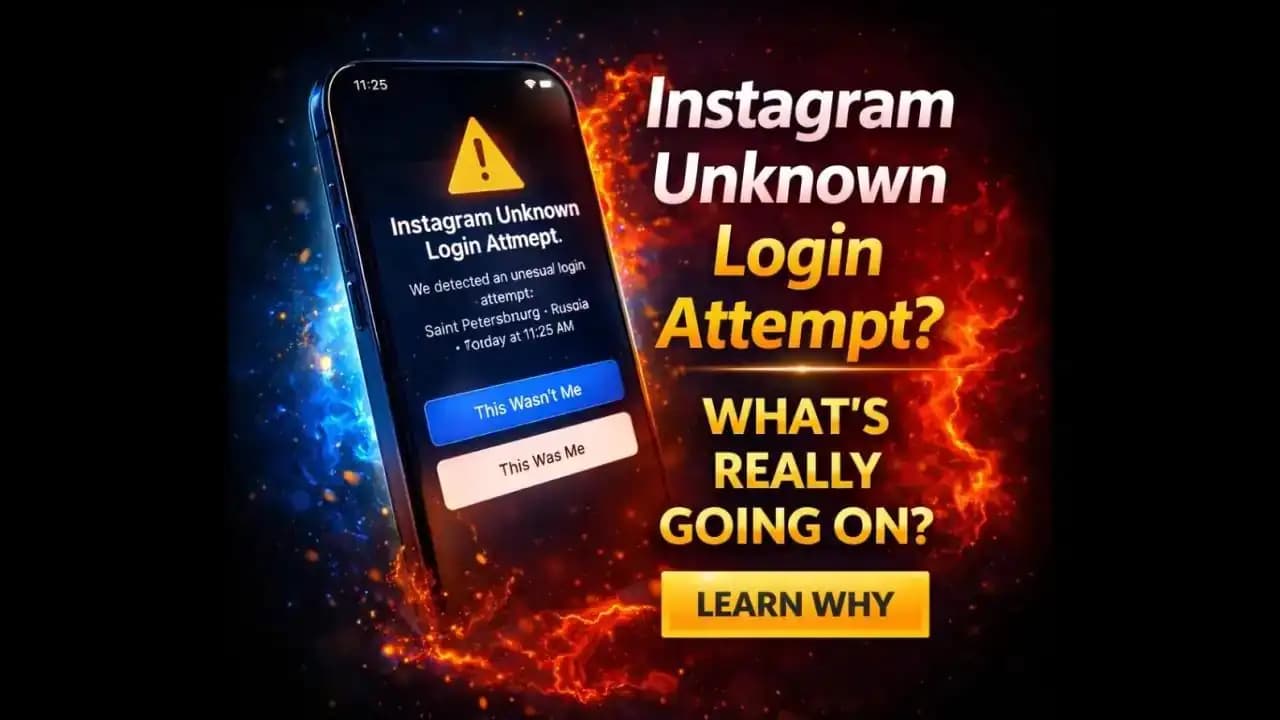
Instagram unknown login attempt notifications can stop you mid-scroll, especially when they mention a city or country you’ve never visited. The message is brief, almost casual. But the implication feels personal: someone, somewhere, tried to access your account. In a world where Instagram has become part of our identity, reputation, and social memory, that small alert can carry an outsized emotional weight.
Over the past few years, and especially heading into 2026, these Alerts have become more common. Some are harmless. Others signal something more deliberate. What matters isn’t panic. It’s understanding what these notifications actually mean and why they hit so close to home.
Why Instagram Sends Unknown Login Attempt Notifications
Instagram sends unknown login attempt Alerts (1) when the platform detects a login request that appears unusual compared to your normal activity.
This can happen for several reasons:
- Someone entered your password incorrectly
- A login attempt came from a different location
- A new device tried accessing the account
- A VPN changed your apparent region
- Instagram’s automated systems detected suspicious behavior
In many cases, the alert is precautionary rather than proof that the Account was hacked.
However, the notification should still be taken seriously because it signals that Instagram detected activity outside your normal login pattern.
When Your Digital Self Feels Exposed
Instagram isn’t just an app. For many people, it’s a curated archive of friendships, creative work, milestones, conversations, and even professional credibility. A login alert from an unknown location doesn’t just feel like someone trying to enter a password-protected Account (1). It feels like someone knocking on the door of your social life.
That emotional reaction makes sense. Our online profiles hold:
- Private messages and conversations
- Personal photos and stories
- Business partnerships and brand collaborations
- Years of digital history
The fear isn’t only about losing Access. It’s about losing control of how we’re seen.
Why Do Instagram Unknown Login Attempts Happen?
Not every unknown login attempt is a targeted attack. In fact, most are not. But the reasons behind them vary.
1. Automated Credential Testing
Large-scale data leaks happen across the internet every year. When passwords from one service are exposed, they’re often tested automatically on other platforms. If you’ve reused a password, even years ago, it might be tried on Instagram.
This isn’t personal. It’s statistical.
2. Mistyped Emails or Usernames
Sometimes another user simply enters the wrong email address or username. If the system recognizes your account, you may receive a Security alert. No one is necessarily “targeting” you.
3. VPN and Location Confusion
Instagram uses IP-based location detection. If you or someone else uses a VPN, travels frequently, or switches devices, the login location may appear unfamiliar.
A login attempt from a different city might just reflect how internet routing works today.
4. Targeted Social Engineering
In rarer cases, someone may be deliberately trying to access your Account again especially if you run a business profile, have a large following, or recently had a public disagreement or visibility spike.
Here, the motive isn’t random. It could involve reputation damage, impersonation, or data access.
Why These Alerts Feel So Threatening
The technical explanation rarely calms the emotional response.
Instagram plays a visible role in how we present ourselves. It’s where:
- Creative professionals showcase portfolios
- Entrepreneurs build trust
- Students maintain social circles
- Public figures manage perception
An unauthorized login attempt feels like someone trying to step into your identity. Even if they never succeed, the idea alone triggers discomfort.
Psychologically, this taps into two modern anxieties:
- Loss of narrative control – What if someone posts something damaging?
- Exposure of private communication – What if messages are accessed?
These fears aren’t irrational. They reflect how deeply intertwined social platforms have become with real-world consequences.
What an Instagram Unrecognized Login Email Usually Means
Many users receive emails with phrases such as:
- “We noticed a login attempt”
- “Unrecognized login”
- “Suspicious login detected”
- “New login from unknown location”
These messages are designed to warn users when Instagram detects access attempts that differ from normal behavior.
Sometimes the alert is triggered by legitimate activity, including:
- logging in from another city
- using a VPN
- switching devices
- clearing browser cookies
- traveling internationally
Other times, the alert may indicate that someone is actively trying to access the account.
This is why users should always review account activity rather than ignoring the notification.
Instagram Login Attempts From Unknown Locations
Instagram compares login behavior against previous account activity.
If a login suddenly appears from another city, country, or device type, the platform may classify it as suspicious.
This does not automatically mean the account was hacked.
Location alerts can sometimes appear inaccurate because:
- IP databases are imperfect
- mobile networks constantly change routing
- VPN services mask locations
- nearby cities may be grouped together
However, if the login location is completely unfamiliar and coincides with password-reset emails or strange account activity, users should secure the account immediately.
Recommended actions include:
- changing the password
- reviewing active sessions
- enabling two-factor authentication
- removing unknown devices
The Difference Between Attempt and Access
A crucial detail often gets lost: an attempt is not the same as a breach.
Instagram sends alerts even when login attempts fail. In many cases:
- The password was incorrect
- The security code wasn’t verified
- The login was blocked
The system is designed to notify before damage occurs. The alert itself may be proof that protective layers are working.
Understanding this distinction can reduce unnecessary panic.
How Public Profiles Change the Risk
If your account is public, has a significant following, or represents a brand, unknown login attempts may increase over time.
Why?
Visibility attracts attention both positive and negative.
Creators, small business owners, and influencers often become targets for account takeover attempts. Hijacked accounts can be used for:
- Cryptocurrency scams
- Fake giveaways
- Phishing links
- Reputation sabotage
Even individuals with modest followings may face impersonation risks. In recent years, impersonation-based scams have expanded globally, affecting users across age groups.
What Unknown Locations Actually Indicate
When Instagram says a login attempt came from another country, it doesn’t always mean someone physically there tried to access your account.
IP addresses can reflect:
- Proxy servers
- VPN routing
- Cloud hosting networks
- Automated scripts running from data centers
An “unknown location” might simply be the exit point of a Digital tool not a person sitting in that city.
That nuance matters. Geography in cyberSecurity (1) is often misleading.
The Reputation Factor
Beyond access, there’s another layer: reputation.
Imagine waking up to find your account posting suspicious content. Even if you regain control quickly, screenshots can circulate. Trust can erode in hours.
For professionals, artists, educators, and entrepreneurs, social credibility is currency. That’s why login alerts feel urgent they hint at potential public consequences.
In today’s environment, where digital identity is deeply linked to employment and opportunity, even small disruptions carry weight.
Why It’s Becoming More Common
In recent months and years, digital identity theft has evolved. Attackers don’t always aim to steal data. Sometimes they aim to:
- Gain temporary access
- Run automated scams
- Harvest contact lists
- Redirect followers
Platforms respond by increasing alerts and security checks. So paradoxically, the rise in notifications may reflect stronger detection systems rather than more successful attacks.
In 2025, platforms are more aggressive about alerting users early sometimes before real harm occurs.
The Quiet Role of Password Habits
Many login attempts trace back to something simple: reused credentials.
When one service experiences a breach, leaked combinations circulate online. Automated bots then test those credentials on major platforms, including Instagram.
It’s rarely about you specifically. It’s about volume.
That said, accounts tied to public profiles or verified status may receive additional attention simply because they appear valuable.
The Emotional Impact of Digital Vulnerability
There’s something deeply personal about social media security alerts.
Your Instagram account holds:
- Photos from birthdays and graduations
- Direct messages with close friends
- Saved drafts and creative ideas
- Professional collaborations
An unknown login attempt threatens continuity. It interrupts the illusion that digital spaces are stable and safe.
This emotional response isn’t dramatic. It reflects how online platforms have become extensions of memory and social presence.
Looking Ahead: Digital Identity in 2025 and Beyond
As digital literacy expands, so does awareness. More people now understand:
- Two-factor authentication
- Password managers
- Account recovery processes
At the same time, attackers evolve.
The future likely holds stronger identity Verification systems biometric checks, device fingerprinting, and AI-based anomaly detection. These tools aim to reduce both successful breaches and false alarms.
But one reality will remain: online identity carries value. Where there is value, there will be attempts.
The goal isn’t to eliminate all alerts. It’s to interpret them calmly.
A Measured Perspective
Receiving an Instagram unknown login attempt notification doesn’t automatically mean your account is compromised. Often, it’s a warning system doing its job.
The healthiest response balances awareness with proportion.
Your online identity matters. So does your peace of mind.
The alert is a signal not a verdict.
Does Instagram Notify Failed Login Attempts?
Yes. Instagram may send security notifications when repeated or suspicious login attempts occur.
These alerts are designed to help users recognize unauthorized access attempts before an attacker successfully enters the account.
A failed login attempt notification does not always mean someone knows your password.
In some situations:
- attackers use leaked email lists
- automated bots try common passwords
- someone mistypes account information
- credential-stuffing tools test old passwords
The alert becomes more serious when combined with:
- password reset emails
- login requests from unknown countries
- unfamiliar devices in active sessions
- unexpected profile changes
FAQs
Why did Instagram send me a login attempt notification?
Instagram detected login activity that appeared unusual compared to your normal behavior.
Does an unknown login alert mean my Instagram account was hacked?
Not always. The alert may result from travel, VPN usage, or device changes, but it should still be reviewed carefully.
Can Instagram send login alerts for failed password attempts?
Yes. Instagram may notify users when suspicious or repeated failed login attempts occur.
Why does Instagram show a different login location?
IP-based location systems are not always accurate and may display nearby cities or VPN-related locations.
Should I change my password after receiving an Instagram login alert?
If the login attempt was unfamiliar, changing the password and enabling two-factor authentication is recommended.
Are Instagram login alert emails always real?
No. Some phishing scams imitate Instagram security notifications. Users should verify alerts carefully.
Can VPNs trigger Instagram suspicious login alerts?
Yes. VPNs can change your apparent location and may trigger automated security warnings.
What should I do if I see an unfamiliar device on Instagram?
Log out of the device remotely, update your password, and enable two-factor authentication immediately.
Why did I get an Instagram unknown login attempt alert?
You likely received it because someone tried to log into your account from a new device or location. It could be automated credential testing, a VPN mismatch, or a mistyped username.
Does an unknown login attempt mean someone hacked my account?
Not necessarily. Most alerts indicate failed attempts. A successful breach usually comes with additional signs, such as changed passwords or unfamiliar activity.
Why does the location look completely wrong?
Instagram identifies login locations based on IP addresses. VPNs, proxy servers, and cloud systems can make attempts appear to come from unexpected cities or countries.
Are public accounts more likely to get login attempts?
Yes, accounts with higher visibility may attract more attention, especially from automated systems or scammers seeking valuable profiles.
Should I be worried if this happens more than once?
Repeated alerts can indicate automated testing of credentials. It’s not always targeted, but it’s a sign that your account security deserves attention.
Digital platforms are woven into modern life. When an Instagram unknown login attempt appears, it’s not just a technical message it’s a reminder of how closely our social identities are tied to passwords and servers.
Understanding what it means restores something important: control.
How To Check Whether an Instagram Login Alert Is Legitimate
Not every login notification claiming to be from Instagram is genuine.
Some phishing emails imitate Instagram security alerts to trick users into clicking fake login links.
Before interacting with any email:
- verify the sender address
- avoid clicking suspicious buttons
- open Instagram directly through the app instead of email links
- check official account activity inside Instagram settings
Real Instagram security alerts generally direct users toward account review and password protection.
Fake alerts often attempt to create panic and urgency.
Understanding the difference helps reduce the risk of phishing attacks disguised as security warnings.