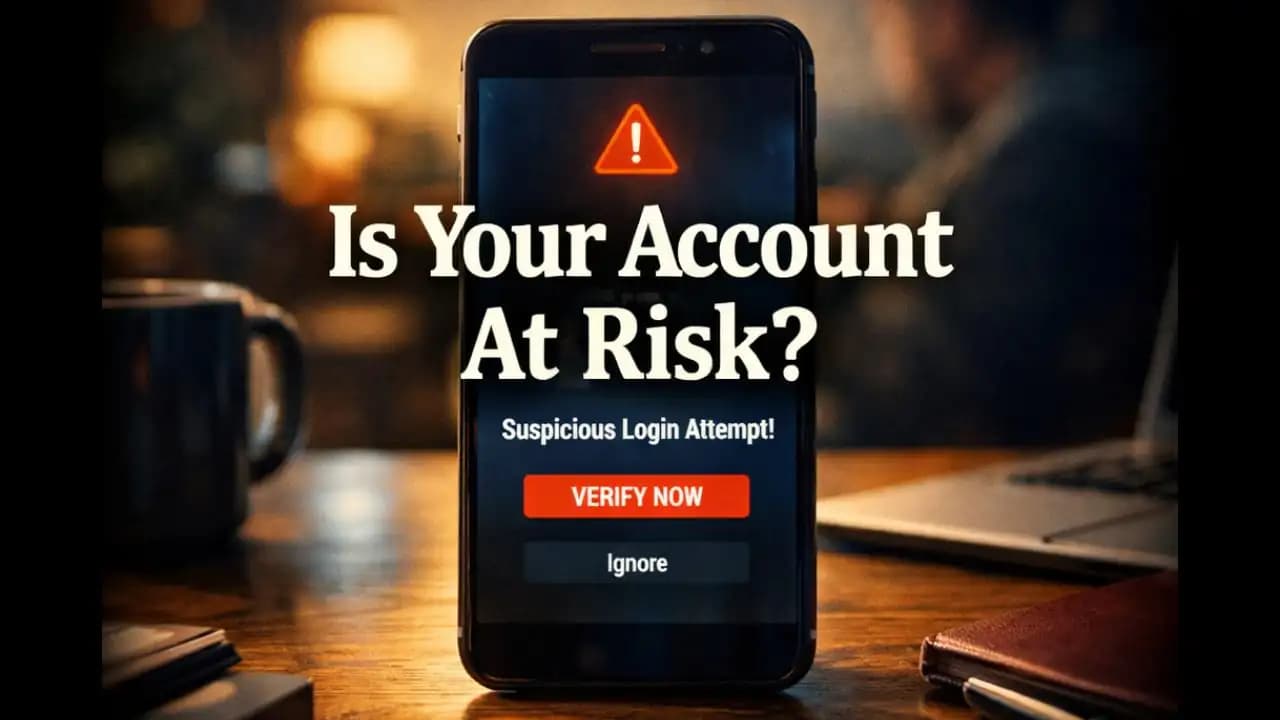



fake bank sms alert messages are showing up on phones across India and the Middle East again in early 2026 often late at night, warning that your account has been “temporarily suspended” and urging you to click a link immediately. It looks urgent, familiar, and just real enough to make you pause. And that pause is exactly what these messages are designed to exploit.
Why did I suddenly get a “bank account suspended” SMS?
It usually starts with a message that feels routine:
“Dear customer, your bank account has been suspended due to suspicious activity. Verify now to avoid permanent block.”
Sometimes it even includes a bank-like sender name or a shortened link that resembles your actual bank’s domain.
What’s happening here isn’t random.
Over the past year, especially through late 2024 and into 2025, these Messages have become more targeted. Scammers are no longer blasting generic textsthey’re mimicking real bank communication styles more closely and sending messages at moments when people are likely to react quickly (evenings, salary days, weekends).
Most of these messages arrive through standard SMS, not apps like WhatsApp, which makes them feel more official. Unlike social media scams, SMS still carries a sense of authority for many users.
The key detail: your bank almost never suspends accounts through a simple SMS with a clickable link.
Why does the message feel so believable?
Because it’s designed to.
These fake alerts copy real patterns you’ve already seen:
- Bank-style language: “Dear Customer,” “KYC Update Required”
- Urgency triggers: “within 24 hours,” “immediate action needed”
- Familiar formatting: account numbers partially masked (****1234)
- Links that look close to real domains
In 2025, many users became more cautious about obvious scams. So attackers adapted. Instead of obvious spelling mistakes or strange links, they now use:
- Domains that differ by one letter
- URL shorteners that hide the real destination
- Messages that match current banking policies (like KYC updates)
That’s why even careful users hesitate for a moment.
What actually happens if you click the link?
Most people assume it’s just a harmless page. It’s not.
The link typically opens a page that looks like your bank’s login portal. Once you enter detailslike your mobile number, OTP, or net banking passwordthat information is captured instantly.
From there, several things can happen:
- Unauthorized transactions within minutes
- Linking your number to new payment apps
- Access to your full banking profile
- Use of your identity for further scams
In some cases, the page may also trigger background downloads on older Android devices, installing malicious apps disguised as security updates.
The danger isn’t just the clickit’s the trust that follows.
Why this matters more now than it did before
A few years ago, these scams were easier to spot. Now, they’re blending into everyday digital life.
Think about how often you already receive real messages from:
- Banks about transactions
- Payment apps about KYC updates
- OTPs for logins and purchases
The volume of legitimate alerts has increased. That creates a perfect environment for fake ones to slip in unnoticed.
In 2024–2025, digital banking usage surged further, especially among users who rely entirely on mobile phones. Many people don’t visit physical branches anymore. That means:
- SMS feels like a primary communication channel
- Users expect urgent account-related messages
- Quick action becomes a habit
Scammers are not just exploiting technologythey’re exploiting behavior.
The subtle signs most people overlook
Not all fake bank SMS messages look suspicious at first glance. But there are small details that often give them away.
You might notice:
- The link doesn’t match your bank’s official domain exactly
- The message creates pressure but gives no specific transaction detail
- The sender ID looks slightly unusual or generic
- It asks for full login details instead of redirecting to your official app
Real banks rarely ask you to “fix” account issues through a random SMS link.
Even when they send alerts, they usually guide you to open their official app or visit their verified website manually.
How these scams evolved in 2025and why they’re harder to ignore
In recent months, there’s been a noticeable shift in how these messages are crafted.
Earlier versions were easy to dismiss. Now, scammers are:
- Timing messages around real banking cycles
- Using data leaks to personalize messages
- Mimicking exact message formats from major banks
- Combining SMS with follow-up calls pretending to be bank agents
Some users even receive a call shortly after the SMS:
“We noticed you received a suspension alert. We’re calling to help you resolve it.”
That combinationSMS plus voicecreates a stronger illusion of legitimacy.
This layered approach has been reported more frequently throughout 2025 and continues into 2026.
Why people still fall for it (even when they know about scams)
It’s easy to assume only inexperienced users get affected. That’s not true.
Even experienced users hesitate when:
- The message mentions “account suspension”
- They recently made a large transaction
- They’re expecting a bank update
- The message arrives at an inconvenient time
The reaction isn’t always panicit’s often confusion.
You think:
“Better to check quickly, just in case.”
And that “just in case” moment is where the risk lives.
The safer way to check your bank status without clicking anything
When something feels off, the instinct Should not be to respondit should be to verify independently.
That means:
- Opening your official banking app directly
- Typing your bank’s website manually in the browser
- Checking recent notifications inside the app
Not through the message. Never through the link.
The safest action is often the one that feels slightly slower.
Why SMS is still the preferred channel for these scams
You might wonder why scammers haven’t fully moved to apps like Instagram or email.
The answer is simple: SMS still works.
- It doesn’t require internet access
- It feels more official than social media messages
- It appears alongside real OTPs and bank alerts
- Users are conditioned to trust it
Even in 2026, SMS carries a level of authority that newer platforms don’t.
And attackers know that.
A quiet shift in user awareness
There has been some improvement.
More users now:
- Question unexpected links
- Avoid sharing OTPs
- Recognize urgency as a red flag
But at the same time, scams have become quieter, more polished, and less obvious.
They don’t scream “fraud” anymore.
They whisper “verification.”
That’s what makes them harder to ignore.
When the message looks realbut something still feels off
That instinct matters.
You may not be able to explain exactly why the message feels wrong. Maybe it’s the timing. Maybe it’s the wording. Maybe it’s just a feeling.
That hesitation is worth paying attention to.
Because most legitimate banking communication doesn’t rely on pressure. It doesn’t rush you. It doesn’t push you toward unknown links.
And it definitely doesn’t punish you for taking a moment to verify.
Questions people are actually searching right now
Why did I get a bank account suspended SMS if my account is fine?
These messages are sent in bulk or semi-targeted campaigns. Receiving one doesn’t mean there’s an issue with your accountit means your number is part of a scam distribution list.
Can banks really suspend accounts through SMS links?
No. Banks may notify you via SMS, but they don’t resolve account issues through clickable links that ask for sensitive information.
What happens if I clicked the link but didn’t enter details?
In most cases, nothing immediatebut it’s still safer to monitor your account and ensure no unknown apps were installed.
How can I confirm if the SMS is real?
The safest way is to check directly through your bank’s official app or websitenot through the message itself.
Are these fake bank SMS alerts increasing recently?
Yes, especially through 2024 and 2025, with more refined tactics and better imitation of real banking communication styles.
There’s a reason these messages keep coming back in new forms. They worknot because people are careless, but because they’re designed to feel just believable enough.
And in a world where most banking happens on a phone screen, that small moment of doubt can make all the difference.